


Efficacy of mupirocin, neomycin and octenidine for nasal Staphylococcus aureus decolonisation: a retrospective cohort study
- PMID: 35012641
- PMCID: PMC8744346
- DOI: 10.1186/s13756-021-01043-1
Efficacy of mupirocin, neomycin and octenidine for nasal Staphylococcus aureus decolonisation: a retrospective cohort study
Abstract
Background: Periprosthetic joint infection (PJI) causes significant morbidity. Methicillin sensitive Staphylococcus aureus (MSSA) is the most frequent organism, and the majority are endogenous. Decolonisation reduces PJIs but there is a paucity of evidence comparing treatments. Aims; compare 3 nasal decolonisation treatments at (1) achieving MSSA decolonisation, (2) preventing PJI.
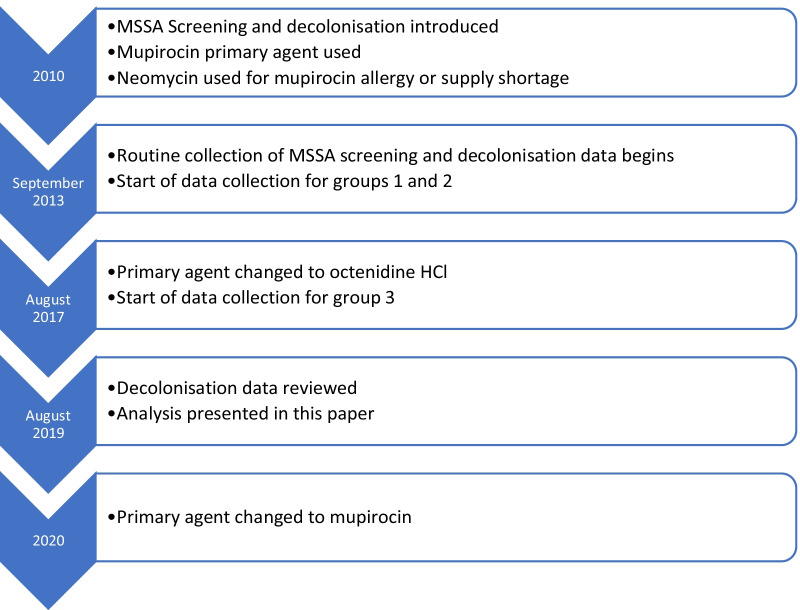
Methods: Our hospital prospectively collected data on our MSSA decolonisation programme since 2013, including; all MSSA carriers, treatment received, MSSA status at time of surgery and all PJIs. Prior to 2017 MSSA carriers received nasal mupirocin or neomycin, from August 2017 until August 2019 nasal octenidine was used.
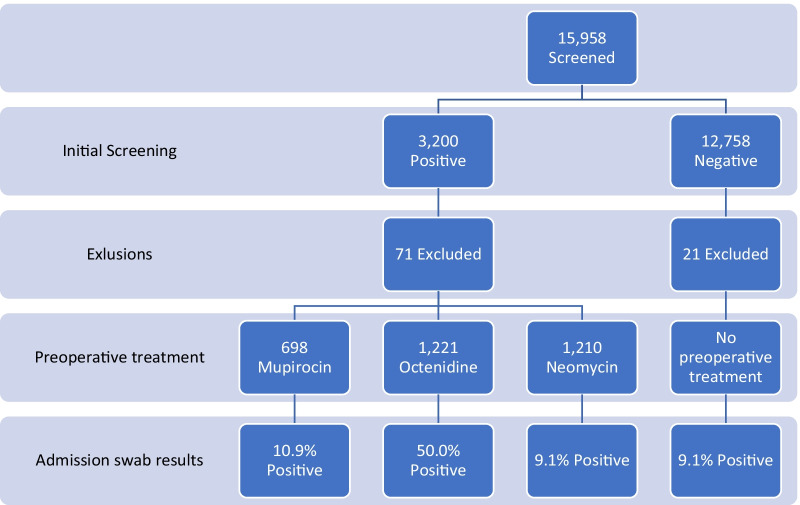
Results: During the study period 15,958 primary hip and knee replacements were performed. 3200 (20.1%) were MSSA positive at preoperative screening and received decolonisation treatment, 698 mupirocin, 1210 neomycin and 1221 octenidine. Mupirocin (89.1%) and neomycin (90.9%) were more effective at decolonisation than octenidine (50.0%, P < 0.0001). There was no difference in PJI rates (P = 0.452).
Conclusions: Mupirocin and neomycin are more effective than octenidine at MSSA decolonisation. There was poor correlation between the MSSA status after treatment (on day of surgery) and PJI rates. Further research is needed to compare alternative MSSA decolonisation treatments.
Keywords: Decolonisation; MSSA; Methicillin sensitive Staphylococcus aureus; Periprosthetic joint infection; Surgical site infection.
© 2021. The Author(s).
Conflict of interest statement
MR and AM have previously received research grant funding from Schϋlke, manufacturers of Octenisan.
Figures
References
-
- National Joint Registry. National Joint Registry for England, Wales, Northern Ireland and Isle of Man: 15th Annual Report 2018. 15th Annu Rep. 2018.
-
- National Joint Registry England Wales and Northern Ireland 2019. NJR report: Patient characteristics for revision knee procedures [Internet]. Available from: njrcentra.org.uk
MeSH terms
Substances
LinkOut - more resources
Full Text Sources
Medical
