


Anti-SARS-CoV-2 antibody levels and kinetics of vaccine response: potential role for unresolved inflammation following recovery from SARS-CoV-2 infection
- PMID: 35013457
- PMCID: PMC8749002
- DOI: 10.1038/s41598-021-04344-y
Anti-SARS-CoV-2 antibody levels and kinetics of vaccine response: potential role for unresolved inflammation following recovery from SARS-CoV-2 infection
Abstract
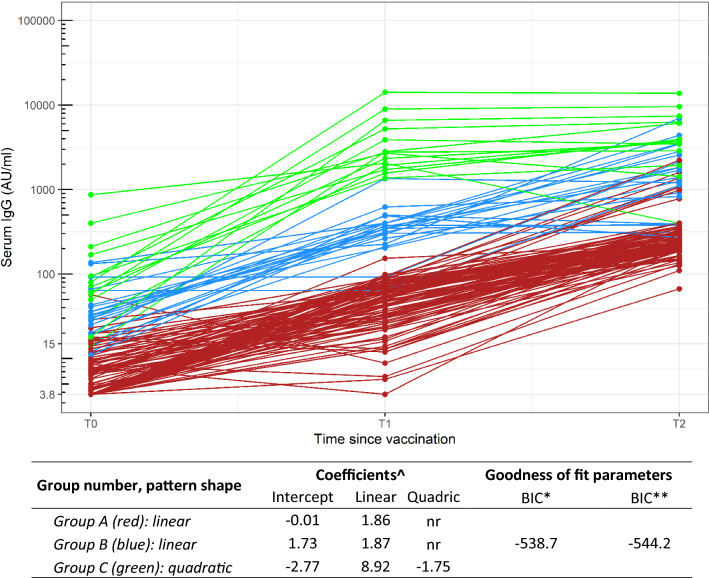
The immune response after SARS-CoV-2 vaccine administration appears to be characterized by high inter-individual variation, even in SARS-CoV-2 positive subjects, who could have experienced different post-infection, unresolved conditions. We monitored anti-SARS-CoV-2 IgG levels and kinetics along with circulating biomarkers in a cohort of 175 healthcare workers during early immunization with COVID-19 mRNA-LNP BNT162b2 vaccine, to identify the associated factors. Subjects with a previous SARS-CoV-2 infection were characterized by higher BMI and CRP levels and lower neutrophil count with respect to naïve subjects. Baseline IgG levels resulted associated with CRP independently on BMI and inflammatory diseases. Among 137 subjects undergoing vaccination and monitored after the first and the second dose, three kinetic patterns were identified. The pattern showing a rapid growth was characterized by higher IgG levels at baseline and higher CRP and MCHC levels than negative subjects. Subjects previously exposed to SARS-CoV-2 showed higher levels of CRP, suggesting persistence of unresolved inflammation. These levels are the main determinant of IgG levels at baseline and characterized subjects belonging to the best performing, post-vaccine antibody kinetic pattern.
© 2022. The Author(s).
Conflict of interest statement
The authors declare no competing interests.
Figures

References
-
- COVID-19 Map—Johns Hopkins Coronavirus Resource Center (2021). https://coronavirus.jhu.edu/map.html.
Publication types
MeSH terms
Substances
Grants and funding
LinkOut - more resources
Full Text Sources
Medical
Research Materials
Miscellaneous
