


Effects of deworming medication on anaemia among children aged 6-59 months in sub-Saharan Africa
- PMID: 35016722
- PMCID: PMC8753868
- DOI: 10.1186/s13071-021-05123-4
Effects of deworming medication on anaemia among children aged 6-59 months in sub-Saharan Africa
Abstract
Background: Despite the limited knowledge regarding the effects of deworming medication (DM) on nutritional indicators in sub-Saharan Africa (SSA), deworming programmes continue to be implemented in resource-limited countries. Therefore, the current study aimed to examine the effects of DM on anaemia among children aged 6-59 months in SSA.
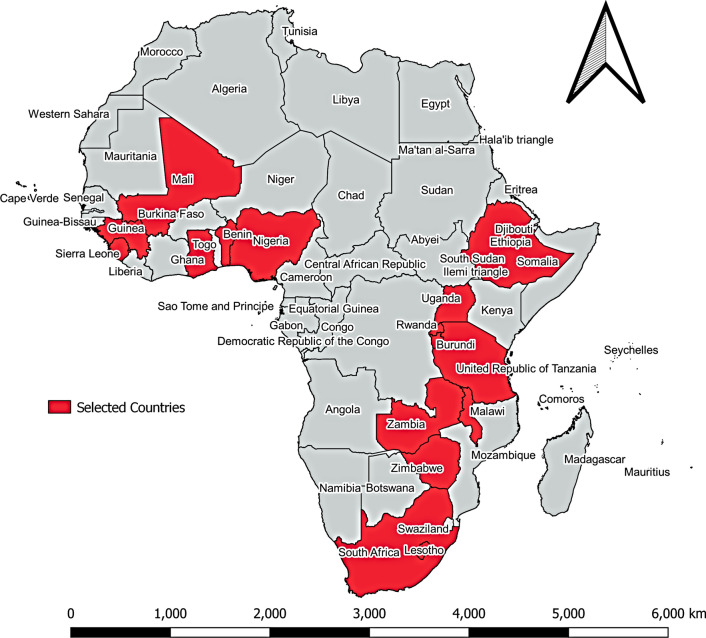
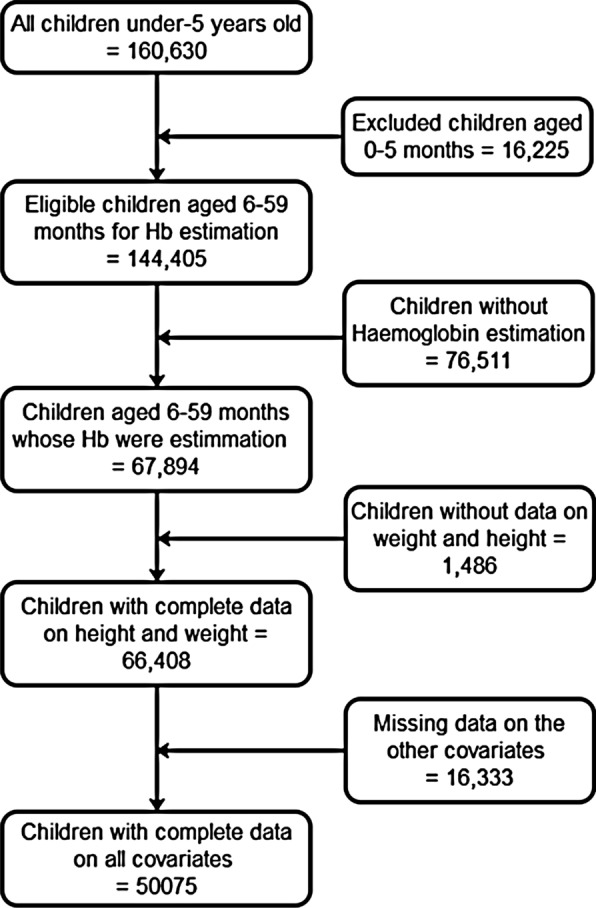
Methods: The analysis was performed using data obtained from 17 demographic and health surveys (DHSs) conducted in SSA. Children were considered to be anaemic if their haemoglobin (Hb) concentration was less than 11.0 g/dl, adjusting for altitude. To account for both multiple measures at the cluster level and the clustering of children within the same country, generalized linear mixed models were used to analyse the anaemia outcomes in 50,075 children aged 6-59 months.
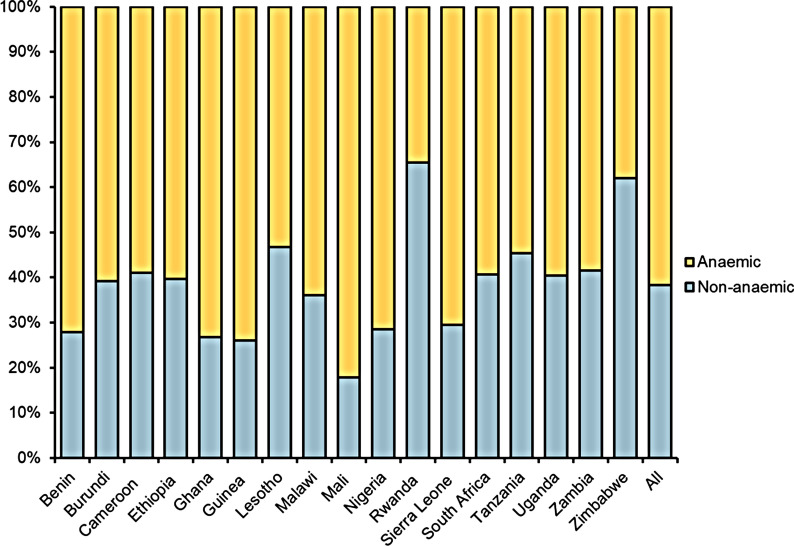
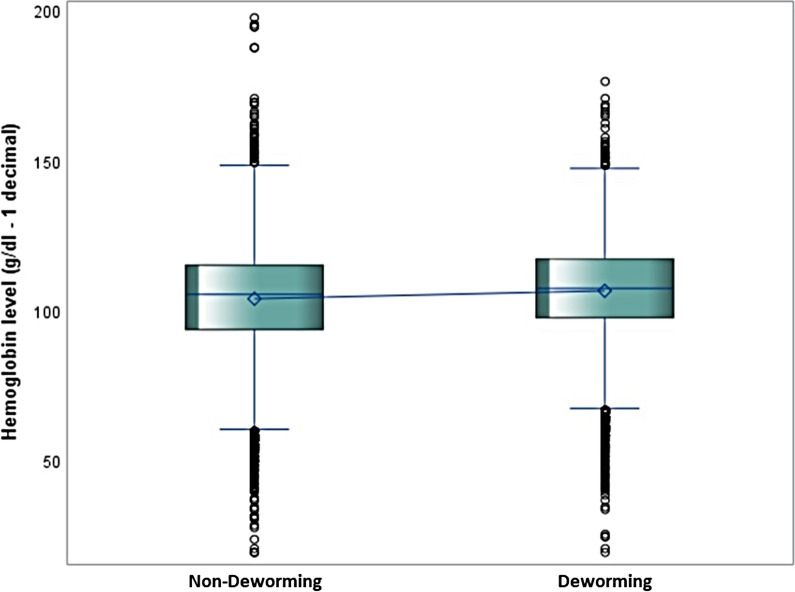
Results: Overall, anaemia was reported in 61.8% of the children, and their median Hb concentration was 10.5 g/dl (interquartile range 9.4-11.5). The prevalence of anaemia ranged from 34.5% in Rwanda to 81.1% in Mali. Multivariate analyses showed that children who did not receive DM had increased odds of being anaemic (adjusted odds ratio [aOR]: 1.11; 95% confidence interval [CI] 1.07-1.16).
Conclusions: The current study revealed that DM can decrease the risk of anaemia among preschool-age children (pre-SAC) in SSA. Thus, tailored public health programmes aimed at reducing childhood anaemia need to consider deworming. However, longitudinal studies are needed to validate the association that has been reported in this cross-sectional study.
Keywords: Anaemia; Coverage; Deworming medication; Haemoglobin; Sub-Saharan Africa.
© 2021. The Author(s).
Conflict of interest statement
The authors declare that they have no competing interests.
Figures
References
-
- World Health Organization (WHO). Soil-transmitted helminth infections. Geneva: WHO; 2020. https://www.who.int/news-room/fact-sheets/detail/soil-transmitted-helmin... helminth infections are among the most common infections, areas where sanitation is poor. Accessed 27 Jan 2020.
-
- Bethony J, Brooker S, Albonico M, Geiger SM, Loukas A, Diemert D, et al. Soil-transmitted helminth infections: ascariasis, trichuriasis, and hookworm. Lancet. 2006;367:1521–1532. - PubMed
-
- World Health Organization (WHO). Neglected tropical diseases. Geneva: WHO; 2017. https://www.who.int/neglected_diseases/news/WHO_publishes_recommendation.... Accessed 28 Jan 2021.
-
- World Health Organization (WHO) Deworming to combat the health and nutritional impact of soil-transmitted helminths. Geneva: WHO; 2012.
-
- World Health Organization (WHO). Preventive chemotherapy to control soil-transmitted helminth infections in at-risk population groups. Geneva: WHO; 2017. http://www.who.int/elena/titles/full_recommendations/deworming/en/. Accessed 28 Jan 2021. - PubMed
MeSH terms
Substances
LinkOut - more resources
Full Text Sources
Medical
Research Materials
