


"Wearables on vogue": a scoping review on wearables on physical activity and sedentary behavior during COVID-19 pandemic
- PMID: 35018193
- PMCID: PMC8739535
- DOI: 10.1007/s11332-021-00885-x
"Wearables on vogue": a scoping review on wearables on physical activity and sedentary behavior during COVID-19 pandemic
Abstract
Background: Wearables are intriguing way to promote physical activity and reduce sedentary behavior in populations with and without chronic diseases. However, the contemporary evidence demonstrating the effectiveness of wearables on physical health during the COVID-19 pandemic has yet to be explored.
Aim: The present review aims to provide the readers with a broader knowledge of the impact of wearables on physical health during the pandemic.
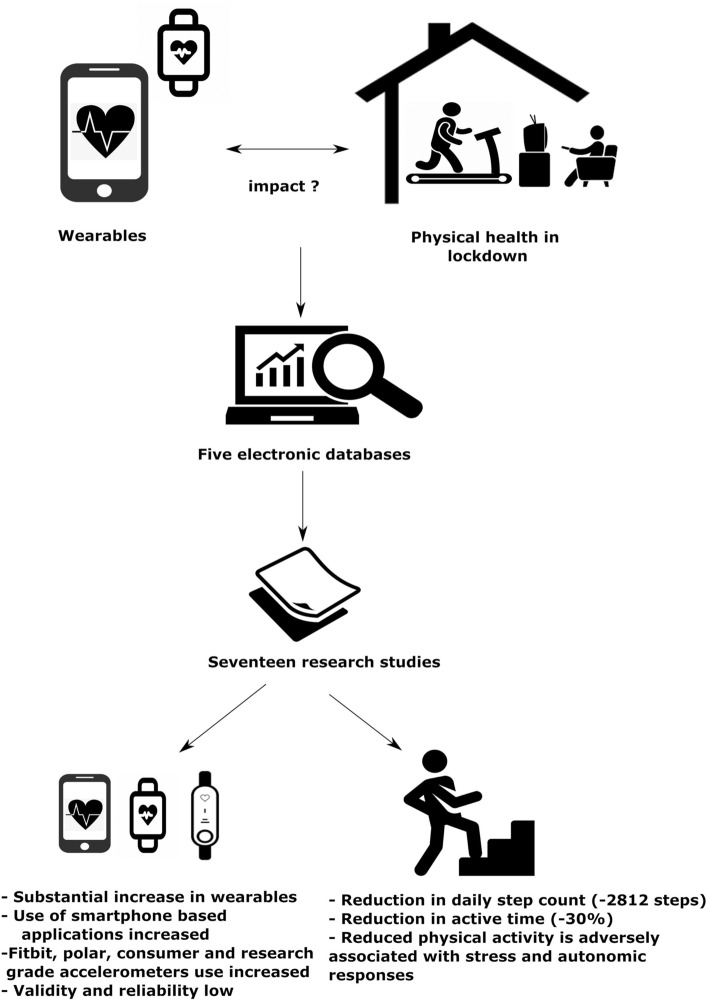
Methods: Five electronic databases (Web of Science, Scopus, Ovid Medline, Cumulative Index to Nursing and Allied Health Literature and Embase) were searched. The eligibility criteria of the studies to be included were based on PICOT criteria: population (adults, children and elderly), intervention (wearable, smartphones), comparison (any behavioral intervention), outcome (physical activity or sedentary behavior levels) and time frame (between December 1st, 2019 and November 19th, 2021). The present scoping review was framed as per the guidelines of the Arksey and O'Malley framework.
Results: Of 469 citations initially screened, 17 articles were deemed eligible for inclusion and potential scoping was done. Smartphone-based applications with inbuilt accelerometers were commonly used, while a few studies employed smart bands, smartwatches for physical health monitoring. Most of the studies observed the increased use of wearables in healthy adults followed by elderly, children and pregnant women. Considerable reduction (almost-50%) in physical activity during the pandemic: daily step count (- 2812 steps/min), standing (- 32.7%) and walking (- 52.2%) time was found.
Conclusion: Wearables appears to be impending means of improving physical activity and reducing sedentary behavior remotely during the COVID-19 pandemic.
Supplementary information: The online version contains supplementary material available at 10.1007/s11332-021-00885-x.
Keywords: COVID-19; Lockdown; Physical activity; Sedentary behavior; Smartwatch; Wearable.
© The Author(s) 2022.
Conflict of interest statement
Conflicts of interestNone of the authors has any conflicts of interest.
Figures

References
Publication types
LinkOut - more resources
Full Text Sources
Miscellaneous