


Linking drug and food addiction via compulsive appetite
- PMID: 35023154
- PMCID: PMC9081129
- DOI: 10.1111/bph.15797
Linking drug and food addiction via compulsive appetite
Abstract
Background and purpose: 'Food addiction' is the subject of intense public and research interest. However, this nosology based on neurobehavioural similarities among obese individuals, patients with eating disorders and those with substance use disorders (drug addiction) remains controversial. We thus sought to determine which aspects of disordered eating are causally linked to preclinical models of drug addiction. We hypothesized that extensive drug histories, known to cause addiction-like brain changes and drug motivation in rats, would also cause addiction-like food motivation.
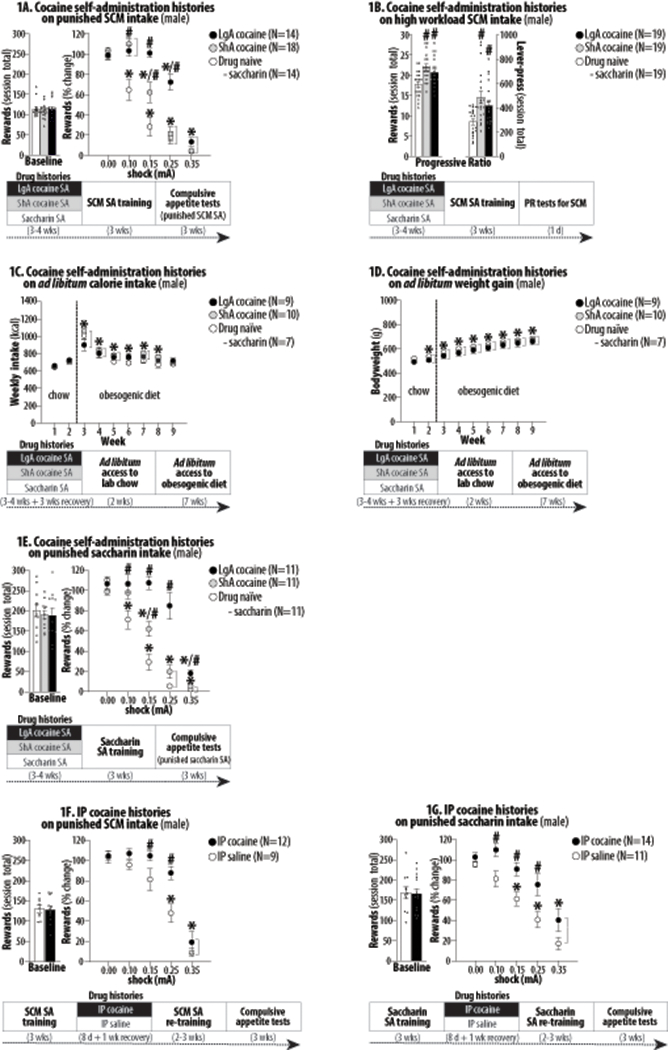
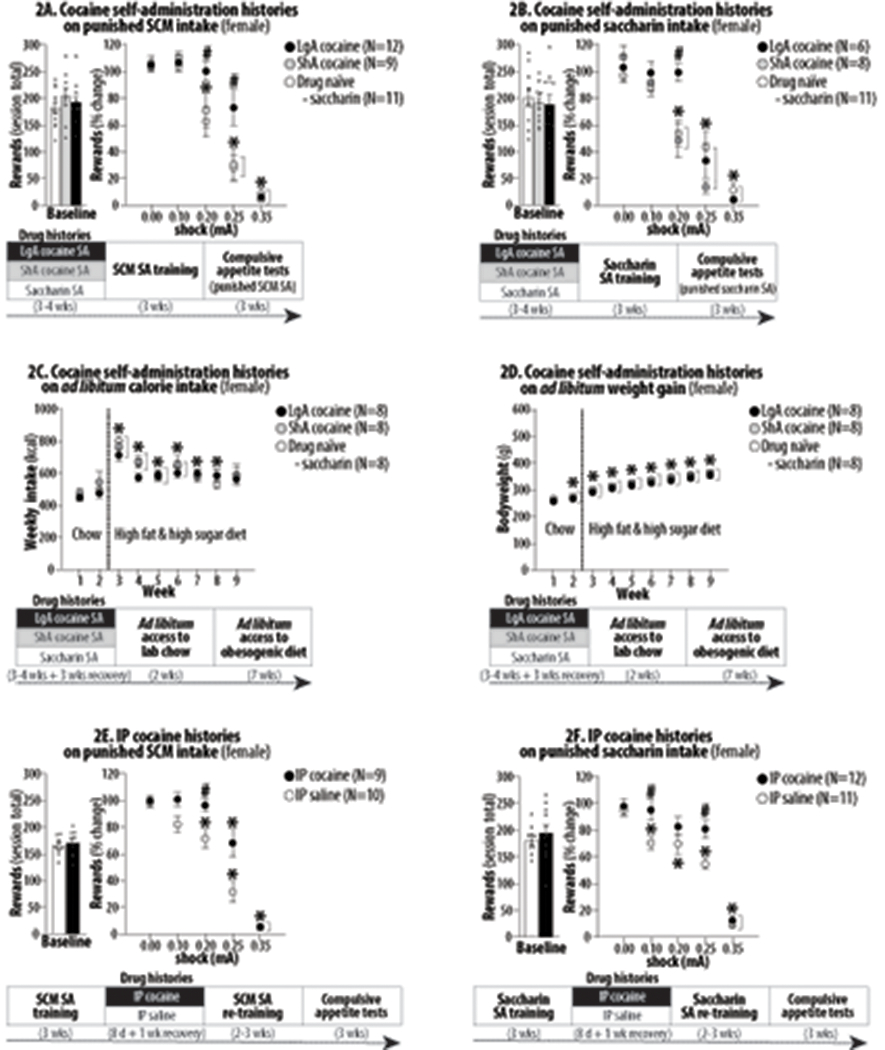
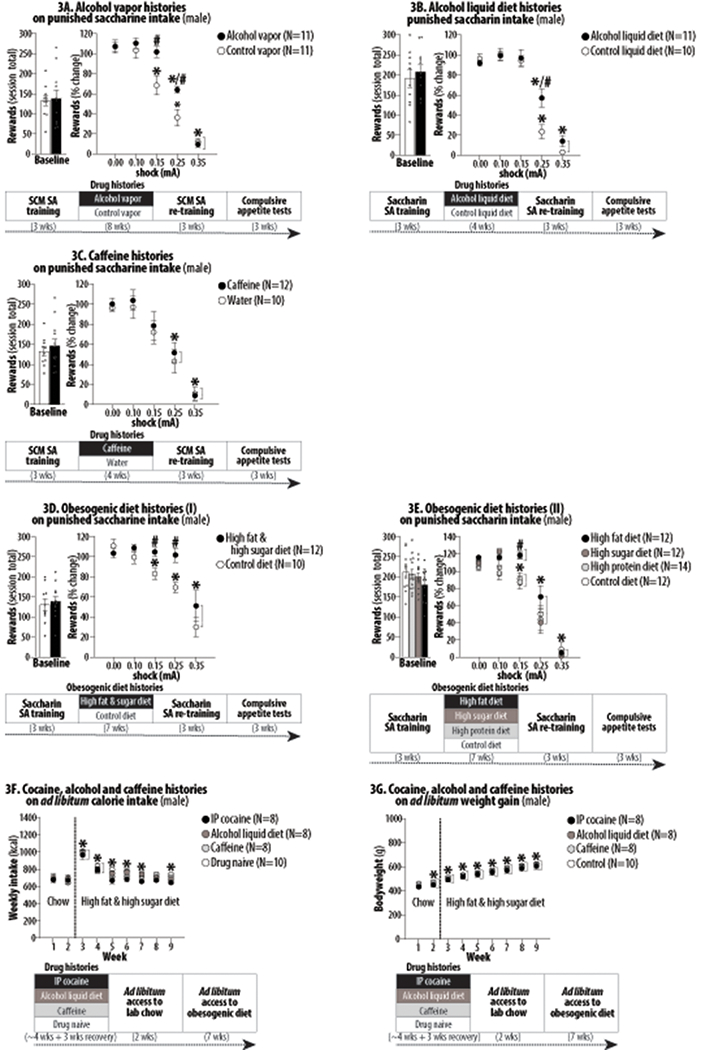
Experimental approach: Rats underwent extensive cocaine, alcohol, caffeine or obesogenic diet histories and were subsequently tested for punishment-resistant food self-administration or 'compulsive appetite', as a measure of addiction-like food motivation.
Key results: Extensive cocaine and alcohol (but not caffeine) histories caused compulsive appetite that persisted long after the last drug exposure. Extensive obesogenic diet histories also caused compulsive appetite, although neither cocaine nor alcohol histories caused excess calorie intake and bodyweight during abstinence. Hence, compulsive appetite and obesity appear to be dissociable, with the former sharing common mechanisms with preclinical drug addiction models.
Conclusion and implications: Compulsive appetite, as seen in subsets of obese individuals and patients with binge-eating disorder and bulimia nervosa (eating disorders that do not necessarily result in obesity), appears to epitomize 'food addiction'. Because different drug and obesogenic diet histories caused compulsive appetite, overlapping dysregulations in the reward circuits, which control drug and food motivation independently of energy homeostasis, may offer common therapeutic targets for treating addictive behaviours across drug addiction, eating disorders and obesity.
Keywords: eating disorders; food addiction; substance use disorders.
© 2022 The British Pharmacological Society.
Conflict of interest statement
Figures
References
-
- Ahmed SH (2012). The science of making drug-addicted animals. Neuroscience 211: 107–125. - PubMed
-
- Alaux-Cantin S, Alarcon R, Audegond C, Simon O’Brien E, Martinetti MP, Ahmed SH, et al. (2021). Sugar, a powerful substitute for ethanol in ethanol postdependent rats: Relevance for clinical consideration? Addict Biol: e13023. - PubMed
-
- American Psychiatric Association (2013). The Diagnostic and Statistical Manual of Mental Disorders, Fifth Edition.
-
- Avena NM, Bocarsly ME, Hoebel BG, & Gold MS (2011). Overlaps in the nosology of substance abuse and overeating: the translational implications of “food addiction”. Curr Drug Abuse Rev 4: 133–139. - PubMed
-
- Berthoud HR (2006). Homeostatic and non-homeostatic pathways involved in the control of food intake and energy balance. Obesity (Silver Spring) 14 Suppl 5: 197S–200S. - PubMed
Publication types
MeSH terms
Substances
Grants and funding
- R01 AA027700/AA/NIAAA NIH HHS/United States
- R01 DA008467/DA/NIDA NIH HHS/United States
- R21 DA046865/DA/NIDA NIH HHS/United States
- R21 MH124036/MH/NIMH NIH HHS/United States
- K99 DA035865/DA/NIDA NIH HHS/United States
- R01 DA037294/DA/NIDA NIH HHS/United States
- R01 AA023183/AA/NIAAA NIH HHS/United States
- T32 AA007456/AA/NIAAA NIH HHS/United States
- R01 AA028879/AA/NIAAA NIH HHS/United States
- P60 AA006420/AA/NIAAA NIH HHS/United States
- R21 AA030184/AA/NIAAA NIH HHS/United States
- R21 AA021549/AA/NIAAA NIH HHS/United States
- R00 DA035865/DA/NIDA NIH HHS/United States
