


Precision medicine in bronchiectasis
- PMID: 35035573
- PMCID: PMC8753699
- DOI: 10.1183/20734735.0119-2021
Precision medicine in bronchiectasis
Abstract
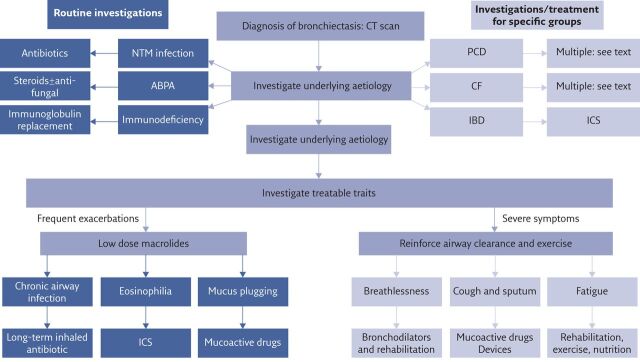
Bronchiectasis, due to its highly heterogenous nature, requires an individualised approach to therapy. Patients experience symptoms and exacerbations driven by a combination of impaired mucociliary clearance, airway inflammation and airway infection. Treatment of bronchiectasis aims to enhance airway clearance and to address the underlying causes of inflammation and infection susceptibility. Bronchiectasis has multiple causes and so the pathophysiology leading to individual symptoms and exacerbations are different between individuals. Standardised investigations are recommended by international guidelines to identify the underlying causes of bronchiectasis. The process of identifying the underlying biology within an individual is called "endotyping" and is an emerging concept across chronic diseases. Endotypes that have a specific treatment are referred to as "treatable traits" and a treatable traits approach to managing patients with bronchiectasis in a holistic and evidence-based manner is the key to improved outcomes. Bronchiectasis is an area of intense research. Endotyping allows identification of subsets of patients to allow medicines to be tested differently in the future where trials, rather than trying to achieve a "one size fits all" solution, can test efficacy in subsets of patients where the treatment is most likely to be efficacious.
Copyright ©ERS 2021.
Conflict of interest statement
Conflict of interest: T. Pembridge has nothing to disclose. Conflict of interest: J.D. Chalmers reports grants and personal fees from AstraZeneca, Boehringer Ingelheim, GlaxoSmithKline, Insmed and Novartis, personal fees from Chiesi, Janssen, Grifols and Zambon, and grants from Gilead Sciences, outside the submitted work.
Figures
References
Publication types
LinkOut - more resources
Full Text Sources