. 2021 Dec 16:27:517-523.
doi: 10.1016/j.omtn.2021.12.018. eCollection 2022 Mar 8.

Anti- EFG1 2'- O MethylRNA oligomer inhibits Candida albicans filamentation and attenuates the candidiasis in Galleria mellonella

Affiliations

Anti- EFG1 2'- O MethylRNA oligomer inhibits Candida albicans filamentation and attenuates the candidiasis in Galleria mellonella

Daniela Araújo et al. Mol Ther Nucleic Acids. .

Abstract

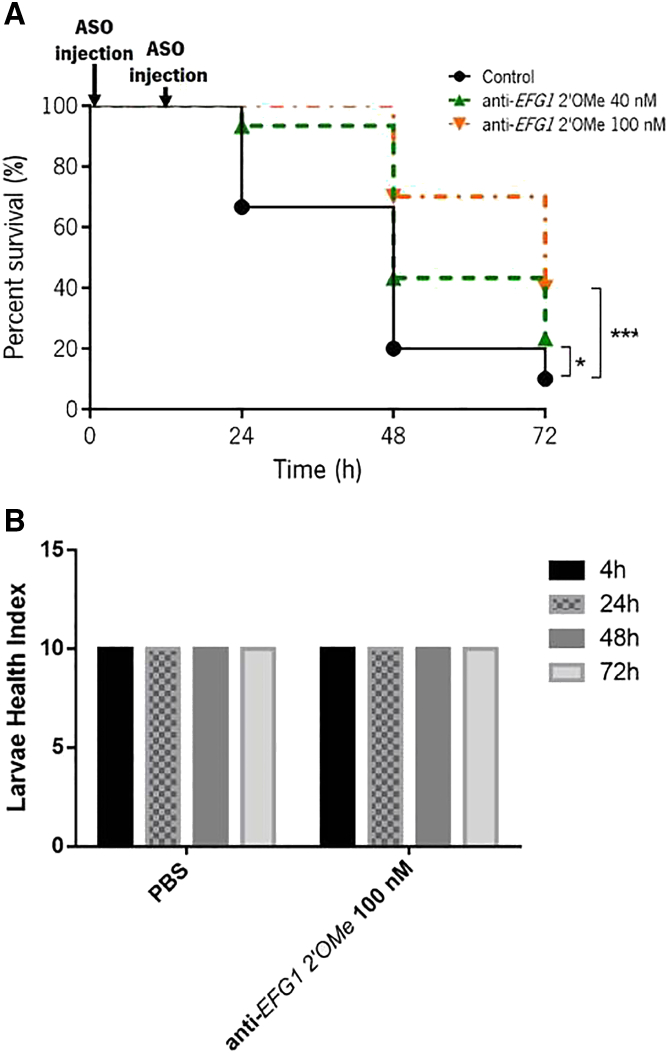
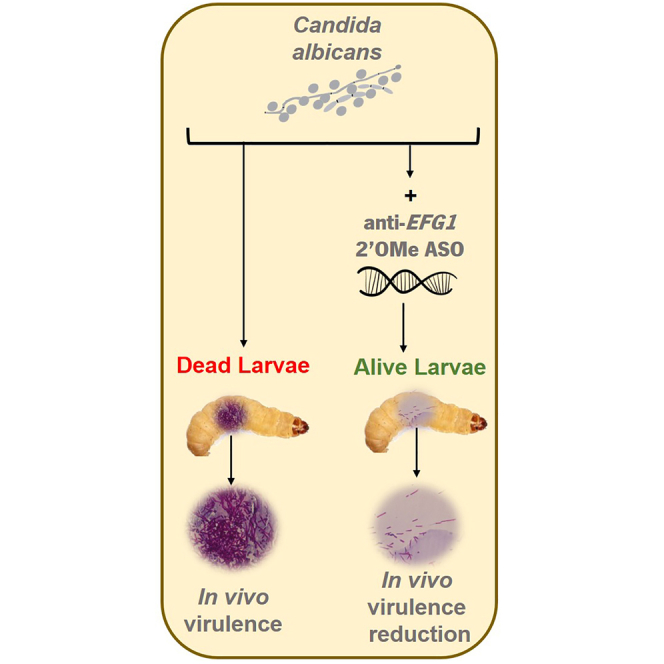
EFG1 is a central transcriptional regulator of filamentation that is an important virulence factor of Candida albicans. This study serves to assess in vivo the applicability of the anti-EFG1 2'-OMethylRNA oligomer for inhibiting C . albicans filamentation and to attenuate candidiasis, using the Galleria mellonella model. For that, larvae infected with a lethal concentration of C. albicans cells were treated with a single dose and with a double dose of the anti-EFG1 2'OMe oligomer (at 40 and 100 nM). The anti-EFG1 2'OMe oligomer toxicity and effect on larvae survival was evaluated. No evidence of anti-EFG1 2'OMe oligomer toxicity was observed and the treatment with double dose of 2'OMe oligomer empowered larvae survival over 24 h (by 90%-100%) and prolonged its efficacy until 72 h of infection (by 30%). Undoubtedly, this work validates the in vivo therapeutic potential of anti-EFG1 2'OMe oligomer for controlling C. albicans infections.

Keywords: 2′-OMethyl chemical modification; Galleria mellonella; antisense oligonucleotides; candidiasis; virulence.


Conflict of interest statement

The authors declare no competing interests.

Figures
None
Graphical abstract
Figure 1
Figure 1
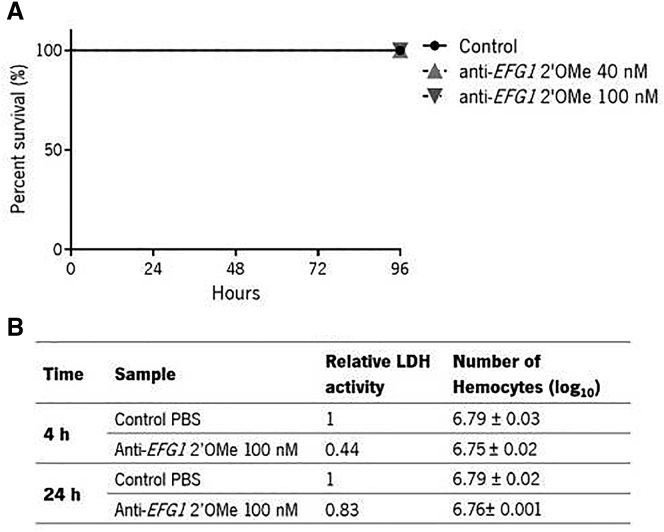
Anti-EFG1 2′OMe oligomer toxicity evaluation in a G. mellonella model (A) Survival curves of larvae injected with 40 and 100 nM of anti-EFG1 2′OMe oligomer. For each condition, 10 larvae were injected with 40 and 100 nM of oligomer and their survival was monitored over 96 h. (B) Relative LDH activity released and total number of hemocytes counted after 4 and 24 h after injection with 100 nM of anti-EFG1 2′OMe oligomer. As controls, larvae were injected only with PBS.
Figure 2
Figure 2
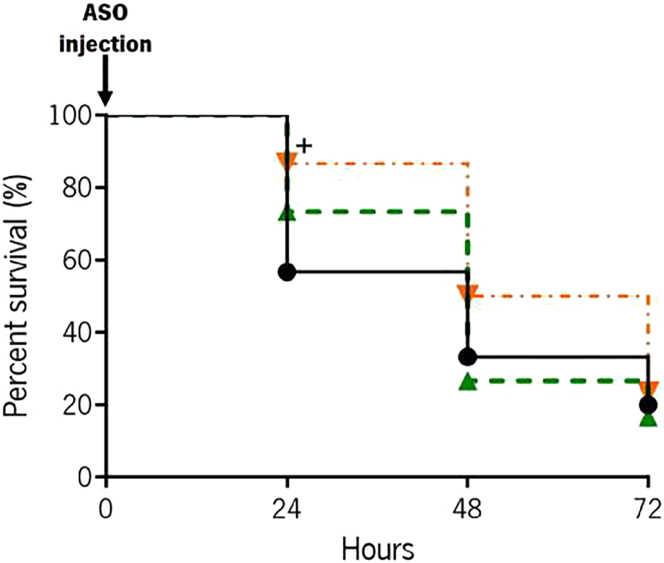
Single-dose effect of anti-EFG1 2′OMe oligomer on the survival of G. mellonella infected with C. albicans Survival curves of infected larvae were treated with a single dose of anti-EFG1 2′OMe oligomer (0 h post infection). Larvae infected with C. albicans cells were treated with 40 and 100 nM of anti-EFG1 2′OMe oligomer. As controls, larvae infected were injected only with PBS. +Significant difference among control and a single dose of 100 nM of anti-EFG1 2′OMe oligomer at 24 h (p < 0.05).
Figure 3
Figure 3
Double-dose effect of anti-EFG1 2′OMe oligomer on G. mellonella infected with C. albicans (A) Survival curves of infected larvae treated with a double dose of anti-EFG1 2′OMe oligomer (0 and 12 h post infection). Larvae infected with C. albicans cells were treated with 40 and 100 nM of anti-EFG1 2′OMe oligomer. As controls, larvae infected were injected only with PBS. (B) The health index scores of larvae treated with a double dose of 100 nM of anti-EFG1 2′OMe oligomer. Control represents the infected larvae treated only with PBS after 12 h post infection. Significant difference among control and a double dose of 40 nM of anti-EFG1 2′OMe oligomer for all times (p < 0.05). ∗∗∗Significant difference among control and a double dose of 100 nM of anti-EFG1 2′OMe ASO for all times (p < 0.001).
Figure 4
Figure 4
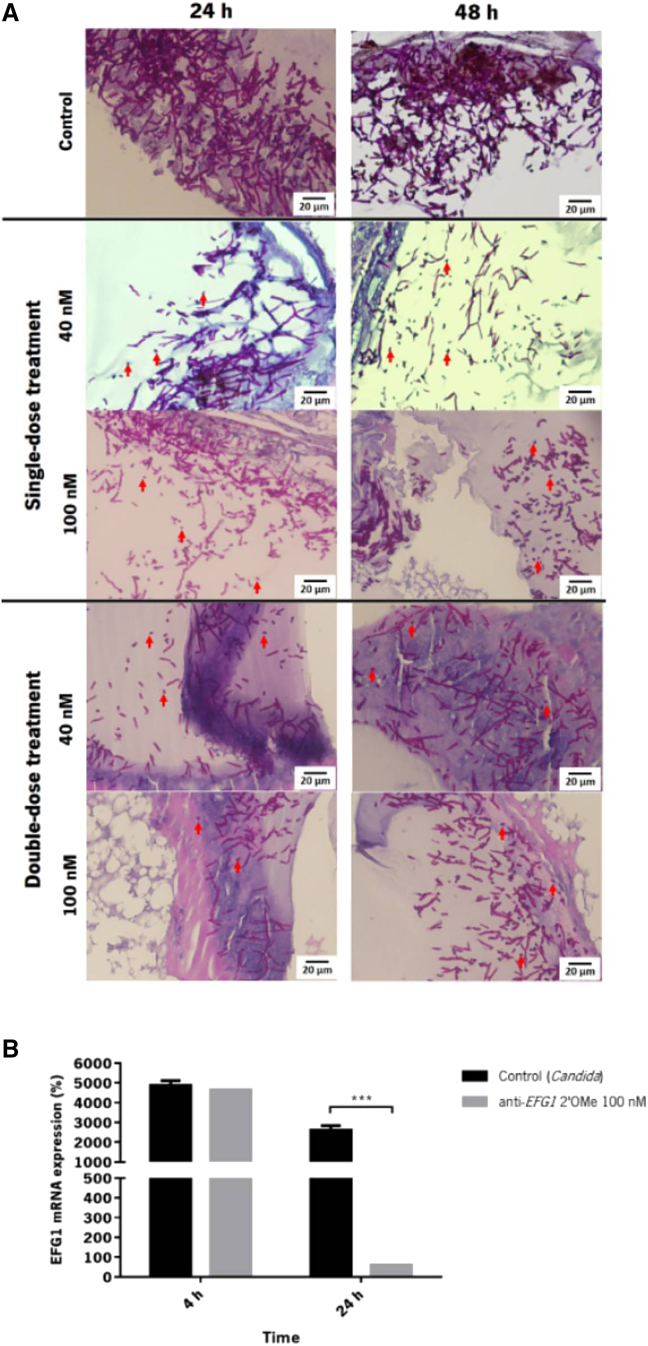
Anti-EFG1 2′OMe oligomer effect on C. albicans cell morphology and progression into the fat body of G. mellonella (A) Histological images of larvae infected with C. albicans (at 24 and 48 h) and treated with a single dose (0 h post infection) and with a double dose (0 and 12 h post infection) of 40 and 100 nM of anti-EFG1 2′OMe oligomer. The larvae sections were labeled with periodic acid Schiff coloration. The magnification images were at 400×. (B) Levels of EFG1 gene expression of larvae treated with a double dose of 100 nM of anti-EFG1 2′OMe oligomer evaluated by quantitative real-time PCR and analyzed by the ΔCt method and normalized to the CaACT1 mRNA levels after 4 and 24 h post infection. Control represents the infected larvae treated only with PBS after 12 h post infection. Error bars represent standard deviation. ∗∗∗Significant difference among control and a double dose of 100 nM of anti-EFG1 2′OMe oligomer at 24 h post infection (p < 0.001).
Figure 5
Figure 5
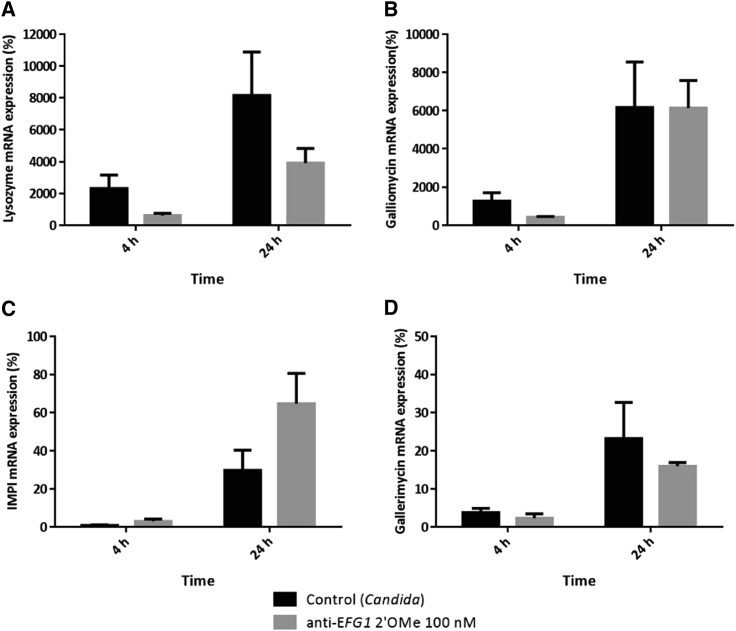
Anti-EFG1 2′OMe oligomer effect on G. mellonella immune response Levels of gene expression on G. mellonella treated with a double dose of 100 nM of anti-EFG1 2′OMe oligomer (0 and 12 h post infection) of (A) lysozyme, (B) galliomycin, (C) inducible metalloproteinase inhibitor, and (D) gallerimycin, after 4 and 24 h of infection by C. albicans SC5314. These results were obtained by quantitative real-time PCR and analyzed by ΔCt method and normalized to the GmACT1 mRNA levels. As a control, G. mellonella injected only with PBS after 12 h post infection was used. Error bars represent standard deviation.

References

    1. Koehler P., Stecher M., Cornely O.A., Koehler D., Vehreschild M.J.G.T., Bohlius J., Wisplinghoff H., Vehreschild J.J. Morbidity and mortality of candidaemia in Europe: an epidemiologic meta-analysis. Clin. Microbiol. Infect. 2019;25:1200–1212. - PubMed
    1. Silva S., Negri M., Henriques M., Oliveira R., Williams D.W., Azeredo J. Candida glabrata, Candida parapsilosis and Candida tropicalis: biology, epidemiology, pathogenicity and antifungal resistance. FEMS Microbiol. Rev. 2012;36:288–305. - PubMed
    1. Silva S., Rodrigues C., Araújo D., Rodrigues M., Henriques M. Candida species biofilms’ antifungal resistance. J. Fungi. 2017;3:8. - PMC - PubMed
    1. Mayer F.L., Wilson D., Hube B. Candida albicans pathogenicity mechanisms. Virulence. 2013;4:119–128. - PMC - PubMed
    1. Araújo D., Henriques M., Silva S. Portrait of Candida species biofilm regulatory network genes. Trends Microbiol. 2017;1:62–75. - PubMed

LinkOut - more resources