


Eyelid Myokymia-a Presumed Manifestation of Coronavirus Disease 2019 (COVID-19)
- PMID: 35036848
- PMCID: PMC8743236
- DOI: 10.1007/s42399-021-01094-w
Eyelid Myokymia-a Presumed Manifestation of Coronavirus Disease 2019 (COVID-19)
Abstract
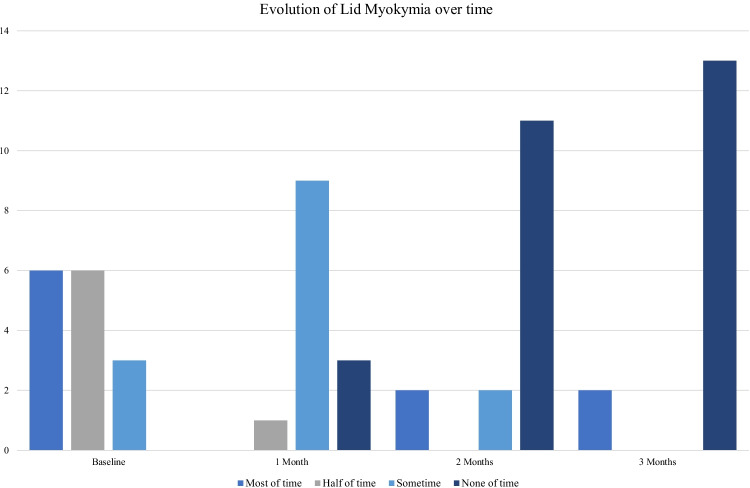
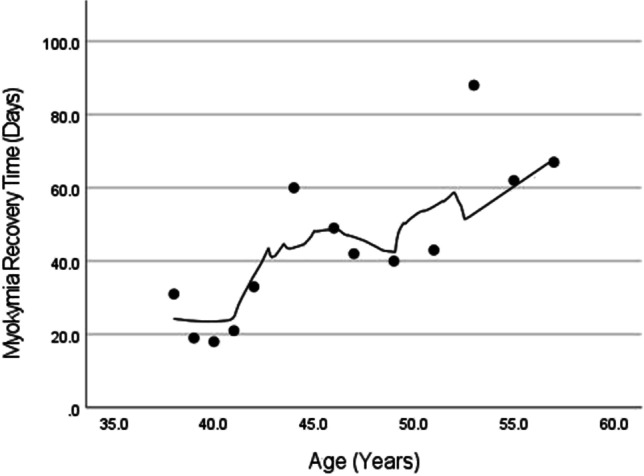
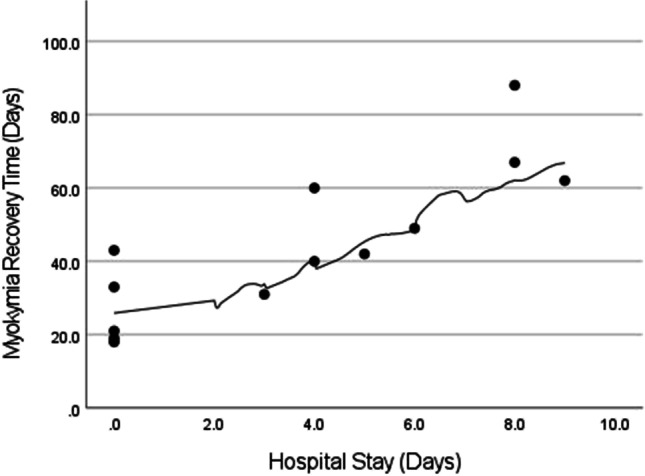
The purpose of this study is to report eyelid myokymia in patients recently recovered from COVID-19 disease. A cohort of 15 patients who developed eyelid myokymia during or immediate post-recovery of systemic disease were evaluated. Demographic, clinical characteristics, effect of age, and hospitalization on the disease course were studied. The disease course was evaluated every month for 3 months period. All, except 2, patients had complete resolution of lid myokymia within 3 months of onset. Median [IQR] myokymia recovery time was 42 [31,60] days. Age and duration of hospitalization had a significant linear relationship with myokymia recovery time. Recovery was delayed by 2.64 days with every 1-year increment in age and by 6.19 days with every additional day of hospital stay. Recovery time was independent of severity of systemic disease (P = .055) and gender (P = 0.2). Eyelid myokymia can be a possible manifestation of COVID-19 recovery phase. While myokymia recovers gradually in all these patients, older age and a longer duration of hospitalization are associated with slower recovery.
Keywords: Blepharospasm; COVID-19; Coronavirus; Eyelid myokymia.
© The Author(s), under exclusive licence to Springer Nature Switzerland AG 2021.
Conflict of interest statement
Conflict of InterestThe authors declare no competing interests.
Figures
References
-
- WHO Coronavirus Disease (COVID-19) Dashboard. 2021. https://covid19.who.int/. Accessed 12/01/2021 2021.
LinkOut - more resources
Full Text Sources