


Contrast-enhanced ultrasound in pediatric blunt abdominal trauma: a systematic review
- PMID: 35040101
- PMCID: PMC9402848
- DOI: 10.1007/s40477-021-00623-6
Contrast-enhanced ultrasound in pediatric blunt abdominal trauma: a systematic review
Abstract
Purpose: Intra-abdominal injury is a major cause of morbidity in children. Computed tomography (CT) is the reference standard for the evaluation of hemodynamically stable abdominal trauma. CT has an increased risk of long-term radiation induced malignancies and a possible risk associated with the use of iodinated contrast media. Contrast-enhanced ultrasound (CEUS) might represent an alternative to CT in stable children with blunt abdominal trauma (BAT). Nonetheless, CEUS in pediatrics remains limited by the lack of strong evidence. The purpose of this study was to offer a systematic review on the use of CEUS in pediatric abdominal trauma.
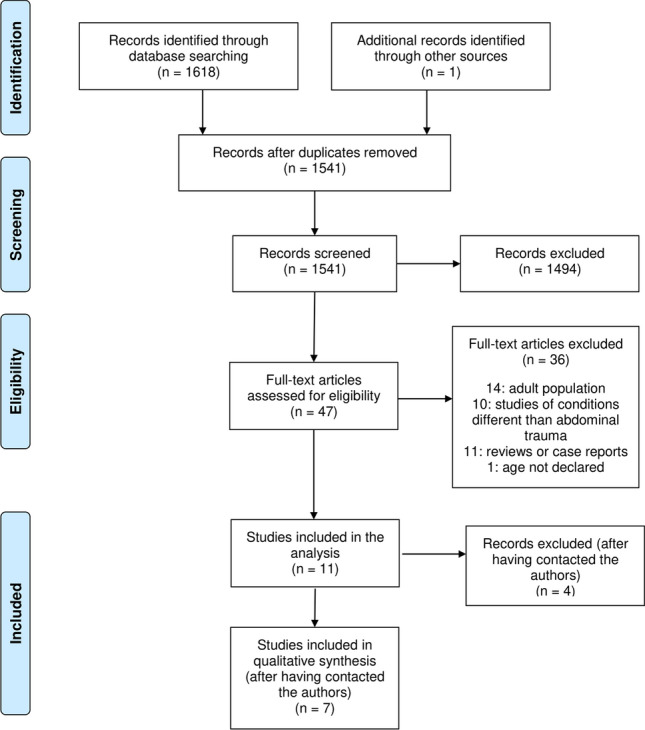
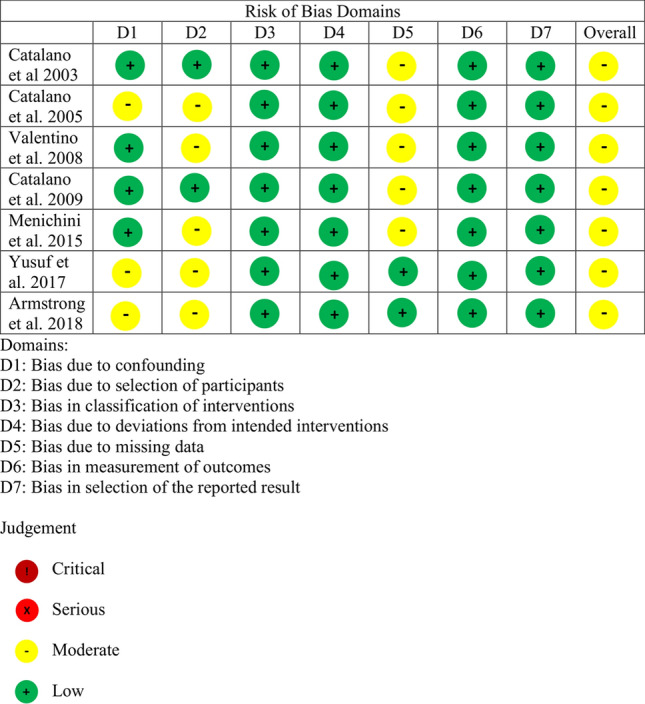
Methods: Electronic search of PubMed, EMBASE and Cochrane databases of studies investigating CEUS for abdominal trauma in children. The risk of bias was assessed using the ROBINS-I tool.
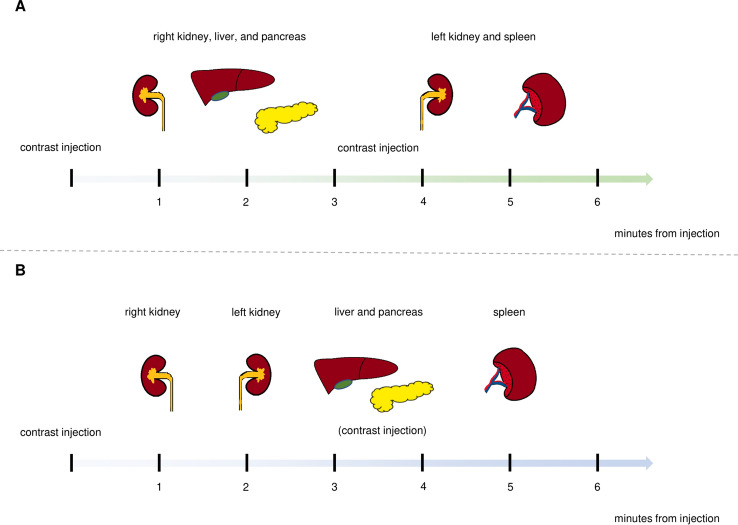
Results: This systematic review included 7 studies. CEUS was performed with different ultrasound equipment, always with a curvilinear transducer. Six out of seven studies used a second-generation contrast agent. No immediate adverse reactions were reported. The dose of contrast agent and the scanning technique varied between studies. All CEUS exams were performed by radiologists, in the radiology department or at the bedside. No standard training was reported to become competent in CEUS. The range of sensitivity and specificity of CEUS were 85.7 to 100% and 89 to 100%, respectively.
Conclusion: CEUS appears to be safe and accurate to identify abdominal solid organ injuries in children with BAT. Further research is necessary to assess the feasibility of CEUS by non-radiologists, the necessary training, and the benefit-cost ratio of CEUS as a tool to potentially reduce CT scans.
Keywords: Abdominal trauma; Children; Contrast-enhanced ultrasound; Ultrasound.
© 2021. Società Italiana di Ultrasonologia in Medicina e Biologia (SIUMB).
Conflict of interest statement
None declared.
Figures

References
-
- Heron M. Deaths: leading causes for 2007. Natl Vital Stat Rep. 2011;59:1–95. - PubMed
Publication types
MeSH terms
Substances
LinkOut - more resources
Full Text Sources
