. 2022 Jan 21;8(3):eabj5908.
doi: 10.1126/sciadv.abj5908. Epub 2022 Jan 19.

Recapitulating hepatitis E virus-host interactions and facilitating antiviral drug discovery in human liver-derived organoids

Affiliations

Recapitulating hepatitis E virus-host interactions and facilitating antiviral drug discovery in human liver-derived organoids

Pengfei Li et al. Sci Adv. .

Abstract

Hepatotropic viruses naturally have narrow host and tissue tropisms, challenging the development of robust experimental models. The advent of organoid technology provides a unique opportunity for moving the field forward. Here, we demonstrate that three-dimensional cultured organoids from fetal and adult human liver with cholangiocyte or hepatocyte phenotype support hepatitis E virus (HEV) replication. Inoculation with infectious HEV particles demonstrates that human liver–derived organoids support the full life cycle of HEV infection. By directing organoids toward polarized monolayers in a transwell system, we observed predominantly apical secretion of HEV particles. Genome-wide transcriptomic and tRNAome analyses revealed robust host responses triggered by viral replication. Drug screening in organoids identified brequinar and homoharringtonine as potent HEV inhibitors, which are also effective against the ribavirin resistance variant harboring G1634R mutation. Thus, successful recapitulation of HEV infection in liver-derived organoids shall facilitate the study of virus-host interactions and development of antiviral therapies.


Figures
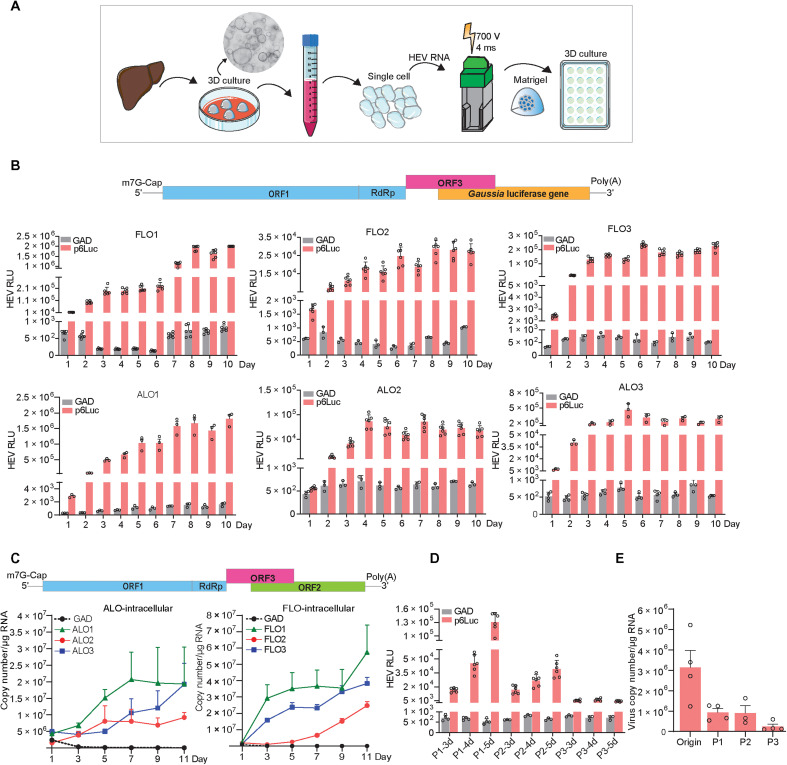
Fig. 1.
Fig. 1.. Human liver–derived organoids are highly permissive for HEV replication.
(A) Schematic representation of the experimental layout. (B) Luciferase activity in adult (ALOs) and fetal (FLOs) ICOs from days 1 to 10 after electroporation (n = 3 to 6). (C) Dynamics of HEV replication (intracellular) in adult and fetal ICOs from days 1 to 11 after electroporation. (D) Dynamic changes of p6Luc HEV replication–related luciferase activity within three passages (FLO1, n = 3 to 6). (E) Dynamic changes of p6 HEV copy numbers within three passages (FLO1, n = 3 to 4). RdRp, RNA-dependent RNA polymerase; RLU, relative luminescence units.
Fig. 2.
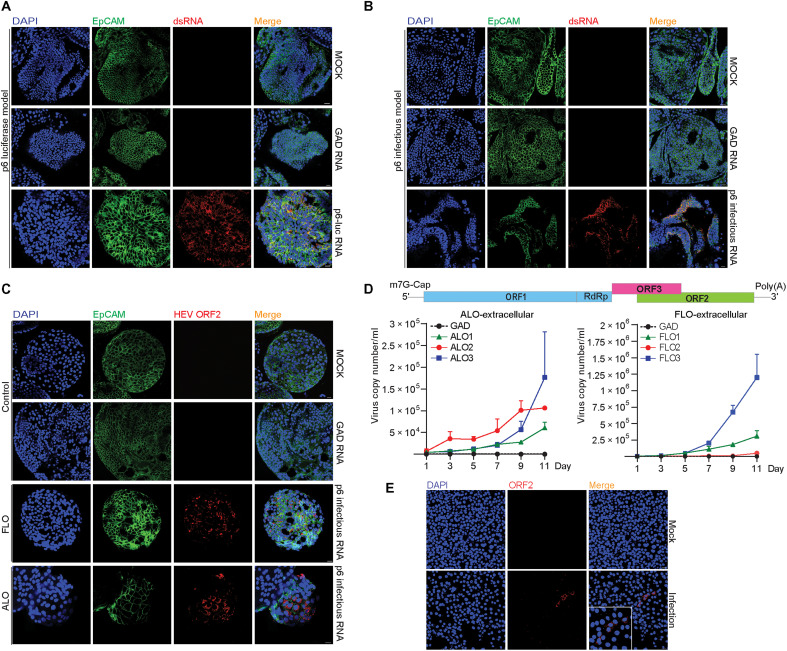
Fig. 2.. Human liver–derived organoids support HEV replication and production of infectious virus.
(A and B) Immunofluorescence staining for viral dsRNA in liver organoids. DAPI, 4′,6-diamidino-2-phenylindole. (C) Immunofluorescence staining for HEV ORF2 expression in organoids. (D) Dynamics of HEV production (extracellular) in adult and fetal ICOs from days 1 to 11 after electroporation. (E) Immunofluorescence staining of HEV ORF2 in Huh7 cells. HEV genomic RNA with GAD mutation (defect in viral replication) was used as a negative control. Data are presented as means ± SD.
Fig. 3.
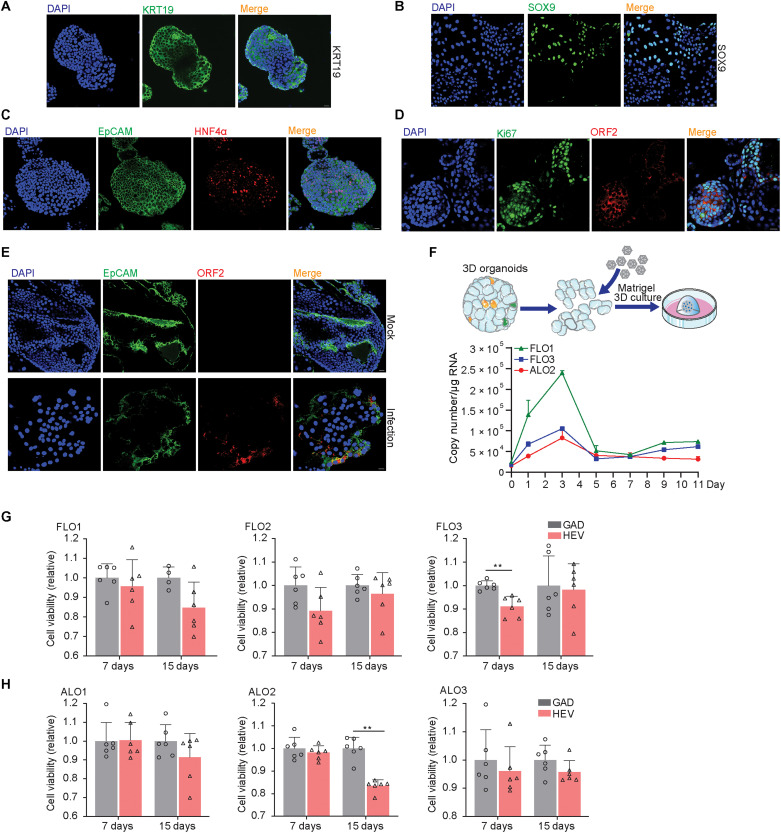
Fig. 3.. Immunostaining of relevant markers, HEV infection in polarized organoid cells with cholangiocyte phenotype, and the effects of HEV replication on organoid growth.
(A) Immunofluorescence staining of KRT19 in ICOs. (B) Immunofluorescence staining of SOX9 in organoids. (C) Immunofluorescence staining of hepatic marker HNF4α in organoids. (D) Immunofluorescence staining of proliferation marker Ki67. (E) Immunofluorescence staining for viral ORF2 protein in ICOs on day 3 after inoculation of infectious HEV particles. (F) Virus growth curve by inoculation of organoids with HEV particles. Virus titers of 1 hour after inoculation was set as day 0 as starting point. (G and H) Cell viability of organoids electroporated with p6 RNA and HEV RNA with GAD mutation. Cell viability is tested on days 7 and 15 after electroporation (n = 4 to 6).
Fig. 4.
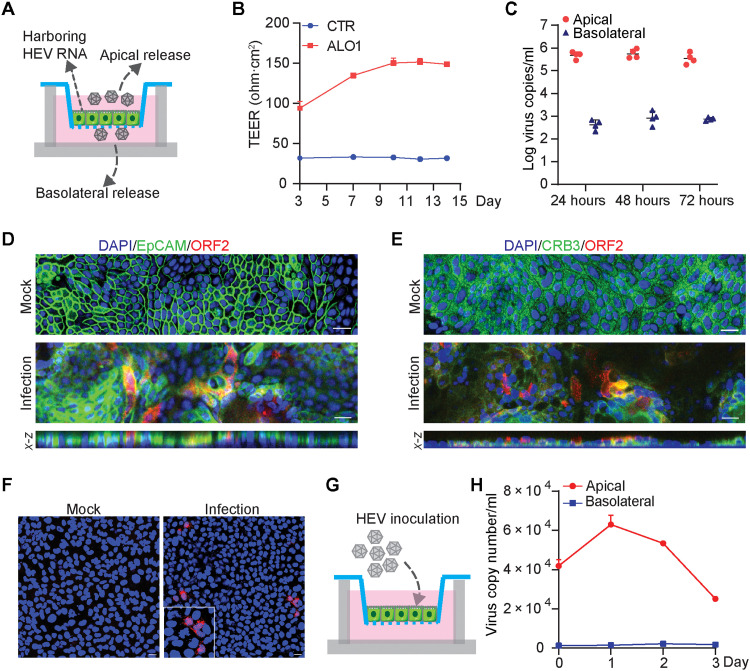
Fig. 4.. Recapitulating HEV infection in polarized organoid cells in transwell system.
(A) Schematic representation of virus release from polarized organoid cells with cholangiocyte phenotype in a transwell system. (B) TEER value of monolayers in transwell membrane tested at 3, 7, 10, 12, and 14 days after seeding. (C) Polarized release of HEV RNA into apical and basolateral supernatant at 24, 48, and 72 hours (n = 4). (D) Immunofluorescence staining for HEV ORF2 and EpCAM and x-z sections for viral ORF2 and EpCAM colocalizaiton. (E) Immunofluorescence staining for HEV ORF2 and apical marker CRB3 and x-z sections for viral ORF2 and CRB3 colocalization. (F) Immunofluorescence staining of HEV ORF2 in Huh7 cells at 48 hours after inoculation with apical released viruses. (G) Schematic representation of HEV virus inoculation with organoid cells in a transwell system. (H) Quantification of released viruses from polarized cells inoculated with cell culture–produced HEV particles. Scale bar, 20 μM. Data are presented as means ± SD.
Fig. 5.
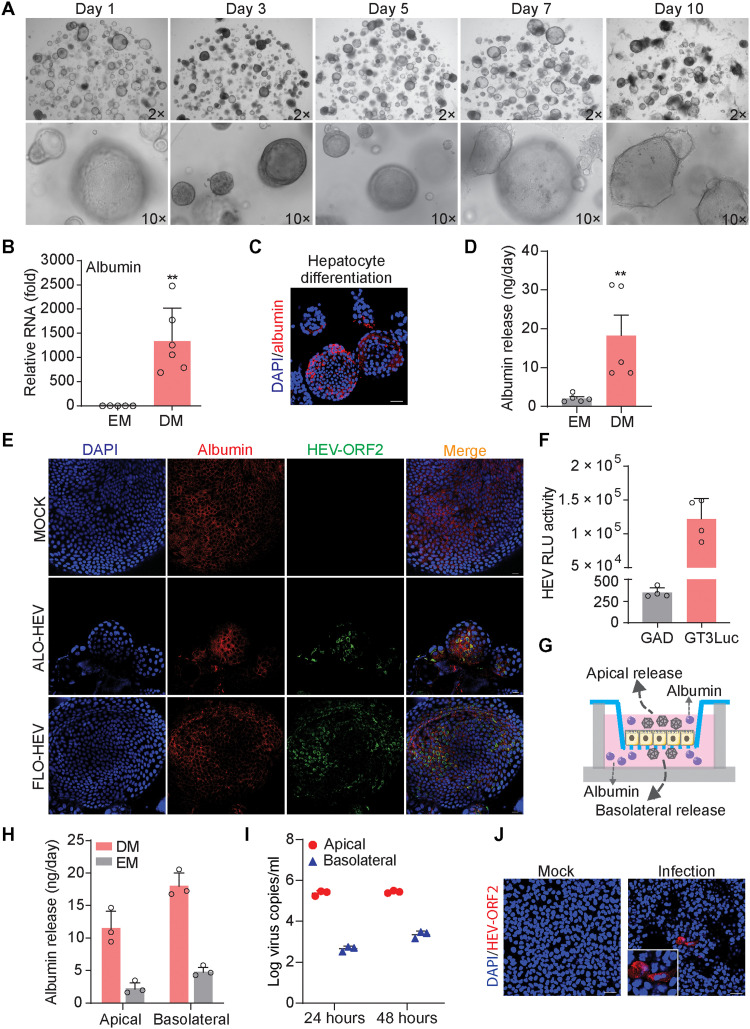
Fig. 5.. Hepatocyte-differentiated organoids support HEV replication.
(A) Morphology of hepatocyte-differentiated organoids in different time points. (B) Gene expression level of albumin upon hepatocyte differentiation (n = 5 to 6). EM, expansion medium. (C) Immunofluorescence staining for mature hepatic marker albumin in hepatocyte-differentiated organoids. Scale bar, 40 μM. (D) The secretion of albumin into supernatant quantified by ELISA (n = 5). (E) Immunofluorescence staining of albumin and HEV ORF2 in hepatocyte-differentiated organoids (FLO1 and ALO1 lines were used for differentiation). Scale bar, 20 μM. (F) HEV replication–related luciferase activity in hepatocyte-differentiated organoids (ALO1, n = 4). (G) Illustrating secretion of albumin and HEV from polarized hepatocyte-like cells in a transwell system. (H) Release of albumin into apical and basolateral compartments from polarized cells cultured in EM with cholangiocyte phenotype or DM with hepatocyte phenotype (n = 3). (I) Polarized release of HEV from hepatocyte-like cells differentiated from ICOs harboring p6 HEV genome (ALO1, n = 3). (J) Immunofluorescence staining of HEV ORF2 in Huh7 cells at 48 hours after inoculation of apical released virus from hepatocyte-like cells. Scale bar, 40 μM. Data are presented as means ± SD, **P < 0.01.
Fig. 6.
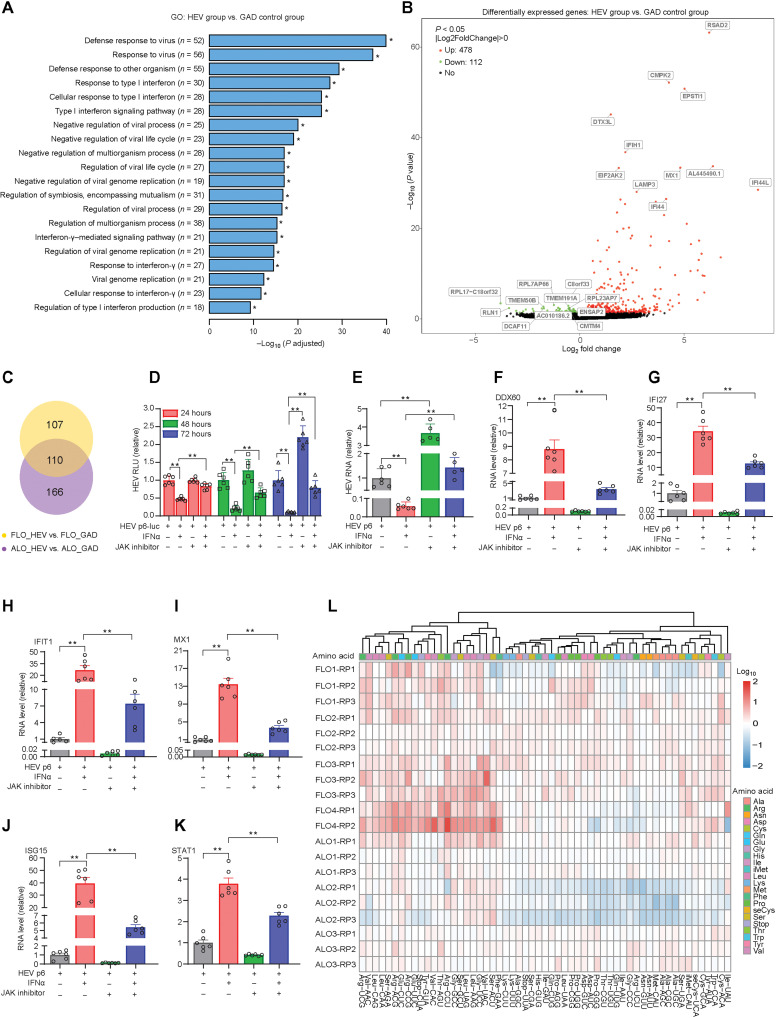
Fig. 6.. Genome-wide transcriptomic analysis in liver-derived organoids upon HEV replication.
(A) Top 20 significantly enriched pathways by gene ontology (GO) analysis in ICOs. (B) Differential gene expression analysis in ICOs. (C) Venn diagram of overlapped differentially expressed genes in fetal ICOs compared to adult ICOs. (D) Treatment of IFNα and JAK inhibitor in organoids with p6Luc HEV replicon model (FLO1, n = 6). (E) Treatment of IFNα and JAK inhibitor in organoids harboring p6 HEV infectious model (n = 5 to 6). (F to K) Expression of ISGs in organoids by IFNα or JAK inhibitor treatment (FLO1, n = 5 to 6). (L) Cluster analysis of the tRNAome profiles upon HEV replication in organoids. Results are normalized with value from organoids electroporated with HEV RNA of the GAD mutation. Data are presented as means ± SD, *P < 0.05 and **P < 0.01.
Fig. 7.
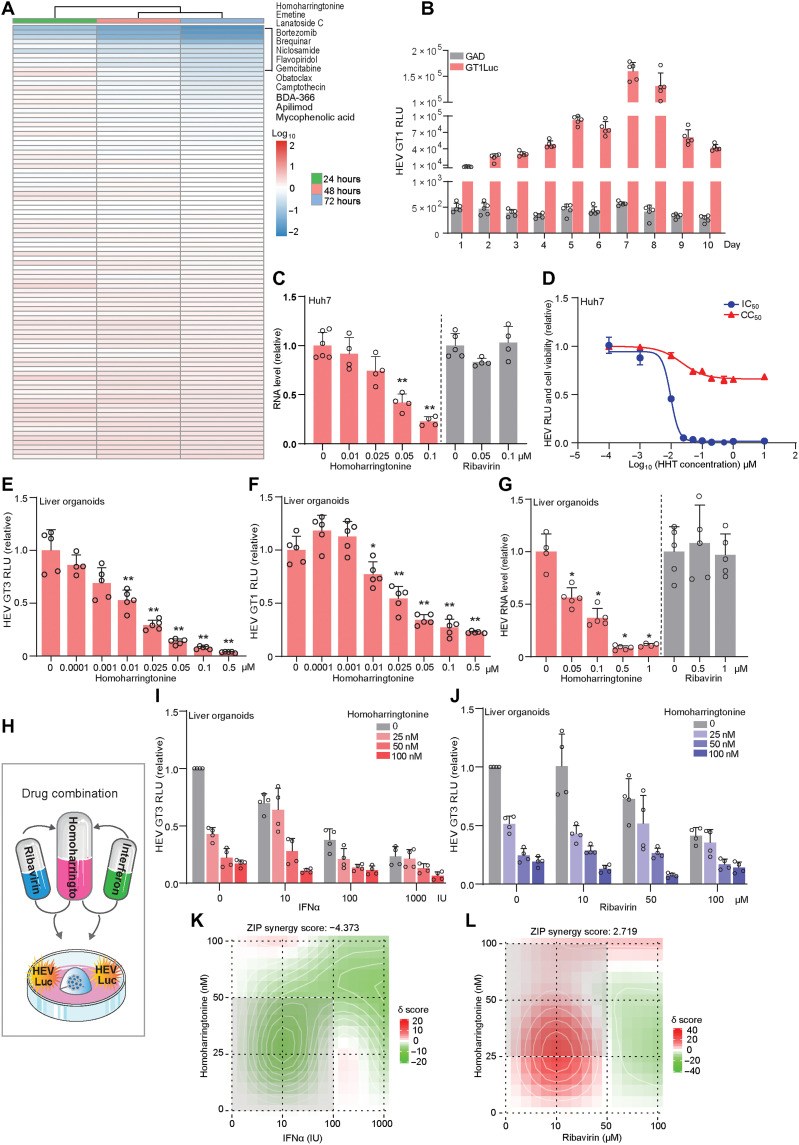
Fig. 7.. Antiviral drug discovery in liver-derived organoids harboring HEV.
(A) Screening a library of 94 antiviral agents in GT3 p6Luc organoids (ICOs). (B) HEV GT1 luciferase activity in organoids harboring GT1Luc replicon (FLO3, n = 5). (C) The inhibitory effect of homoharringtonine (HHT) and ribavirin in p6 Huh7 cells (n = 4 to 6). (D) IC50 and CC50 of homoharringtonine in p6Luc Huh7 cells (n = 5 to 6). (E) The inhibitory effect of homoharringtonine in p6Luc organoids (FLO1, n = 5). (F) The inhibitory effect of homoharringtonine in GT1Luc organoids (FLO1, n = 4 to 5). (G) The inhibitory effect of homoharingtonine and ribavirin in p6 organoids (FLO1, n = 4 to 5). (H) Schematic representation of drug combination treatment on organoids harboring p6Luc model. (I) The antiviral effects of homoharringtonine in combination with IFNα (FLO1, n = 4). (J) The antiviral effects of homoharringtonine in combination with ribavirin (FLO1, n = 4). (K) Synergy distribution of pairwise combination of IFNα and homoharringtonine (n = 4). (L) Synergy distribution of pairwise combination of ribavirin and homoharringtonine (n = 4). ZIP, zero interaction potency. Data are presented as means ± SD, *P < 0.05 and **P < 0.01.
Fig. 8.
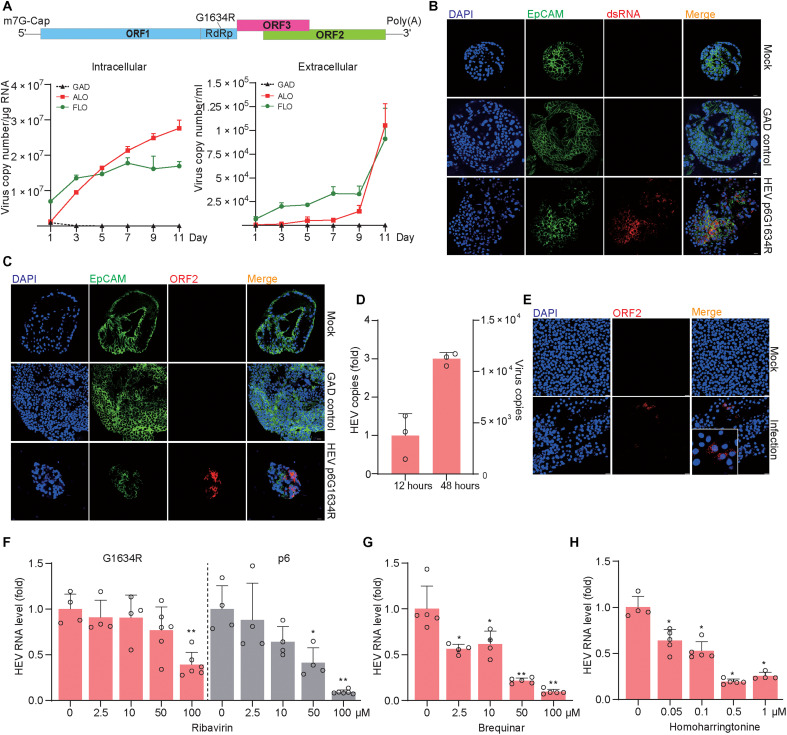
Fig. 8.. Modeling infection of the p6G1634R HEV variant and testing antiviral drugs in liver-derived organoids.
(A) Replication (intracellular) and production (extracellular) of the HEV variant in fetal (FLO3) and adult (ALO2) ICOs. (B) Immunofluorescence staining of virus dsRNA in organoids electroporated with p6G1634R. (C) Immunofluorescence staining of HEV ORF2 protein in organoids electroporated with p6G1634R. (D) Quantification of viral RNA in HepG2 cells inoculated with extracellular HEV from organoid supernatant (n = 3). (E) Immunofluorescence staining of HEV ORF2 in Huh7 cells at 48 hours after inoculation. (F) The inhibitory effect of ribavirin in p6G1634R organoids or p6 organoids (FLO1, n = 4 to 6). (G) The inhibitory effect of brequinar in p6G1634R organoids (FLO1, n = 4 to 5). (H) The inhibitory effect of homoharringtonine in p6G1634R organoids (FLO1, n = 4 to 5). Data are presented as means ± SD, *P < 0.05 and **P < 0.01.

References

    1. Li P., Liu J., Li Y., Su J., Ma Z., Bramer W. M., Cao W., de Man R. A., Peppelenbosch M. P., Pan Q., The global epidemiology of hepatitis E virus infection: A systematic review and meta-analysis. Liver Int. 40, 1516–1528 (2020). - PMC - PubMed
    1. Wang Y., Metselaar H. J., Peppelenbosch M. P., Pan Q., Chronic hepatitis E in solid-organ transplantation: The key implications of immunosuppressants. Curr. Opin. Infect. Dis. 27, 303–308 (2014). - PubMed
    1. Hakim M. S., Wang W., Bramer W. M., Geng J., Huang F., de Man R. A., Peppelenbosch M. P., Pan Q., The global burden of hepatitis E outbreaks: A systematic review. Liver Int. 37, 19–31 (2017). - PubMed
    1. Khuroo M. S., Khuroo M. S., Khuroo N. S., Hepatitis E: Discovery, global impact, control and cure. World J. Gastroenterol. 22, 7030–7045 (2016). - PMC - PubMed
    1. Ma X. X., Ji Y., Jin L., Baloch Z., Zhang D. R., Wang Y., Pan Q., Ma Z., Prevalence and clinical features of hepatitis E virus infection in pregnant women: A large cohort study in Inner Mongolia, China. Clin. Res. Hepatol. Gastroenterol. 45, 101536 (2020). - PubMed

Publication types

Substances