


Microglia Activate Early Antiviral Responses upon Herpes Simplex Virus 1 Entry into the Brain to Counteract Development of Encephalitis-Like Disease in Mice
- PMID: 35045263
- PMCID: PMC8941881
- DOI: 10.1128/JVI.01311-21
Microglia Activate Early Antiviral Responses upon Herpes Simplex Virus 1 Entry into the Brain to Counteract Development of Encephalitis-Like Disease in Mice
Abstract
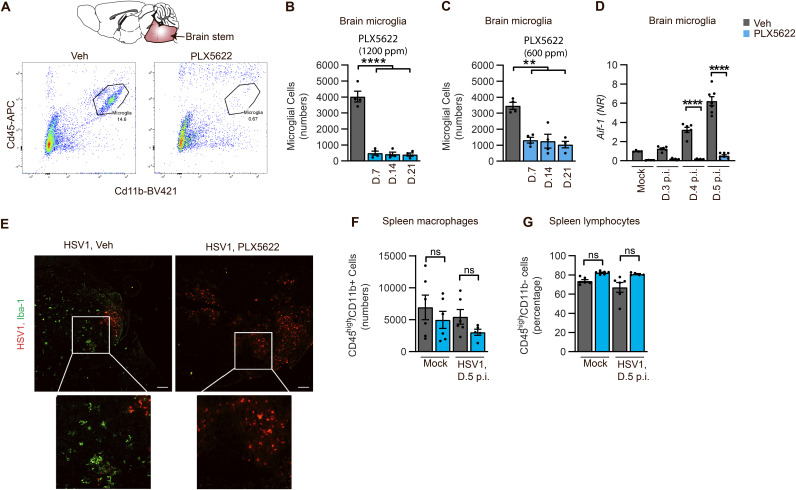
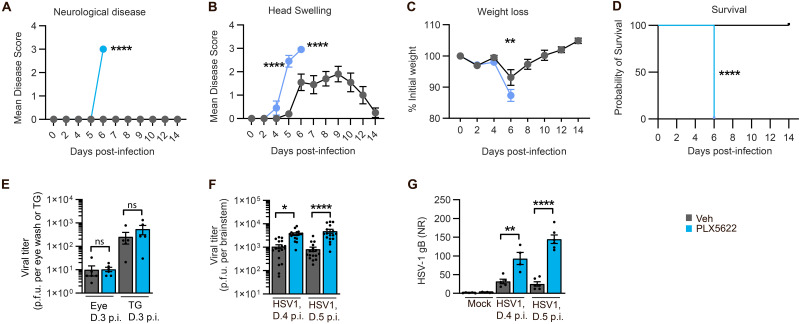
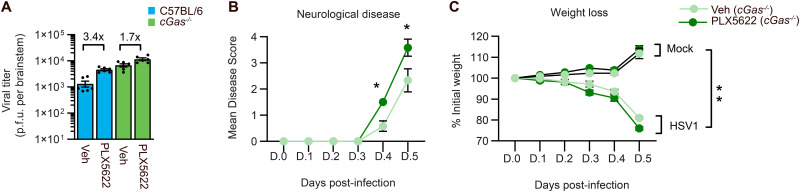
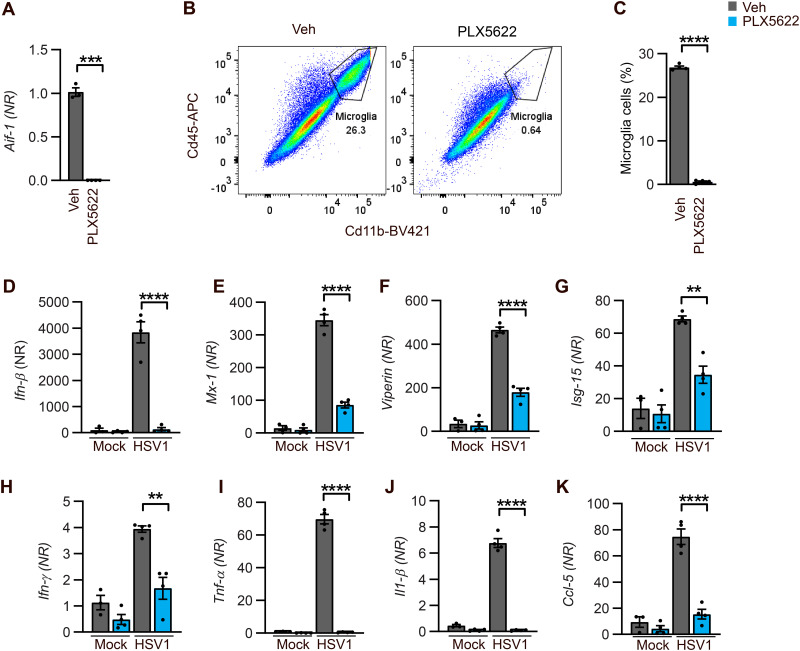
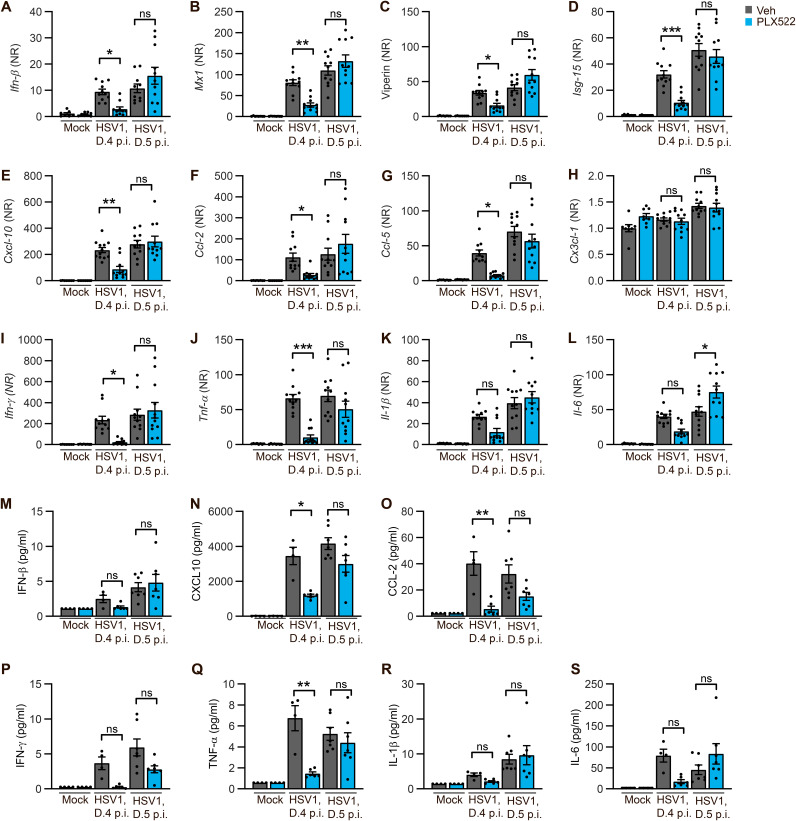
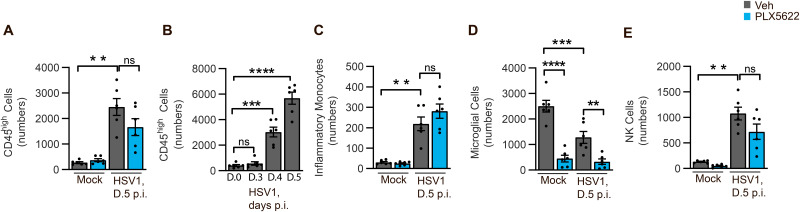
Spread of herpes simplex virus 1 (HSV1) from the periphery to the central nervous system (CNS) can lead to extensive infection and pathological inflammation in the brain, causing herpes simplex encephalitis (HSE). It has been shown that microglia, the CNS-resident macrophages, are involved in early sensing of HSV1 and induction of antiviral responses. In addition, infiltration of peripheral immune cells may contribute to the control of viral infection. In this study, we tested the effect of microglia depletion in a mouse model of HSE. Increased viral titers and increased disease severity were observed in microglia-depleted mice. The effect of microglia depletion was more pronounced in wild-type than in cGas-/- mice, revealing that this immune sensor contributes to the antiviral activity of microglia. Importantly, microglia depletion led to reduced production of type I interferon (IFN), proinflammatory cytokines, and chemokines at early time points after viral entry into the CNS. In line with this, in vitro experiments on murine primary CNS cells demonstrated microglial presence to be essential for IFN RNA induction, and control of HSV1 replication. However, the effect of microglia depletion on the expression of IFNs, and inflammatory cytokines was restricted to the early time point of HSV1 entry into the CNS. There was no major alteration of infiltration of CD45-positive cells in microglia-depleted mice. Collectively, our data demonstrate a key role for microglia in controlling HSV1 replication early after viral entry into the CNS and highlight the importance of a prompt antiviral innate response to reduce the risk of HSE development. IMPORTANCE One of the most devastating and acute neurological conditions is encephalitis, i.e., inflammation of brain tissue. Herpes simplex virus 1 (HSV1) is a highly prevalent pathogen in humans, and the most frequent cause of viral sporadic encephalitis called herpes simplex encephalitis (HSE). HSV1 can infect peripheral neurons and reach the central nervous system (CNS) of humans, where it can be detected by brain resident cells and infiltrating immune cells, leading to protective and damaging immune responses. In this study, we investigated the effects of microglia depletion, the main brain-resident immune cell type. For this purpose, we used a mouse model of HSE. We found that viral levels increased, and disease symptoms worsened in microglia-depleted mice. In addition, mice lacking a major sensor of viral DNA, cGAS, manifested a more pronounced disease than wild-type mice, highlighting the importance of this immune sensor in the activity of microglia. Microglia depletion led to reduced production of many known antiviral factors, most notably type I interferon (IFN). The importance of microglia in the early control of HSV1 spread and the generation of antiviral responses is further demonstrated by experiments on murine mixed glial cell cultures. Interestingly, mice with microglia depletion exhibited an unaltered activation of antiviral responses and recruitment of immune cells from the periphery at later time points of infection, but this did not prevent the development of the disease. Overall, the data highlight the importance of rapid activation of the host defense, with microglia playing a critical role in controlling HSV1 infection, which eventually prevents damage to neurons and brain tissue.
Keywords: DNA sensor; PLX5622; cGAS; central nervous system infections; herpes simplex virus; innate immunity; interferon; microglia.
Conflict of interest statement
The authors declare no conflict of interest.
Figures
References
-
- Murray PR, Rosenthal KS, Pfaller MA. 2016. Medical Microbiology 8th Edition Elsevier.
-
- Granerod J, Ambrose HE, Davies NWS, Clewley JP, Walsh AL, Morgan D, Cunningham R, Zuckerman M, Mutton KJ, Solomon T, Ward KN, Lunn MPT, Irani SR, Vincent A, Brown DWG, Crowcroft NS, UK Health Protection Agency (HPA) Aetiology of Encephalitis Study Group. 2010. Causes of encephalitis and differences in their clinical presentations in England: a multicentre, population-based prospective study. Lancet Infect Dis 10:835–844. 10.1016/S1473-3099(10)70222-X. - DOI - PubMed
Publication types
MeSH terms
Substances
LinkOut - more resources
Full Text Sources
Research Materials
Miscellaneous
