


The Nuanced Metabolic Functions of Endogenous FGF21 Depend on the Nature of the Stimulus, Tissue Source, and Experimental Model
- PMID: 35046901
- PMCID: PMC8761941
- DOI: 10.3389/fendo.2021.802541
The Nuanced Metabolic Functions of Endogenous FGF21 Depend on the Nature of the Stimulus, Tissue Source, and Experimental Model
Abstract
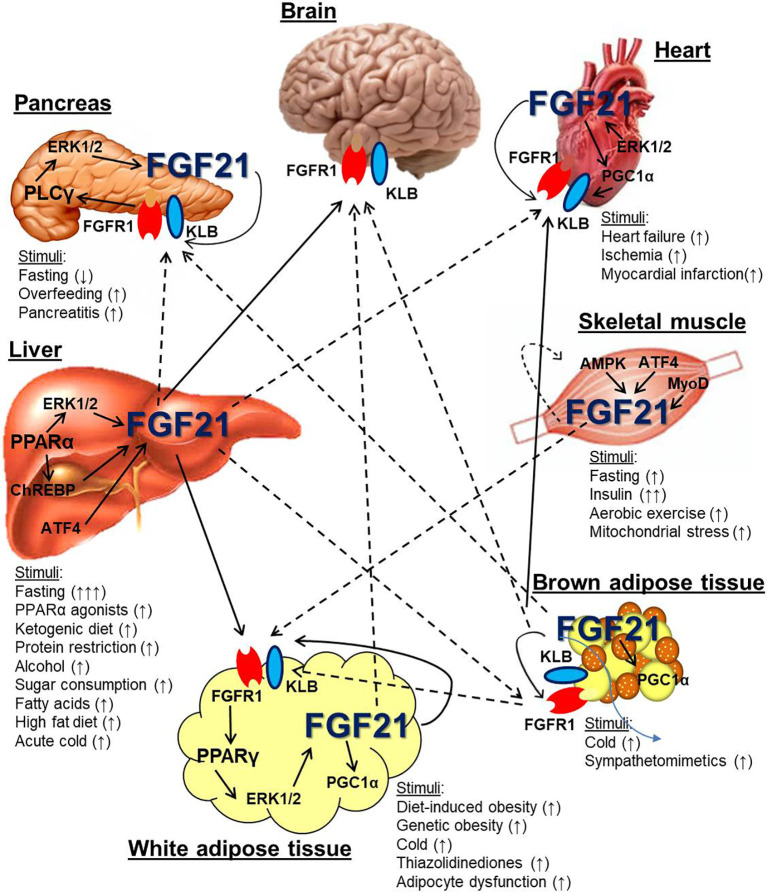
Fibroblast growth factor 21 (FGF21) is a hormone that is involved in the regulation of lipid, glucose, and energy metabolism. Pharmacological FGF21 administration promotes weight loss and improves insulin sensitivity in rodents, non-human primates, and humans. However, pharmacologic effects of FGF21 likely differ from its physiological effects. Endogenous FGF21 is produced by many cell types, including hepatocytes, white and brown adipocytes, skeletal and cardiac myocytes, and pancreatic beta cells, and acts on a diverse array of effector tissues such as the brain, white and brown adipose tissue, heart, and skeletal muscle. Different receptor expression patterns dictate FGF21 function in these target tissues, with the primary effect to coordinate responses to nutritional stress. Moreover, different nutritional stimuli tend to promote FGF21 expression from different tissues; i.e., fasting induces hepatic-derived FGF21, while feeding promotes white adipocyte-derived FGF21. Target tissue effects of FGF21 also depend on its capacity to enter the systemic circulation, which varies widely from known FGF21 tissue sources in response to various stimuli. Due to its association with obesity and non-alcoholic fatty liver disease, the metabolic effects of endogenously produced FGF21 during the pathogenesis of these conditions are not well known. In this review, we will highlight what is known about endogenous tissue-specific FGF21 expression and organ cross-talk that dictate its diverse physiological functions, with particular attention given to FGF21 responses to nutritional stress. The importance of the particular experimental design, cellular and animal models, and nutritional status in deciphering the diverse metabolic functions of endogenous FGF21 cannot be overstated.
Keywords: adipose tissue; brain; cold exposure; fasting; liver; obesity; protein restriction.
Copyright © 2022 Spann, Morrison and den Hartigh.
Conflict of interest statement
The authors declare that the research was conducted in the absence of any commercial or financial relationships that could be construed as a potential conflict of interest.
Figures
References
Publication types
MeSH terms
Substances
Grants and funding
LinkOut - more resources
Full Text Sources
