Review
. 2022 Jan;3(1):e54-e66.
doi: 10.1016/s2666-7568(21)00280-4. Epub 2022 Jan 5.

Personalising therapy for early-stage oestrogen receptor-positive breast cancer in older women

Affiliations
Review

Personalising therapy for early-stage oestrogen receptor-positive breast cancer in older women

Neil Carleton et al. Lancet Healthy Longev. 2022 Jan.

Abstract

Age is one of the most important risk factors for the development of breast cancer. Nearly a third of all breast cancer cases occur in older women (aged ≥70 years), with most cases being oestrogen receptor-positive (ER+). Such tumours are often indolent and unlikely to be the ultimate cause of death for older women, particularly when considering other comorbidities. This Review focuses on unique clinical considerations for screening, detection, and treatment regimens for older women who develop ER+ breast cancers-specifically, we focus on recent trends for de-implementation of screening, staging, surgery, and adjuvant therapies along the continuum of care. Additionally, we also review emerging basic and translational research that will further uncover the unique underlying biology of these tumours, which develop in the context of systemic age-related inflammation and changing hormone profiles. With prevailing trends of clinical de-implementation, new insights into mechanistic biology might provide an opportunity for precision medicine approaches to treat patients with well tolerated, low-toxicity agents to extend patients' lives with a higher quality of life, prevent tumour recurrences, and reduce cancer-related burdens.


Figures
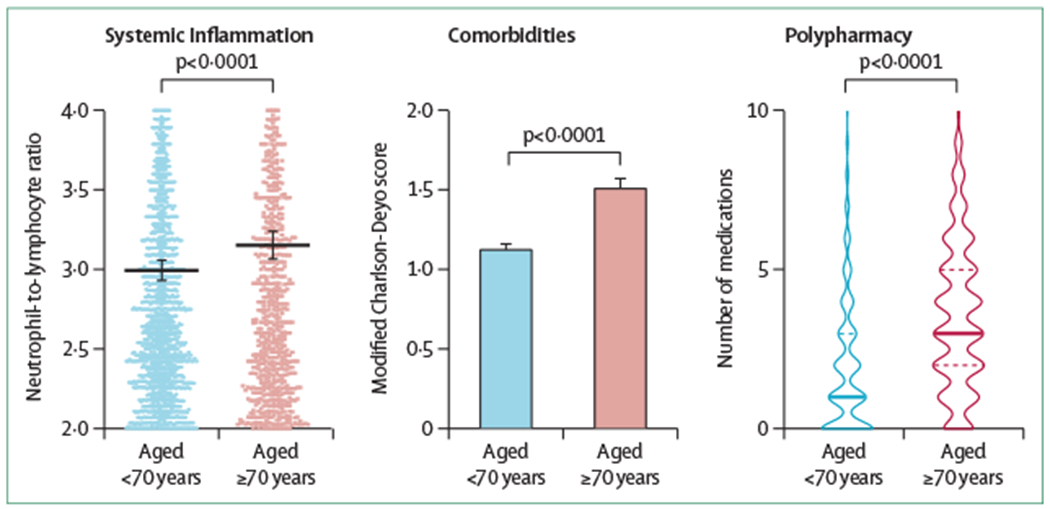
Figure 1:
Figure 1:. Challenges with treating older patients with ER+ breast cancer
(A) One measure of age-related systemic inflammation is the neutrophil-to-lymphocyte ratio, which is measured routinely during blood analysis at check-ups and which increases with age. This age-related systemic inflammation is also seen in patients with breast cancer, for whom the neutrophil-to-lymphocyte ratio also increases with age. p<0·0001 when comparing patients younger than 70 years diagnosed with ER+ breast cancer (n=2701) and patients aged 70 years or older diagnosed with ER+ breast cancer (n=1182). (B) Older patients with ER+ breast cancer have more comorbidities than their younger counterparts as measured by the mean modified Charlson-Deyo score. p<0·0001 when comparing patients younger than 70 years diagnosed with ER+ breast cancer (n=3426) and patients aged 70 years or older diagnosed with ER+ breast cancer (n=1652). (C) Older patients with cancer are often prescribed multiple medications that might complicate or interact with treatments for their primary cancer. p<0.0001 when comparing patients younger than 70 years diagnosed with ER+ breast cancer (n=3426) and patients aged 70 years or older diagnosed with ER+ breast cancer (n=1652). Data shown in this figure are derived from the University of Pittsburgh Medical Center electronic medical record and cancer registry. For additional details, see the methods in Carleton et al. ER=oestrogen receptor.
Figure 2:
Figure 2:. The need for comprehensive geriatric assessment
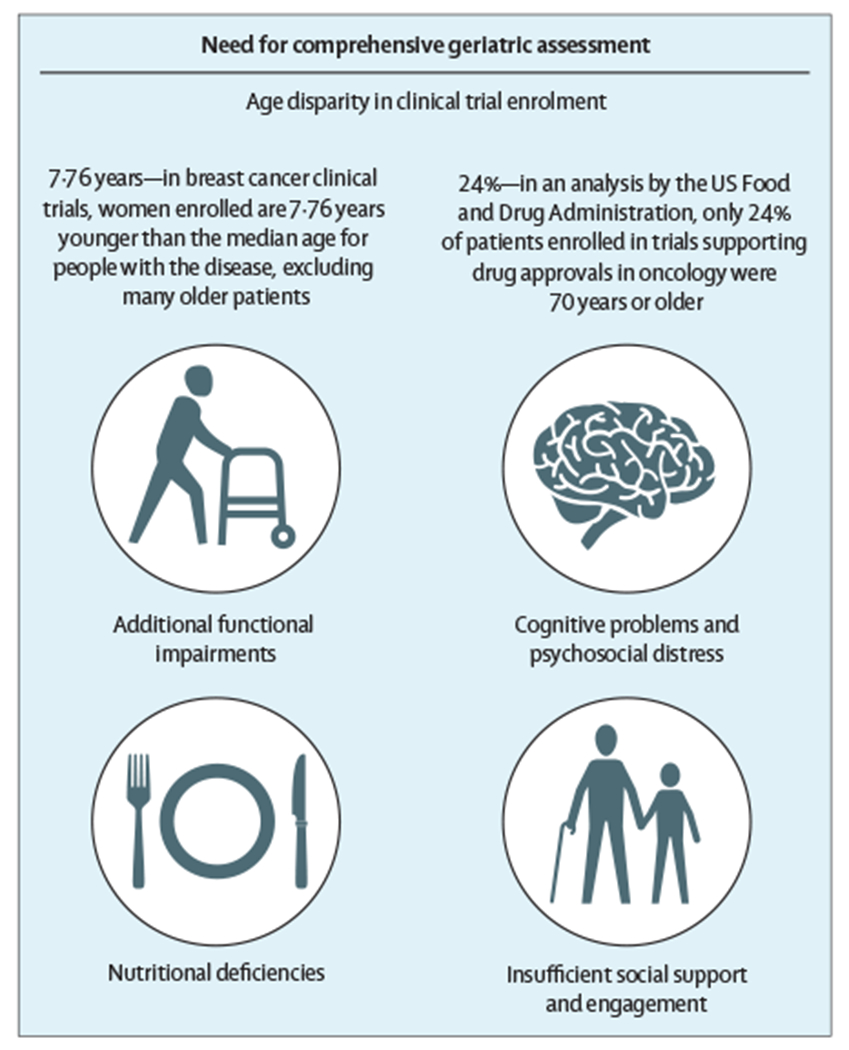
Although comorbidities and polypharmacy can be challenges, older women are also typically excluded from clinical trials. Thus, all women older than 70 years of age diagnosed with breast cancer should receive a comprehensive geriatric assessment, which might reveal additional insights that could influence therapeutic decision making. These can include additional functional impairments, cognitive or psychosocial distress, nutritional deficiencies, and a lack of social support or engagement.
Figure 3:
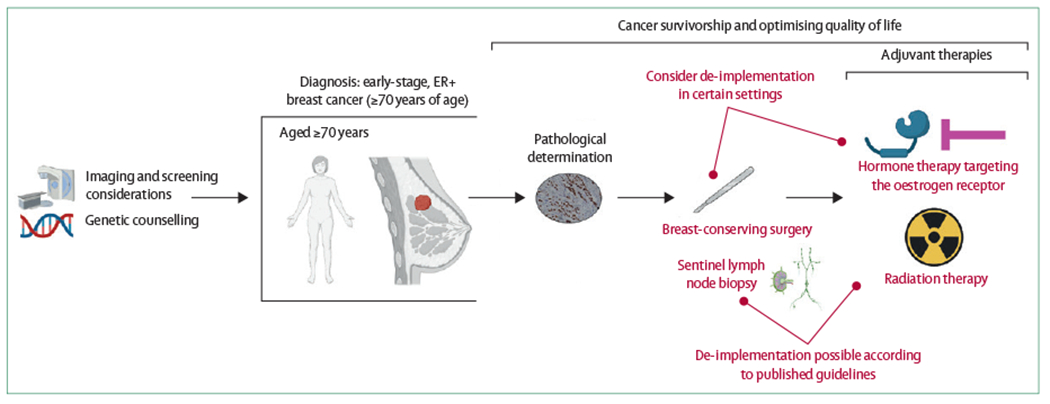
Figure 3:. Considerations for treating older patients along a continuum of care
Options for de-implementation might occur at multiple times along the spectrum of care. Guidelines recommending against routine use of sentinel lymph node biopsy and radiation therapy are well established. Emerging evidence to omit upfront surgery and adjuvant endocrine therapy could also be options depending on a clinician’s assessment of the patient and the patient’s preferences. ER=oestrogen receptor.
Figure 4:
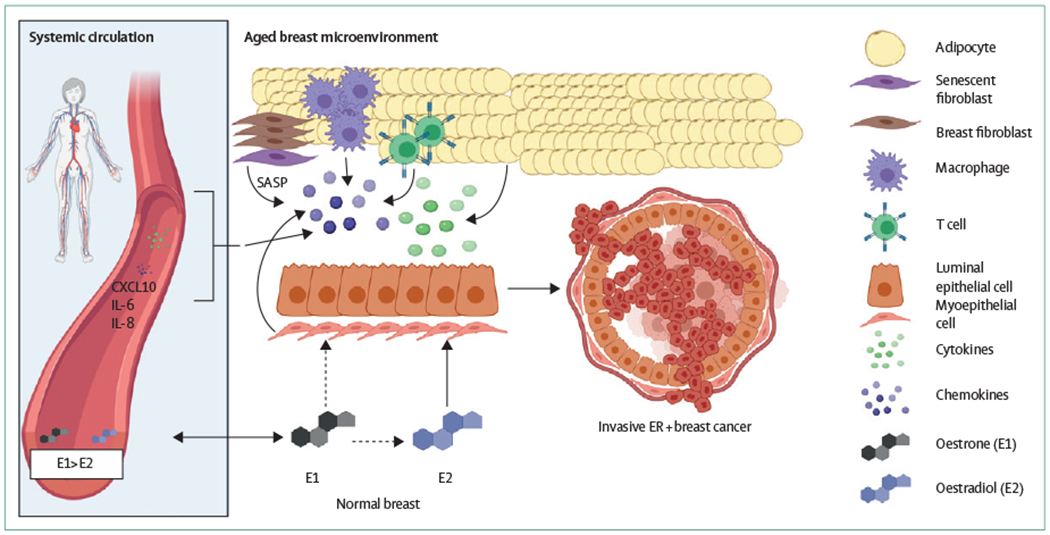
Figure 4:. A systems biology view of the aged breast microenvironment
In the aged breast microenvironment, multiple cell types might contribute to the development of ER+ breast cancer. Fibroblasts might secrete pro-inflammatory, senescence-associated molecules; adipocytes might also take on a senescent phenotype; the adaptive immune system has a decreased responsiveness, and the myoepithelial cells might also secrete pro-inflammatory molecules. In turn, changes to the local oestrogen disposition might compound the age-associated inflammatory environment, leading to breast tumorigenesis. It is unclear whether or not systemic circulatory levels of inflammation and oestrogens are reflective of local changes. Dashed arrows show speculative links. CXCL10=C-X-C motif chemokine 10. ER=oestrogen receptor. IL=interleukin. SASP=senescence-associated secretory phenotype.

References

    1. DeSantis CE, Ma J, Gaudet MM, et al. Breast cancer statistics, 2019. CA Cancer J Clin 2019; 69: 438–51. - PubMed
    1. Smith BD, Smith GL, Hurria A, Hortobagyi GN, Buchholz TA. Future of cancer incidence in the United States: burdens upon an aging, changing nation. J Clin Oncol 2009; 27: 2758–65. - PubMed
    1. Stapleton SM, Oseni TO, Bababekov YJ, Hung YC, Chang DC. Race/ethnicity and age distribution of breast cancer diagnosis in the United States. JAMA Surg 2018; 153: 59–95. - PMC - PubMed
    1. Anderson WF, Jatoi I, Devesa SS. Distinct breast cancer incidence and prognostic patterns in the NCI’s SEER program: suggesting a possible link between etiology and outcome. Breast Cancer Res Treat 2005; 90: 127–37. - PubMed
    1. Benz CC. Impact of aging on the biology of breast cancer. Crit Rev Oncol Hematol 2008; 66: 65–74. - PMC - PubMed

Publication types

Substances