


Multistate outbreak of Salmonella Typhimurium linked to pet hedgehogs, United States, 2018-2019
- PMID: 35048538
- PMCID: PMC11325814
- DOI: 10.1111/zph.12904
Multistate outbreak of Salmonella Typhimurium linked to pet hedgehogs, United States, 2018-2019
Abstract
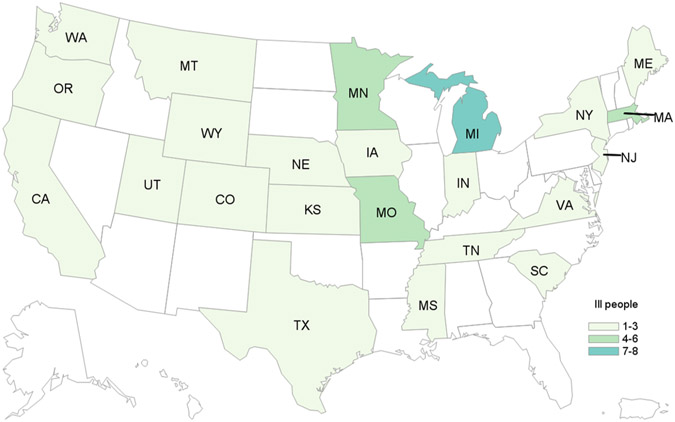
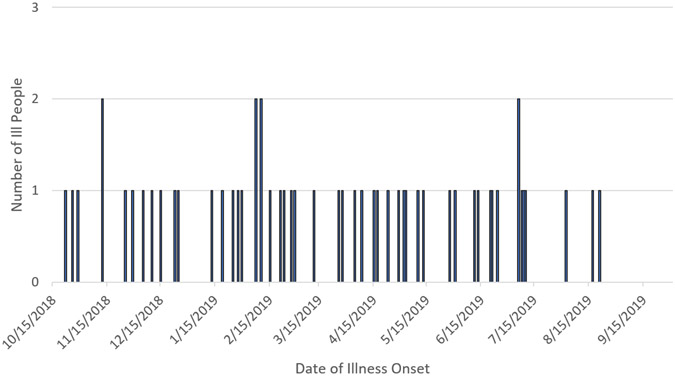
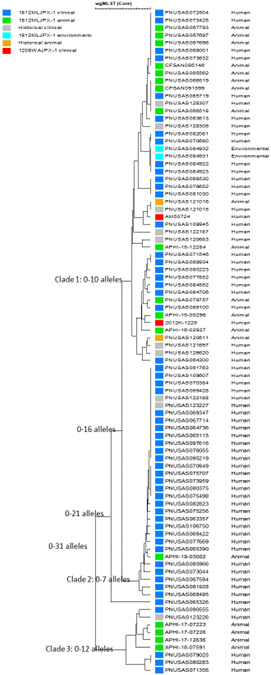
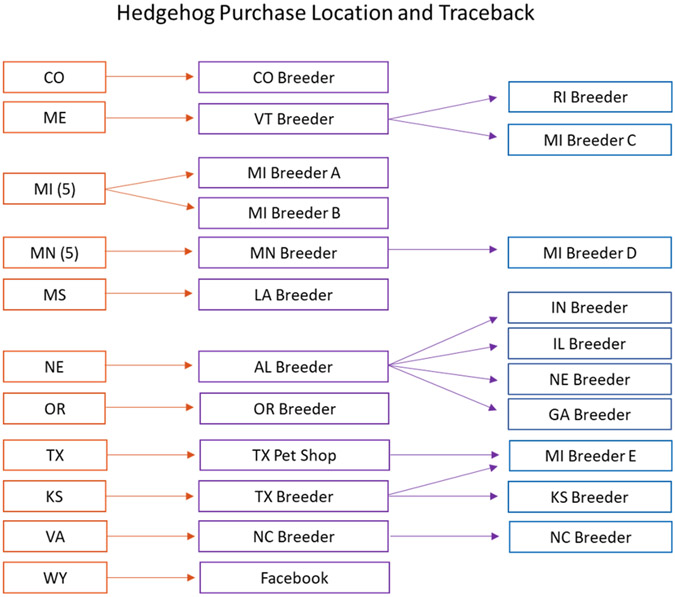
In December 2018, PulseNet, the national laboratory network for enteric disease surveillance, identified an increase in Salmonella Typhimurium isolates with an uncommon pulsed-field gel electrophoresis pattern which was previously isolated from hedgehogs. CDC, state, and local health partners interviewed patients with a questionnaire that focused on hedgehog exposures, conducted traceback of patients' hedgehog purchases, and collected hedgehog faecal pellets and environmental samples. Isolates in this outbreak were analysed using core-genome multi-locus sequence typing (cgMLST) and compared to sequence data from historic clinical isolates from a 2011-2013 outbreak of Salmonella Typhimurium illnesses linked to pet hedgehogs. Fifty-four illnesses in 23 states were identified between October 2018 and September 2019. Patients ranged from <1 to 95 years, and 65% were female. Eight patients were hospitalized. Eighty-one per cent (29/36) of patients interviewed reported contact with a hedgehog before becoming ill; of these, 21 (72%) reported owning a hedgehog. Analysis of 53 clinical, 11 hedgehog, and two hedgehog bedding isolates from this outbreak, seven hedgehog isolates obtained prior to this outbreak, and two clinical isolates from the 2011-2013 outbreak fell into three distinct groupings (37 isolates in Clade 1 [0-10 alleles], 28 isolates in Clade 2 [0-7 alleles], and eight isolates in Clade 3 [0-12 alleles]) and were collectively related within 0-31 alleles by cgMLST. Purchase information available from 20 patients showed hedgehogs were purchased from multiple breeders across nine states, a pet store, and through an online social media website; a single source of hedgehogs was not identified. This outbreak highlights the ability of genetic sequencing analysis to link historic and ongoing Salmonella illness outbreaks and demonstrates the strain of Salmonella linked to hedgehogs might continue to be a health risk to hedgehog owners unless measures are taken to prevent transmission.
Keywords: Salmonella; hedgehogs; outbreak.
© 2022 Published 2022. This article is a U.S. Government work and is in the public domain in the USA.
Figures
References
-
- CDC. (2013). Advice to Pet Owners. Retrieved from https://www.cdc.gov/Salmonella/typhimurium-hedgehogs-09-12/advice-consum...
-
- CDC. (2018). Stay Healthy Around Small Pets. Retrieved from https://www.cdc.gov/healthypets/publications/stay-healthy-around-small-p...
Publication types
MeSH terms
Grants and funding
LinkOut - more resources
Full Text Sources
