Review
. 2022 Jan 11;11(2):186.
doi: 10.3390/plants11020186.

Role of Phaseolus vulgaris L. in the Prevention of Cardiovascular Diseases-Cardioprotective Potential of Bioactive Compounds

Affiliations
Review

Role of Phaseolus vulgaris L. in the Prevention of Cardiovascular Diseases-Cardioprotective Potential of Bioactive Compounds

Lyanne Rodríguez et al. Plants (Basel). .

Abstract

In terms of safe and healthy food, beans play a relevant role. This crop belongs to the species of Phaseolusvulgaris L., being the most consumed legume worldwide, both for poor and developed countries, the latter seek to direct their diet to healthy feeding, mainly low in fat. Phaseolus vulgaris L. stands out in this area-an important source of protein, vitamins, essential minerals, soluble fiber, starch, phytochemicals, and low in fat from foods. This species has been attributed many beneficial properties for health; it has effects on the circulatory system, immune system, digestive system, among others. It has been suggested that Phaseolus vulgaris L. has a relevant role in the prevention of cardiovascular events, the main cause of mortality and morbidity worldwide. Conversely, the decrease in the consumption of this legume has been related to an increase in the prevalence of cardiovascular diseases. This review will allow us to relate the nutritional level of this species with cardiovascular events, based on the correlation of the main bioactive compounds and their role as cardiovascular protectors, in addition to revealing the main mechanisms that explain the cardioprotective effects regulated by the bioactive components.

Keywords: Phaseolus vulgaris L.; beans; bioactive compounds; cardioprotective; cardiovascular diseases.


Conflict of interest statement

The authors have no conflict of interest to disclose.

Figures
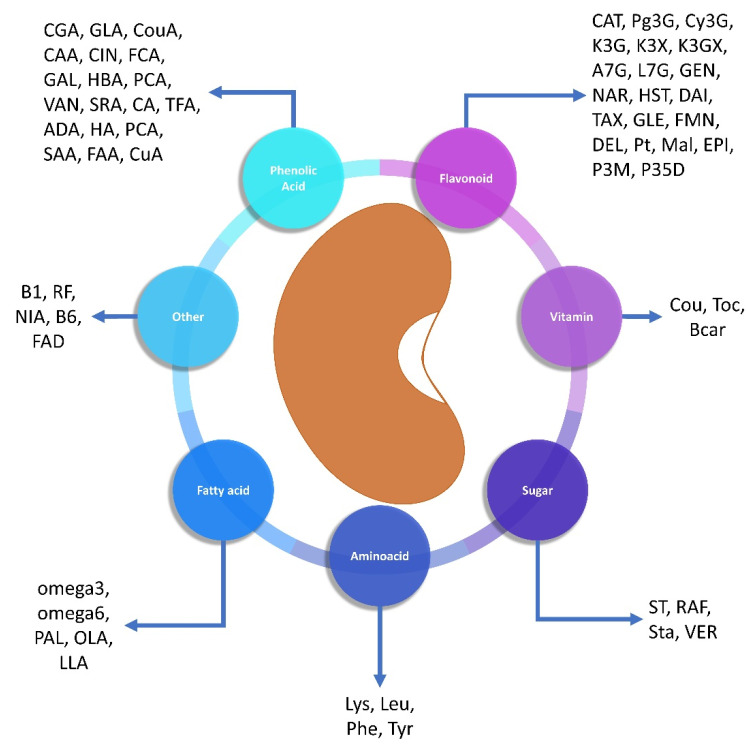
Figure 1
Figure 1
Compounds identified in Phaseolus vulgaris L. A7G: apigenin-7-glucoside [51], ADA: aldaric acid [51], B1: thiamine [33], B6: vitamin B6 [33], Bcar: β-carotene [52], CA: kaphtharic acid [53], CAA: caffeic acid [51], CAT: catechin [52], CGA: chlorogenic acid [54], CIN: cinnamic acid [51], Cou: coumetrol [51], CouA: coumaric acid [51], CuA: p-coumaryl aldaric acid [55], Cy3G: cyanidin-3-glucoside [52], DAI: daidzein [51], DEL: delphinidin [51], EPI: epicatechin [56], FAA: feruloyl aldaric acid [51], FAD: folic acid [33], FCA: ferulic acid [51], FMN: formononetin [51], GAL: gallic acid [51], GEN: genistein [51], GLA: syringic acid [54], GLE: glycitein [51], HA: synapic acid [51], HBA: hydroxybenzoic acid [51], HST: hesperetin [51], K3G: kaempferol-3-glucoside [57], K3GX: kaempferol 3-glucosylxilosido [57], K3X: kaempferol 3-xylosylglucoside [57], L7G: luteolin-7-glycoside [51], Leu: leucine [58], LLA: linolenic acid [26], Lys: lysine [58], Lys: lysine [58], Mal: malvidin [51], NAR: naringenin [51], NIA: niacin [33], OLA: oleic acid [59], omega-3: omega-3 [54], omega-3: omega-3 [54], omega-6: omega-6 [54], P35D: pelargonidin 3,5-diglycoside [51], P3M: pelargonium-3-(6″-malonyl)glucoside [51], PAL: Palmitic acid [59], PCA: Protocatechuic acid [51], PCA: Palmitic acid [56], Pg3G: Pelargonidin-3-glucoside [52], Phe: phenylalanine [58], Pt: petunidine [51], RAF: raffinose [60], RF: riboflavin [33], SAA: sinapil aldaric acid [55], SRA: syringic acid [51], ST: starch [54], Sta: Stachyose [60], TAX: taxifolin [51], TFA: transferulic acid [51], Toc: tocopherol [52], Tyr: tyrosine [58], VAN: vanilic acid [51], VER: verbascosa [60]. Source: created by the authors.
Figure 2
Figure 2
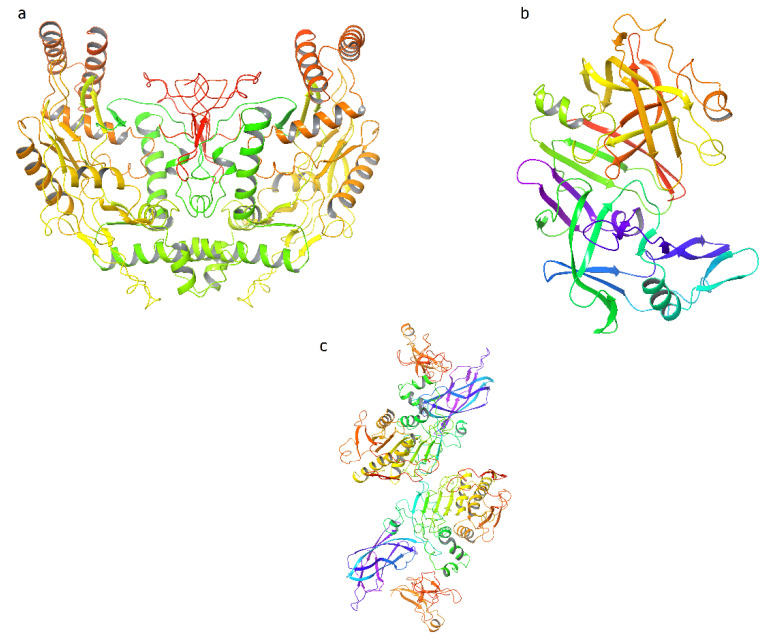
Targets studied about Phaseolus vulgaris. (a) NOS protein (PDB:ID 3NLE) [237]. (b) Porcine gastric mucosa (PDB code: 5PEP [240]. (c) Porcine pancreatic lipase (PDB code: 1 ETH) [241]. Source: adapted images according to PDB ID.
Figure 3
Figure 3
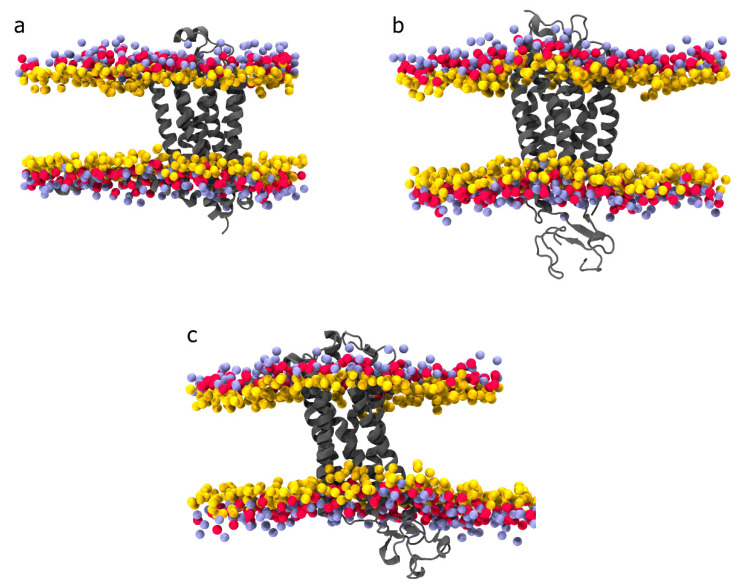
Therapeutic targets associated with CVD. (a) Adenosine A2A receptor (PDB ID: 2YDV) [242]. (b) P2Y1 receptor (PDB ID:4XNV) [243]. (c) Thromboxane receptor TxA2 (PDB ID: 6IIU) [244]. Source: all images were obtained from MemProtMD database according to the PDB ID [247].
Figure 4
Figure 4
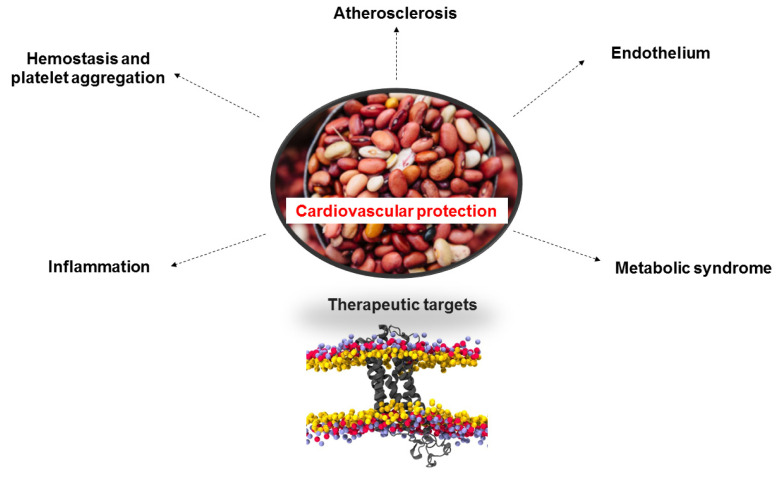
Cardioprotective Effects of Phaseolus vulgaris L. Source: created by the authors.

References

    1. Irfan M., Kwon T.-H., Lee D.-H., Hong S.-B., Oh J.-W., Kim S.-D., Rhee M.H. Antiplatelet and antithrombotic effects of Epimedium koreanum Nakai. Evid.-Based Complement. Altern. Med. 2021;2021:7071987. doi: 10.1155/2021/7071987. - DOI - PMC - PubMed
    1. Olas B. Dietary supplements with antiplatelet activity: A solution for everyone? Adv. Nutr. 2018;9:51–57. doi: 10.1093/advances/nmx014. - DOI - PMC - PubMed
    1. Jackson S.L., Yang E.C., Zhang Z. Income disparities and cardiovascular risk factors among adolescents. Pediatrics. 2018;142:e20181089. doi: 10.1542/peds.2018-1089. - DOI - PMC - PubMed
    1. Mensah G.A., Roth G.A., Fuster V. The global burden of cardiovascular diseases and risk factors: 2020 and beyond. J. Am. Coll. Cardiol. 2019;74:2529–2532. doi: 10.1016/j.jacc.2019.10.009. - DOI - PubMed
    1. Rosengren A., Hawken S., Ôunpuu S., Sliwa K., Zubaid M., Almahmeed W.A., Ngu Blackett K., Sitthi-Amorn C., Sato H., Yusuf S., et al. Association of psychosocial risk factors with risk of acute myocardial infarction in 11,119 cases and 13,648 controls from 52 countries (the INTERHEART study): Case-control study. Lancet. 2004;364:953–962. doi: 10.1016/S0140-6736(04)17019-0. - DOI - PubMed

LinkOut - more resources