


Additional Blue LED during Cultivation Induces Cold Tolerance in Tomato Fruit but Only to an Optimum
- PMID: 35053099
- PMCID: PMC8773245
- DOI: 10.3390/biology11010101
Additional Blue LED during Cultivation Induces Cold Tolerance in Tomato Fruit but Only to an Optimum
Abstract
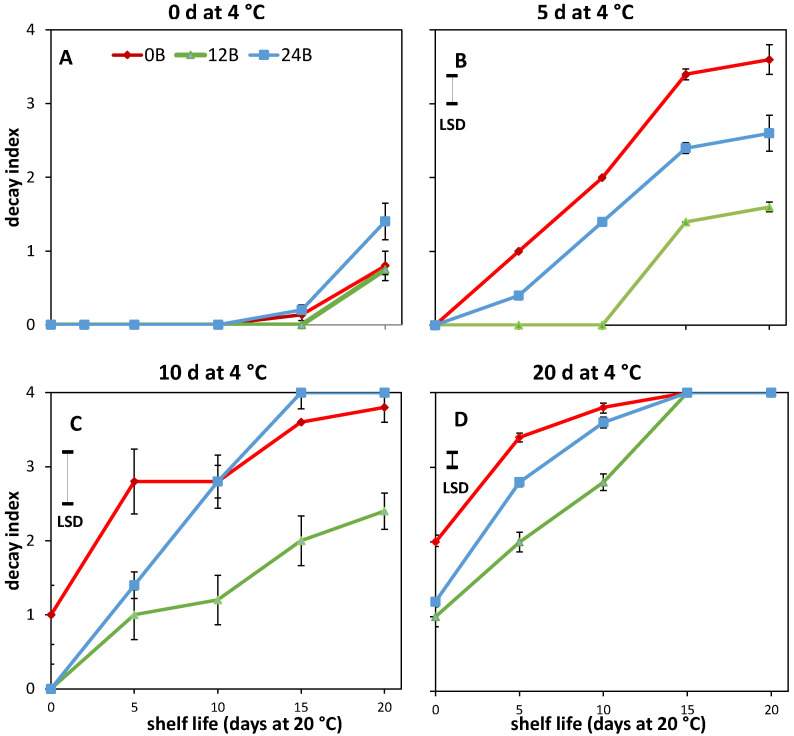
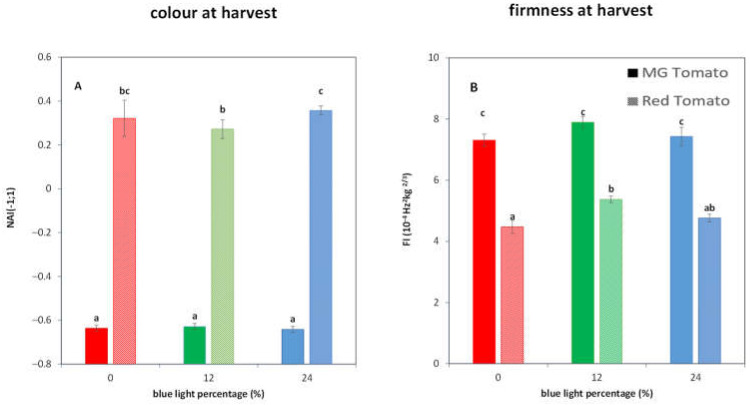
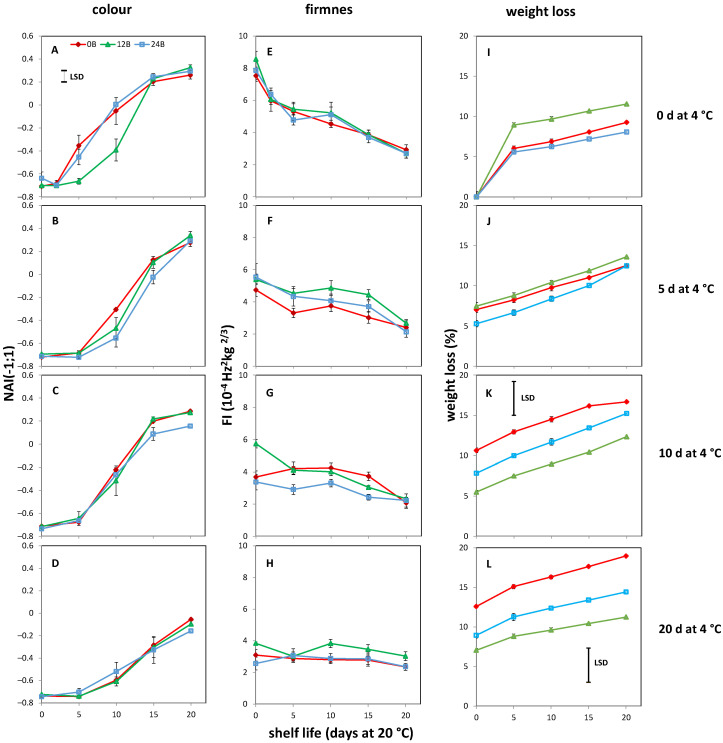
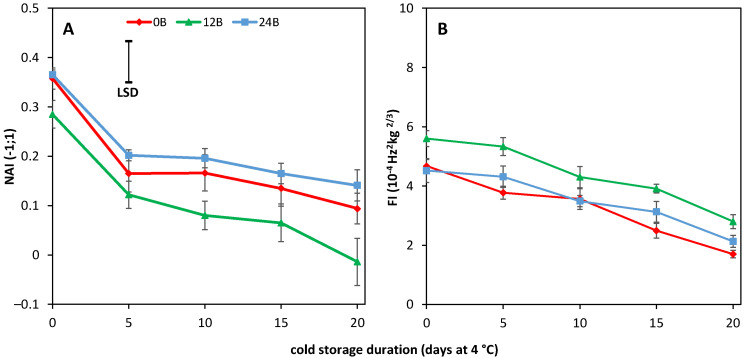
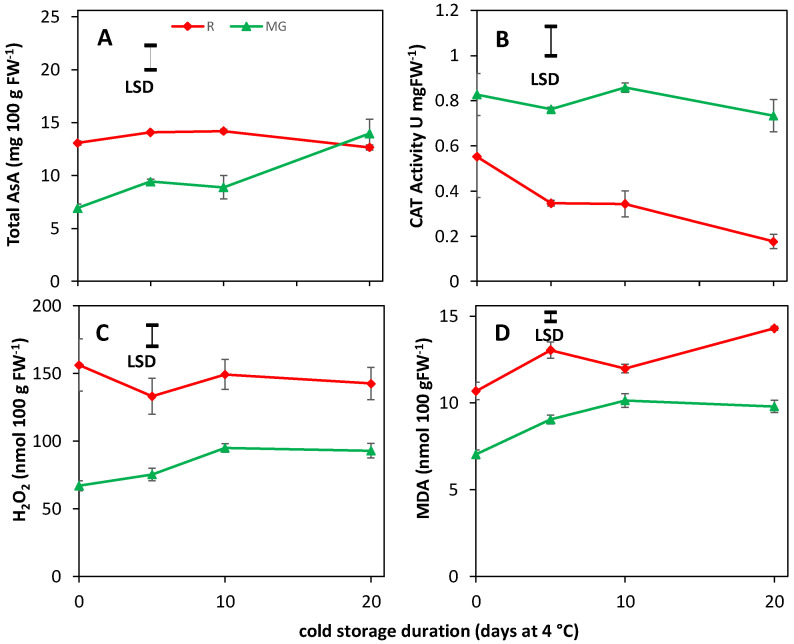
Tomato is a chilling-sensitive fruit. The aim of this study is to examine the role of preharvest blue LED lighting (BL) to induce cold tolerance in 'Foundation' tomatoes. Blue and red supplemental LED light was applied to achieve either 0, 12 or 24% additional BL (0B, 12B and 24B). Mature green (MG) or red (R) tomatoes were harvested and cold stored at 4 °C for 0, 5, 10, 15 and 20 d, and then stored for 20 d at 20 °C (shelf life). Chilling injury (CI) indices, color and firmness, hydrogen peroxide, malondialdehyde, ascorbic acid and catalase activity were characterized. At harvest, R tomatoes cultivated at 12B were firmer and showed less coloration compared to fruit of other treatments. These fruits also showed higher loss of red color during cold storage and lower CI symptoms during shelf-life. MG tomatoes cultivated at 12B showed delayed coloring (non-chilled) and decreased weight loss (long cold stored) during shelf life compared to fruit in the other treatments. No effects of light treatments, both for MG and R tomatoes, were observed for the selected antioxidant capacity indicators. Improved cold tolerance for R tomatoes cultivated at 12B points to lycopene having higher scavenging activity at lower concentrations to mitigate chilling injury.
Keywords: blue LED; chilling injury; lycopene; tomato fruit.
Conflict of interest statement
The authors declared no conflict of interest.
Figures
References
-
- Biswas P., East A.R., Brecht J.K., Hewett E.W., Heyes J.A. Intermittent warming during low temperature storage reduces tomato chilling injury. Postharvest Biol. Technol. 2012;74:71–78. doi: 10.1016/j.postharvbio.2012.07.002. - DOI
-
- Farneti B., Schouten R.E., Woltering E.J. Low temperature-induced lycopene degradation in red ripe tomato evaluated by remittance spectroscopy. Postharvest Biol. Technol. 2012;73:22–27. doi: 10.1016/j.postharvbio.2012.05.008. - DOI
-
- Sevillano L., Sanchez-Ballesta M.T., Romojaro F., Flores F.B. Physiological, hormonal and molecular mechanisms regulating chilling injury in horticultural species. Postharvest technologies applied to reduce its impact. J. Sci. Food Agric. 2009;89:555–573. doi: 10.1002/jsfa.3468. - DOI
Grants and funding
LinkOut - more resources
Full Text Sources
