Review
. 2022 Jan 10;23(2):725.
doi: 10.3390/ijms23020725.

Title IgA Nephropathy and Oral Bacterial Species Related to Dental Caries and Periodontitis

Affiliations
Review

Title IgA Nephropathy and Oral Bacterial Species Related to Dental Caries and Periodontitis

Yasuyuki Nagasawa et al. Int J Mol Sci. .

Abstract

A relationship between IgA nephropathy (IgAN) and bacterial infection has been suspected. As IgAN is a chronic disease, bacteria that could cause chronic infection in oral areas might be pathogenetic bacteria candidates. Oral bacterial species related to dental caries and periodontitis should be candidates because these bacteria are well known to be pathogenic in chronic dental disease. Recently, several reports have indicated that collagen-binding protein (cnm)-(+) Streptococcs mutans is relate to the incidence of IgAN and the progression of IgAN. Among periodontal bacteria, Treponema denticola, Porphyromonas gingivalis and Campylobacte rectus were found to be related to the incidence of IgAN. These bacteria can cause IgAN-like histological findings in animal models. While the connection between oral bacterial infection, such as infection with S. mutans and periodontal bacteria, and the incidence of IgAN remains unclear, these bacterial infections might cause aberrantly glycosylated IgA1 in nasopharynx-associated lymphoid tissue, which has been reported to cause IgA deposition in mesangial areas in glomeruli, probably through the alteration of microRNAs related to the expression of glycosylation enzymes. The roles of other factors related to the incidence and progression of IgA, such as genes and cigarette smoking, can also be explained from the perspective of the relationship between these factors and oral bacteria. This review summarizes the relationship between IgAN and oral bacteria, such as cnm-(+) S. mutans and periodontal bacteria.

Keywords: IgA nephropathy; Porphyromonas gingivalis; Streptococcus mutans; cnm; dental caries; infection; mouse; oral bacteria; periodontal bacteria; periodontitis; tonsil.


Conflict of interest statement

The authors declare no conflict of interest.

Figures
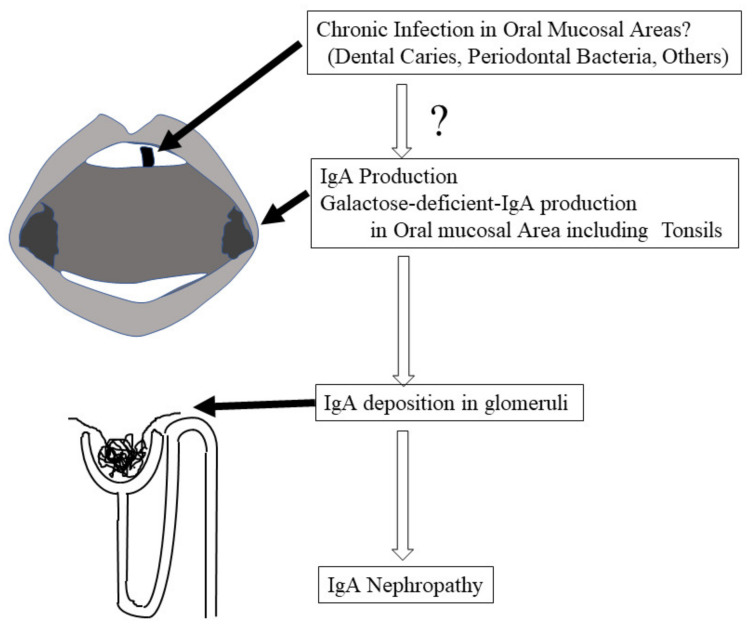
Figure 1
Figure 1
Cascade from oral infections to IgAN. IgA nephropathy was defined by the deposition of IgA in the mesangial area of the glomeruli. This IgA might be produced in oral area mucosa lymphoid tissues, including the tonsils, which are called NALT. The most suspicious stimulator of IgA production by NALT might be chronic oral area infections, such as bacteria related to dental caries and periodontal bacteria.
Figure 2
Figure 2
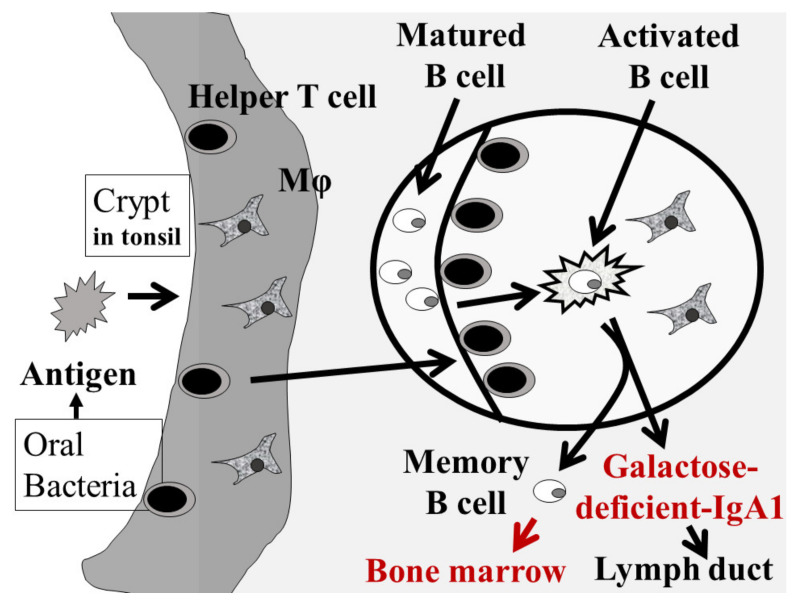
IgA1 production in the tonsils. In the crypt of the tonsils, macrophages/dendritic cells phagocytose antigens, such as oral bacteria, and present antigens to helper T cells. Activated helper T cells stimulate and activate mature B cells in the tonsillar germinal center to produce Gd-IgA1. The produced Gd-IgA1 flows into the systemic circulation via the lymphatic system. At that time, the activated B cells migrate into the body circulation and settle in the bone marrow.
Figure 3
Figure 3
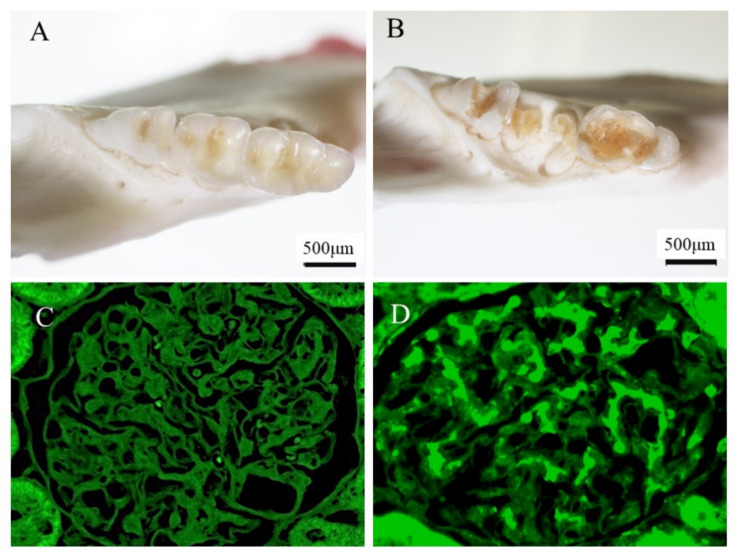
IgA nephropathy model rat induced by cnm(+)-S. mutans. In a mouse model, dental caries induced by cnm(+)-S. mutans could cause mesangial IgA deposition, which is an important feature of IgAN. Details of the methods and the characteristics of the model rats are described in a previous reference [100]. These figures were originally prepared for this review. (A) Control mouse teeth. (B) Dental caries in mice treated with cnm(+)-S. mutans. (C) There was no IgA deposition in the glomeruli of control mice. (D) IgA deposition in the glomeruli of mice treated with cnm(+)-S. mutans.
Figure 4
Figure 4
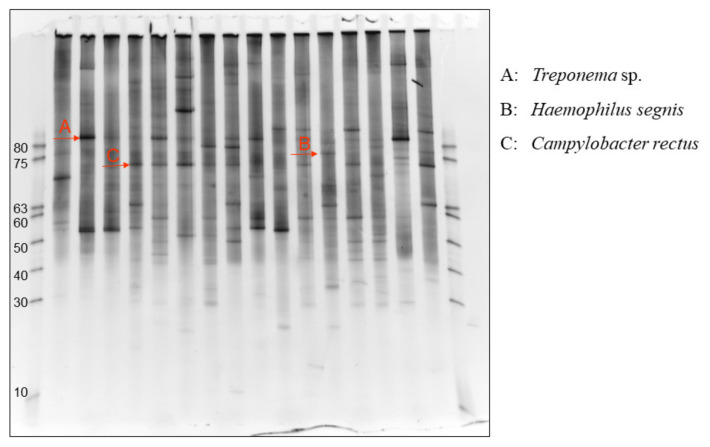
Results of DGGE analysis using mRNA from the tonsils of IgAN patients. Denaturing gradient gel electrophoresis (DGGE) can provide each band specific to each bacterium using universal PCR primers and bacterial ribosomal RNA. The intensity of the band usually semi-quantitatively reflects the amount of the bacteria. Therefore, in DGGE methods, the position of the bands indicates the type of bacteria, and the intensity of the bands indicates the amount of the bacteria. Red arrows indicate specific bands to A: Treponema species, B: Haemophilus segnis, and C: Campylobacter rectus. This figure was originally prepared for this review.
Figure 5
Figure 5
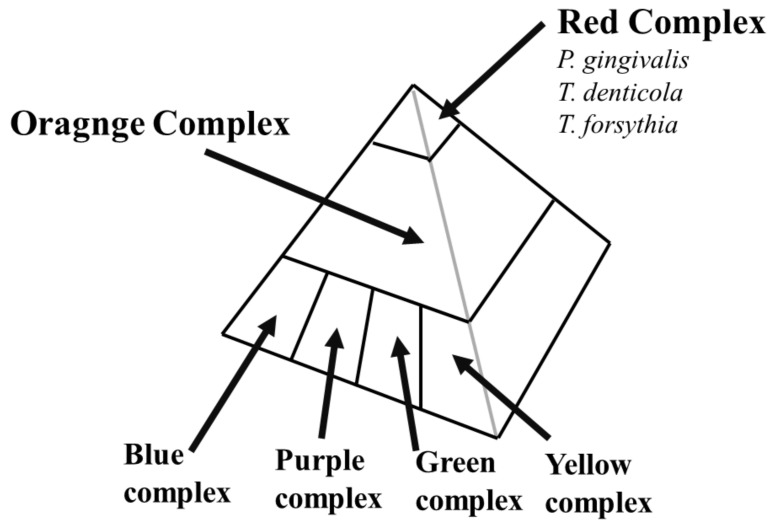
Pyramid structure of periodontal bacteria. First, periodontal bacteria belong to the blue, purple, green, and yellow complexes colonizing pockets around teeth. These periodontal bacteria have a relatively low level of periodontal disease pathogenicity. Second, the orange complex of periodontal bacteria colonizes the pockets. Finally, red complex periodontal bacteria, such as P. gigivalis, T. denticola, and T. forsythesis, can colonize the pockets, which have strong periodontal disease pathogenicity.
Figure 6
Figure 6
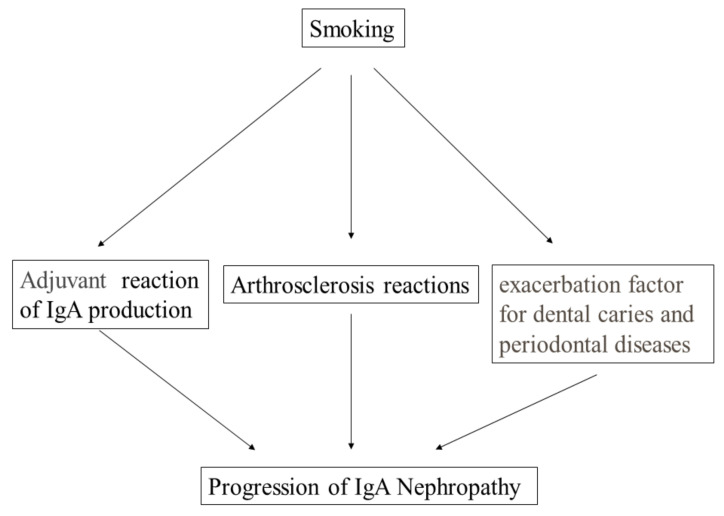
Mechanism by which smoking is considered to accelerate the progression of IgAN. Smoking has been reported to accelerate the progression of IgAN. Classically, this acceleration was explained by atherosclerotic reactions because many atherosclerotic factors can worsen CKD. As another potential mechanism, chemicals present in cigarettes can work as chemical adjuvants, which might increase IgA production in the oral mucosal area. As another considered mechanism, smoking can worsen both dental caries and periodontal diseases, resulting in an increase in the production of pathogenic IgA.
Figure 7
Figure 7
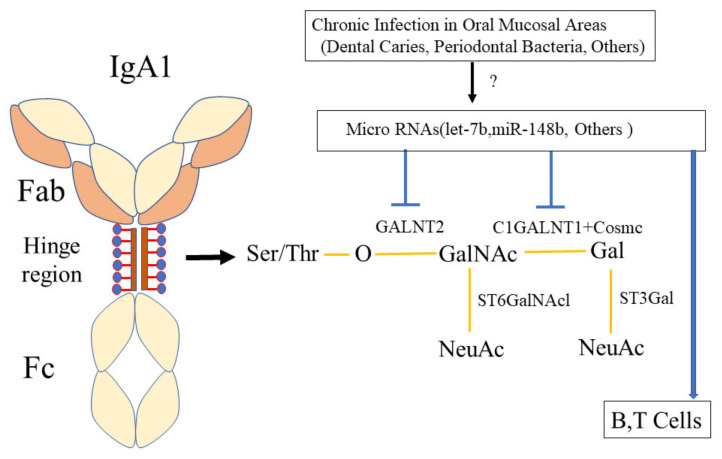
Hypothesis of the mechanism by which oral bacterial infection causes aberrantly glycosylated IgA1. The hinge region of IgA1 contains serine (Ser) or threonine (Thr) amino acids, which can be glycosylated. This glycosylation contributes to the aggregation of IgA1 because of the reactivity of IgA1 to jacalin, a lectin specific for O-linked glycan side chains containing GalNAc, N-acetyl-galactosamine (GalNAc) and galactose (Gal) linked by beta-1,3-glycosidic bonds. These O-glycan chains in the IgA1 hinge region are formed by sequential reactions that are catalyzed by some glycosyltransferases, such as GALNT2, C1GALT1, and COSMC. The expression levels of these enzymes were altered by microRNAs, such as let-7b and miR-148b, resulting in aberrantly glycosylated IgA1. The expression of these microRNAs might be altered by chronic infections in the oral mucosal areas, such as bacteria related to dental caries and periodontal bacteria. Ser: serine amino acid, Thr: threonine amino acid, GalNAc: N-acetyl-galactosamine, GALNT2: UDP-N-acetyl-alpha-D-galactosamine:polypeptide N-acetyl-galactosaminyl-transferase 2, C1GALT1: core 1 beta-1,3-galactosyltransferase, COSMC: core 1-β3 galactosyl-transferase specific molecular chaperone.

References

    1. Wyatt R.J., Julian B.A. IgA Nephropathy. N. Engl. J. Med. 2013;368:2402–2414. doi: 10.1056/NEJMra1206793. - DOI - PubMed
    1. Lai K.N., Tang S.C., Schena F.P., Novak J., Tomino Y., Fogo A.B., Glassock R.J. IgA nephropathy. Nat. Rev. Dis. Prim. 2016;2:16001. doi: 10.1038/nrdp.2016.1. - DOI - PubMed
    1. Selvaskandan H., Cheung C.K., Muto M., Barratt J. New strategies and perspectives on managing IgA nephropathy. Clin. Exp. Nephrol. 2019;23:577–588. doi: 10.1007/s10157-019-01700-1. - DOI - PMC - PubMed
    1. Maixnerova D., Tesar V. Emerging modes of treatment of IgA nephropathy. Int. J. Mol. Sci. 2020;21:9064. doi: 10.3390/ijms21239064. - DOI - PMC - PubMed
    1. Sallustio F., Curci C., Di Leo V., Gallone A., Pesce F., Gesualdo L. A New vision of IgA nephropathy: The missing link. Int. J. Mol. Sci. 2019;21:189. doi: 10.3390/ijms21010189. - DOI - PMC - PubMed

MeSH terms