


The Epithelial-Mesenchymal Transition at the Crossroads between Metabolism and Tumor Progression
- PMID: 35054987
- PMCID: PMC8776206
- DOI: 10.3390/ijms23020800
The Epithelial-Mesenchymal Transition at the Crossroads between Metabolism and Tumor Progression
Abstract
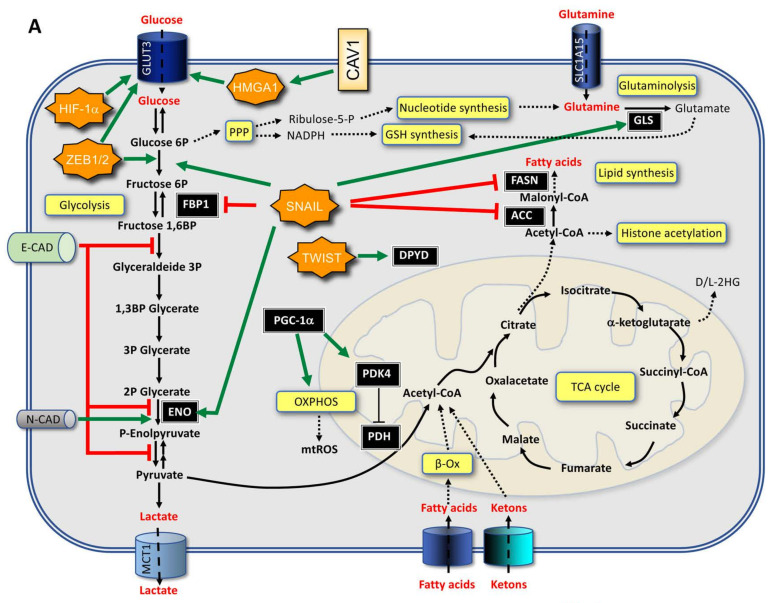
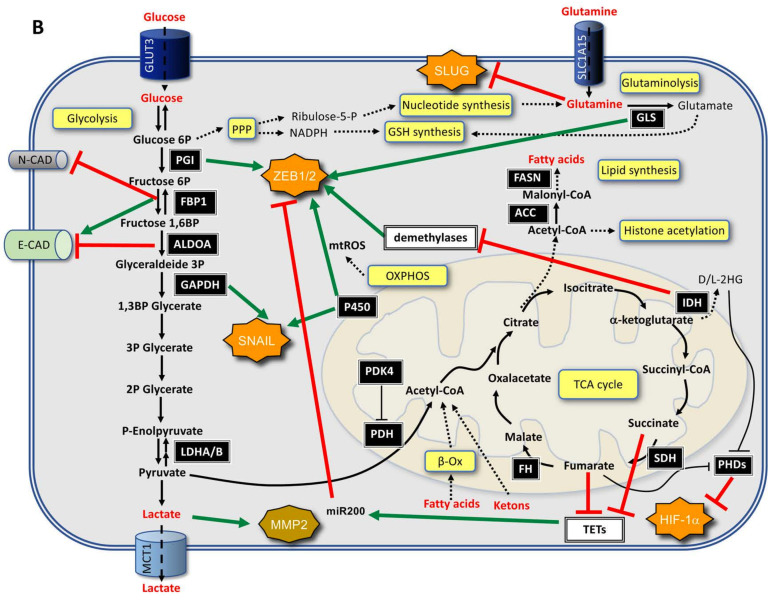
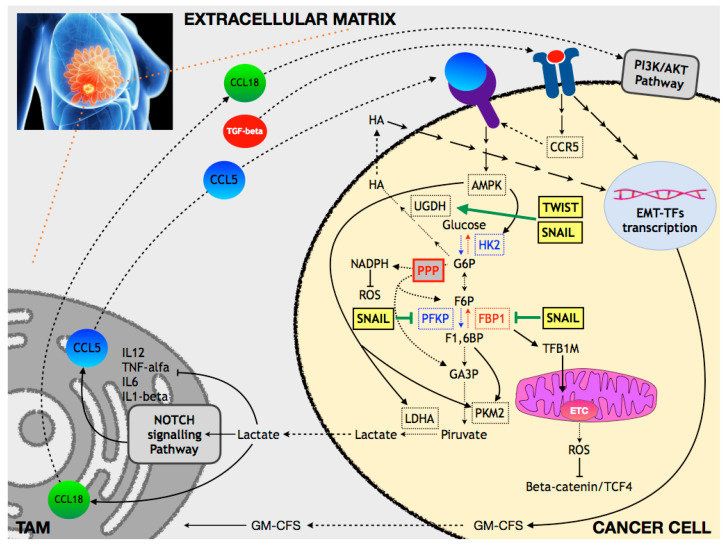
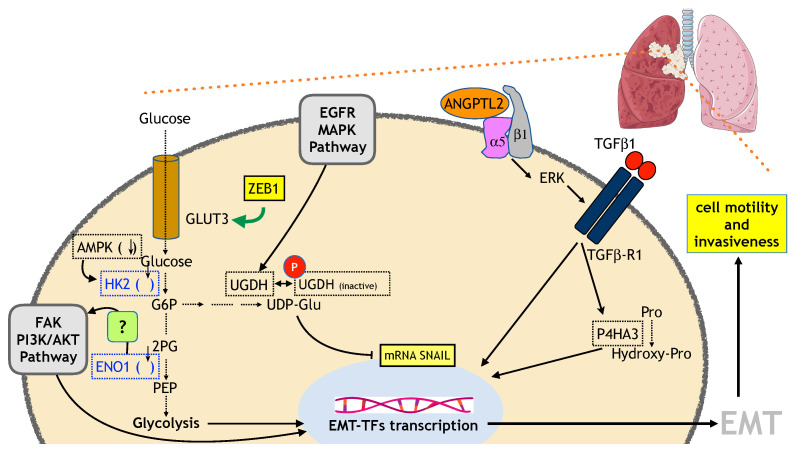
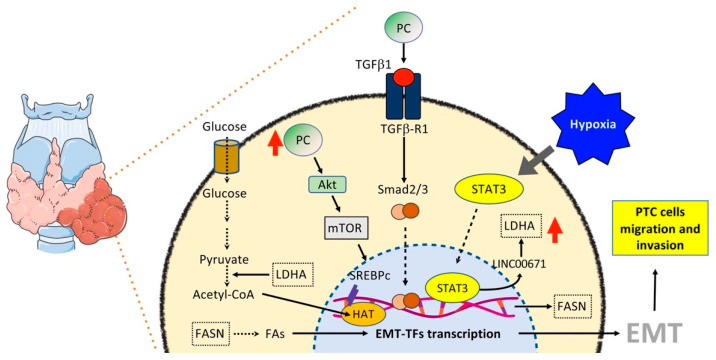
The transition between epithelial and mesenchymal phenotype is emerging as a key determinant of tumor cell invasion and metastasis. It is a plastic process in which epithelial cells first acquire the ability to invade the extracellular matrix and migrate into the bloodstream via transdifferentiation into mesenchymal cells, a phenomenon known as epithelial-mesenchymal transition (EMT), and then reacquire the epithelial phenotype, the reverse process called mesenchymal-epithelial transition (MET), to colonize a new organ. During all metastatic stages, metabolic changes, which give cancer cells the ability to adapt to increased energy demand and to withstand a hostile new environment, are also important determinants of successful cancer progression. In this review, we describe the complex interaction between EMT and metabolism during tumor progression. First, we outline the main connections between the two processes, with particular emphasis on the role of cancer stem cells and LncRNAs. Then, we focus on some specific cancers, such as breast, lung, and thyroid cancer.
Keywords: Warburg effect; breast cancer; cancer; epithelial–mesenchymal transition (EMT); lung cancer; metabolic rewiring; metabolism; thyroid cancer; tumor progression.
Conflict of interest statement
The authors declare no conflict of interest.
Figures
References
Publication types
MeSH terms
Substances
LinkOut - more resources
Full Text Sources
Medical
Miscellaneous
