


Evaluation of Methods to Minimize Pain in Newborns during Capillary Blood Sampling for Screening: A Randomized Clinical Trial
- PMID: 35055694
- PMCID: PMC8775482
- DOI: 10.3390/ijerph19020870
Evaluation of Methods to Minimize Pain in Newborns during Capillary Blood Sampling for Screening: A Randomized Clinical Trial
Abstract
Aim: The aim of the study was to assess the severity of pain experienced by a newborn during a heel puncture for screening using the Newborn Pain Scale (NIPS), measure the heart rate and compare the effectiveness of non-pharmacological methods of pain control.
Design: Randomized clinical trial. No experimental factors. The test was performed during routine screening. Surroundings: Provincial Specialist Hospital in Olsztyn.
Patients/participants: Pain was assessed in 90 full-term newborns. The newborns were rooming in with their mothers in the hospital.
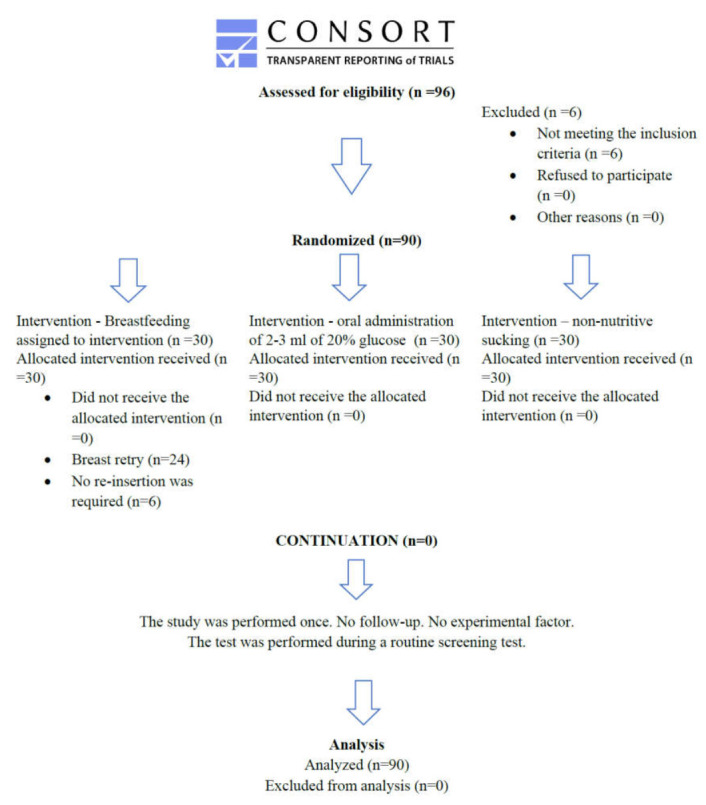
Interventions: Newborns were divided into three groups. Three different methods of pain relief were used: breastfeeding, 20% glucose administered orally and non-nutritional sucking.
Main outcome measures: The primary pain outcome was measured using the NIPS and the secondary pain outcome measures (heart rate, oxygen saturation) were measured using a pulse oximeter.
Results: During capillary blood sampling from the heel, most newborns, n = 56 (62.2%), experienced no pain or mild discomfort, severe pain occurred in n = 23 (25.6%) and moderate pain occurred in n = 11 (12.2%). No significant statistical differences were found between the degree of pain intensity and the intervention used to minimize the pain p = 0.24. Statistically significant relationships were demonstrated between heart rate variability and the degree of pain intensity (p = 0.01). There were no statistically significant differences between the newborn's pain intensity and the mother's opinion on the effectiveness of breastfeeding in minimizing pain.
Conclusions: This study did not answer the question of which pain management method used during the heel prick was statistically more effective in reducing pain. However, the results indicate that each of the non-pharmacological interventions (breastfeeding, oral glucose dosing and non-nutritive sucking) applied during heel puncture resulted in effective pain management in most of the newborns enrolled in the study. The relationship between heart rate variability and the severity of pain was confirmed. Mothers of newborns in the breastfeeding group were satisfied with the pain relief methods used in the child and the opportunity to console their newborn during painful procedures in a technologically invasive environment.
Keywords: neonatal pain; non-pharmacological analgesia; pain assessment; pain minimization; screening.
Conflict of interest statement
The authors declare no conflict of interest.
References
-
- Ministry of Health, Department of Health Policy, Health Policy Newborn Screening Program in Poland for 2019–2022. [(accessed on 27 September 2021)];2018 Warsaw. Available online: https://www.gov.pl/web/zdrowie/program-badan-przesiewowych-noworodkow-w-....
-
- Stoińska B., Wieczorek E., Borszewska-Kornacka M.K. Standardy Opieki Medycznej nad Noworodkiem w Polsce—Zalecenia PTN. Polskie Towarzystwo Neonatologiczne Media-Press sp. z o.o.; Warszawa, Poland: 2021. Standard opieki okołoporodowej nad zdrowym noworodkiem; pp. 15–22.
-
- Korenev S., Lemonde H., Cleary M., Chakrapani A. Newborn screening for inborn errors of metabolism. Pediatrics Child Health. 2019;29:105–110. doi: 10.1016/j.paed.2019.01.002. - DOI
-
- Panek M., Kwinta P. Heel puncture in a newborn—The most important principles. Adv. Neonatol. 2018;24:73–79. doi: 10.31350/postepyneonatologii/2018/1/. PN2018006. - DOI
-
- Gulczyńska E., Piotrowski A. Standardy Opieki Medycznej nad Noworodkiem w Polsce—Zalecenia PTN. Polskie Towarzystwo Neonatologiczne Media-Press sp. z o.o.; Warszawa, Poland: 2021. Profilaktyka i leczenie bólu u noworodka; pp. 118–127.
Publication types
MeSH terms
LinkOut - more resources
Full Text Sources
Medical
