. 2022 Jan 14;11(1):94.
doi: 10.3390/pathogens11010094.

The Conserved Macrodomain Is a Potential Therapeutic Target for Coronaviruses and Alphaviruses

Affiliations

The Conserved Macrodomain Is a Potential Therapeutic Target for Coronaviruses and Alphaviruses

Anthony K L Leung et al. Pathogens. .

Abstract

Emerging and re-emerging viral diseases pose continuous public health threats, and effective control requires a combination of non-pharmacologic interventions, treatment with antivirals, and prevention with vaccines. The COVID-19 pandemic has demonstrated that the world was least prepared to provide effective treatments. This lack of preparedness has been due, in large part, to a lack of investment in developing a diverse portfolio of antiviral agents, particularly those ready to combat viruses of pandemic potential. Here, we focus on a drug target called macrodomain that is critical for the replication and pathogenesis of alphaviruses and coronaviruses. Some mutations in alphavirus and coronaviral macrodomains are not tolerated for virus replication. In addition, the coronavirus macrodomain suppresses host interferon responses. Therefore, macrodomain inhibitors have the potential to block virus replication and restore the host's protective interferon response. Viral macrodomains offer an attractive antiviral target for developing direct acting antivirals because they are highly conserved and have a structurally well-defined (druggable) binding pocket. Given that this target is distinct from the existing RNA polymerase and protease targets, a macrodomain inhibitor may complement current approaches, pre-empt the threat of resistance and offer opportunities to develop combination therapies for combating COVID-19 and future viral threats.

Keywords: ADP-ribosylation; ADP-ribosylhydrolase; SARS-CoV-2; alphavirus; coronavirus; macrodomain; therapeutics.


Conflict of interest statement

D.E.G. is on advisory boards for Takeda Pharmaceuticals, GlaxoSmithKline, and GreenLight Biosciences. The other authors declare no conflict of interest. The funders had no role in the design of the study; in the collection, analyses, or interpretation of data; in the writing of the manuscript; or in the decision to publish the results.

Figures
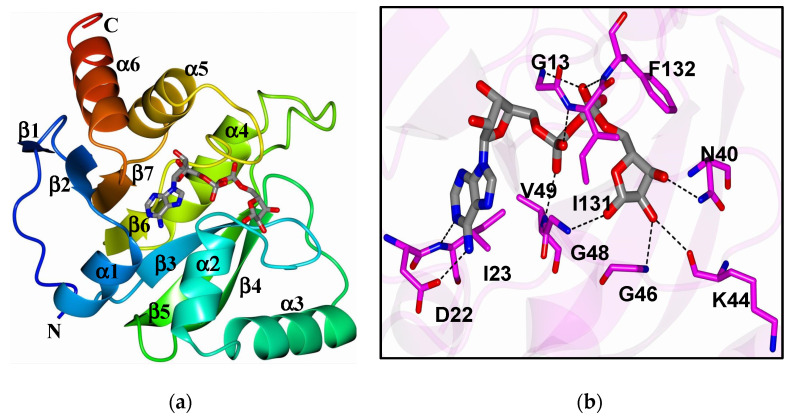
Figure 1
Figure 1
(a) The structure of SARS-CoV-2 macrodomain complexed with ADP-ribose (6WOJ); (b) hydrogen bonds (dashed lines) between amino acids in the binding pocket and ADP-ribose. Obtained from Alhammad et al., 2020.
Figure 2
Figure 2
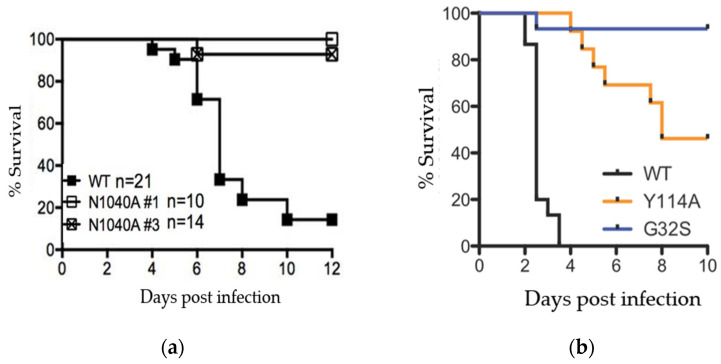
SARS-CoV and CHIKV macrodomain activity is required for viral pathogenesis. (a) Female Balb/C mice were infected with a lethal dose of SARS-CoV and equivalent amount of 2 separate clones of macrodomain mutant (N1040A) virus and monitored for survival over 12 days. Data from Fehr et al., 2016; (b) 2-day old CD-1 mice (N = 24–28/group) were infected with CHIKV or nsP3 macrodomain mutants Y114A and G32S and monitored for survival over 10 days. Data from McPherson et al., 2017.
Figure 3
Figure 3
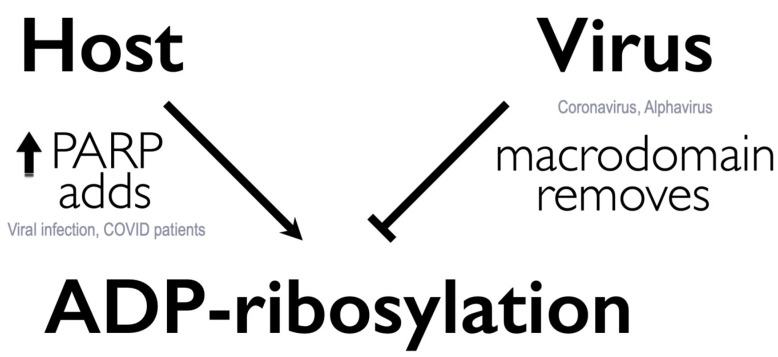
Working model: arms-race on ADP-ribosylation between host PARPs and virus macrodomains.
Figure 4
Figure 4
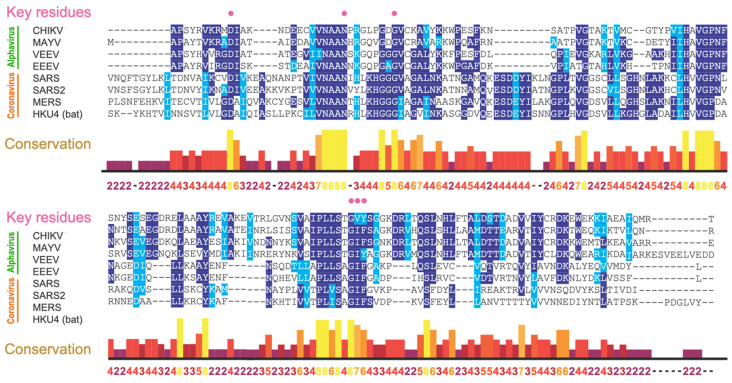
Amino acid analyses revealed high conservation of key residues responsible for macrodomain ADP-ribosylhydrolase activities (pink circles). Alphavirus: CHIKV; MAYV, VEEV, EEEV; Coronavirus: SARS-CoV (SARS), SARS-CoV-2 (SARS2), MERS-CoV (MERS), and a bat coronavirus (HKU4).
Figure 5
Figure 5
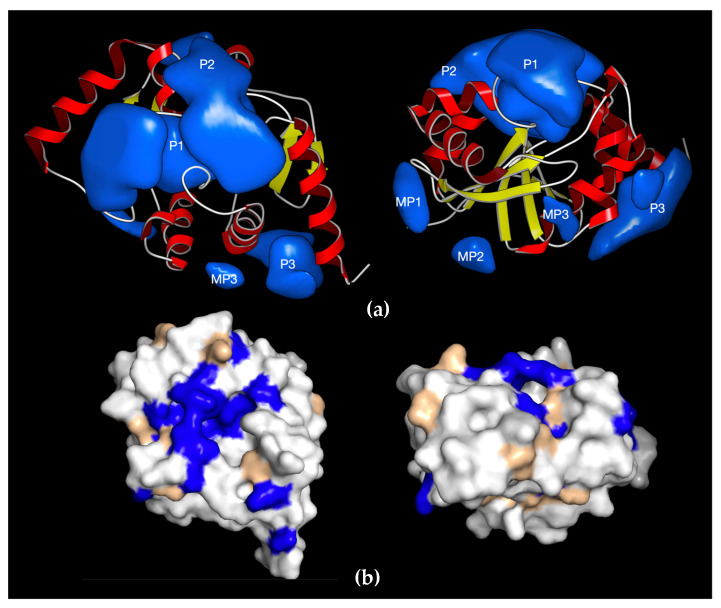
Druggable pockets of SARS-CoV-2 macrodomain and similarities with human MacroD2. (a) Ribbon representation of SARS-CoV-2 macrodomain with surface representation of the druggable pockets (P1, P2, P3). Additional minor pockets MP1, MP2, and MP3 are generally too small to be considered a good exploitable binding site as their volume is <200 Å3 and would only allow small fragments to bind with typically low inhibitory potential. The right panel shows a 90°-rotated view along two axes; (b) identities between SARS-CoV-2 Mac1 macrodomain and the closest human homolog MacroD2 are shown in blue, conserved residues in wheat, and different residues in white. Views in b are identical to the orientation in a.
Figure 6
Figure 6
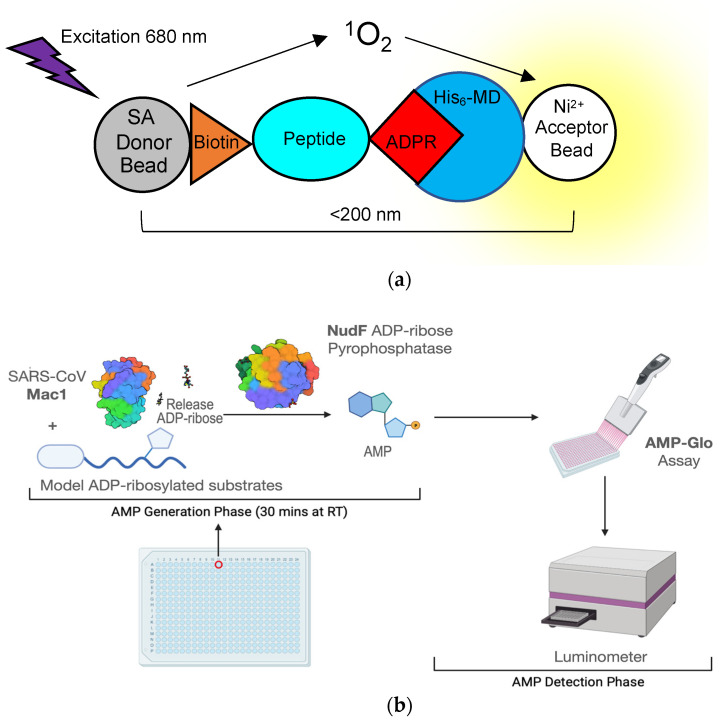
Assays developed to use high-throughput screening for macrodomain inhibitors. (a) Cartoon diagram depicting a bead-based AlphaScreen assay for measuring macrodomain interaction with an ADP-ribosylated peptide. SA—streptavidin; Ni2+—Nickel; His6-MD—Histidine-tagged macrodomain; ADPR—ADP-ribose; (b) Schematics of ADPr-Glo assay (see text for more details).

References

    1. Wang Y., Grunewald M., Perlman S. Coronaviruses: An Updated Overview of Their Replication and Pathogenesis. Methods Mol. Biol. 2020;2203:1–29. doi: 10.1007/978-1-0716-0900-2_1. - DOI - PMC - PubMed
    1. Weaver S.C., Winegar R., Manger I.D., Forrester N.L. Alphaviruses: Population genetics and determinants of emergence. Antivir. Res. 2012;94:242–257. doi: 10.1016/j.antiviral.2012.04.002. - DOI - PMC - PubMed
    1. Zeller H., Van Bortel W., Sudre B. Chikungunya: Its History in Africa and Asia and Its Spread to New Regions in 2013–2014. J. Infect. Dis. 2016;214:S436–S440. doi: 10.1093/infdis/jiw391. - DOI - PubMed
    1. Girard M., Nelson C.B., Picot V., Gubler D.J. Arboviruses: A global public health threat. Vaccine. 2020;38:3989–3994. doi: 10.1016/j.vaccine.2020.04.011. - DOI - PMC - PubMed
    1. Hoarau J.-J., Bandjee M.-C.J., Trotot P.K., Das T., Li-Pat-Yuen G., Dassa B., Denizot M., Guichard E., Ribera A., Henni T., et al. Persistent Chronic Inflammation and Infection by Chikungunya Arthritogenic Alphavirus in Spite of a Robust Host Immune Response. J. Immunol. 2010;184:5914–5927. doi: 10.4049/jimmunol.0900255. - DOI - PubMed

LinkOut - more resources