. 2022 Mar 9;42(10):1930-1944.
doi: 10.1523/JNEUROSCI.1137-21.2022. Epub 2022 Jan 20.

A Female-Specific Role for Calcitonin Gene-Related Peptide (CGRP) in Rodent Pain Models

Affiliations

A Female-Specific Role for Calcitonin Gene-Related Peptide (CGRP) in Rodent Pain Models

Candler Paige et al. J Neurosci. .

Abstract

We aimed to investigate a sexually dimorphic role of calcitonin gene-related peptide (CGRP) in rodent models of pain. Based on findings in migraine where CGRP has a preferential pain-promoting effect in female rodents, we hypothesized that CGRP antagonists and antibodies would attenuate pain sensitization more efficaciously in female than male mice and rats. In hyperalgesic priming induced by activation of interleukin 6 signaling, CGRP receptor antagonists olcegepant and CGRP8-37 both given intrathecally, blocked, and reversed hyperalgesic priming only in females. A monoclonal antibody against CGRP, given systemically, blocked priming specifically in female rodents but failed to reverse it. In the spared nerve injury model, there was a transient effect of both CGRP antagonists, given intrathecally, on mechanical hypersensitivity in female mice only. Consistent with these findings, intrathecally applied CGRP caused a long-lasting, dose-dependent mechanical hypersensitivity in female mice but more transient effects in males. This CGRP-induced mechanical hypersensitivity was reversed by olcegepant and the KCC2 enhancer CLP257, suggesting a role for anionic plasticity in the dorsal horn in the pain-promoting effects of CGRP in females. In spinal dorsal horn slices, CGRP shifted GABAA reversal potentials to significantly more positive values, but, again, only in female mice. Therefore, CGRP may regulate KCC2 expression and/or activity downstream of CGRP receptors specifically in females. However, KCC2 hypofunction promotes mechanical pain hypersensitivity in both sexes because CLP257 alleviated hyperalgesic priming in male and female mice. We conclude that CGRP promotes pain plasticity in female rodents but has a limited impact in males.SIGNIFICANCE STATEMENT The majority of patients impacted by chronic pain are women. Mechanistic studies in rodents are creating a clear picture that molecular events promoting chronic pain are different in male and female animals. We sought to build on evidence showing that CGRP is a more potent and efficacious promoter of headache in female than in male rodents. To test this, we used hyperalgesic priming and the spared nerve injury neuropathic pain models in mice. Our findings show a clear sex dimorphism wherein CGRP promotes pain in female but not male mice, likely via a centrally mediated mechanism of action. Our work suggests that CGRP receptor antagonists could be tested for efficacy in women for a broader variety of pain conditions.

Keywords: CGRP; dorsal horn; hyperalgesic priming; neuropathic pain; olcegepant; pain.


Figures

Figure 1.
Figure 1.
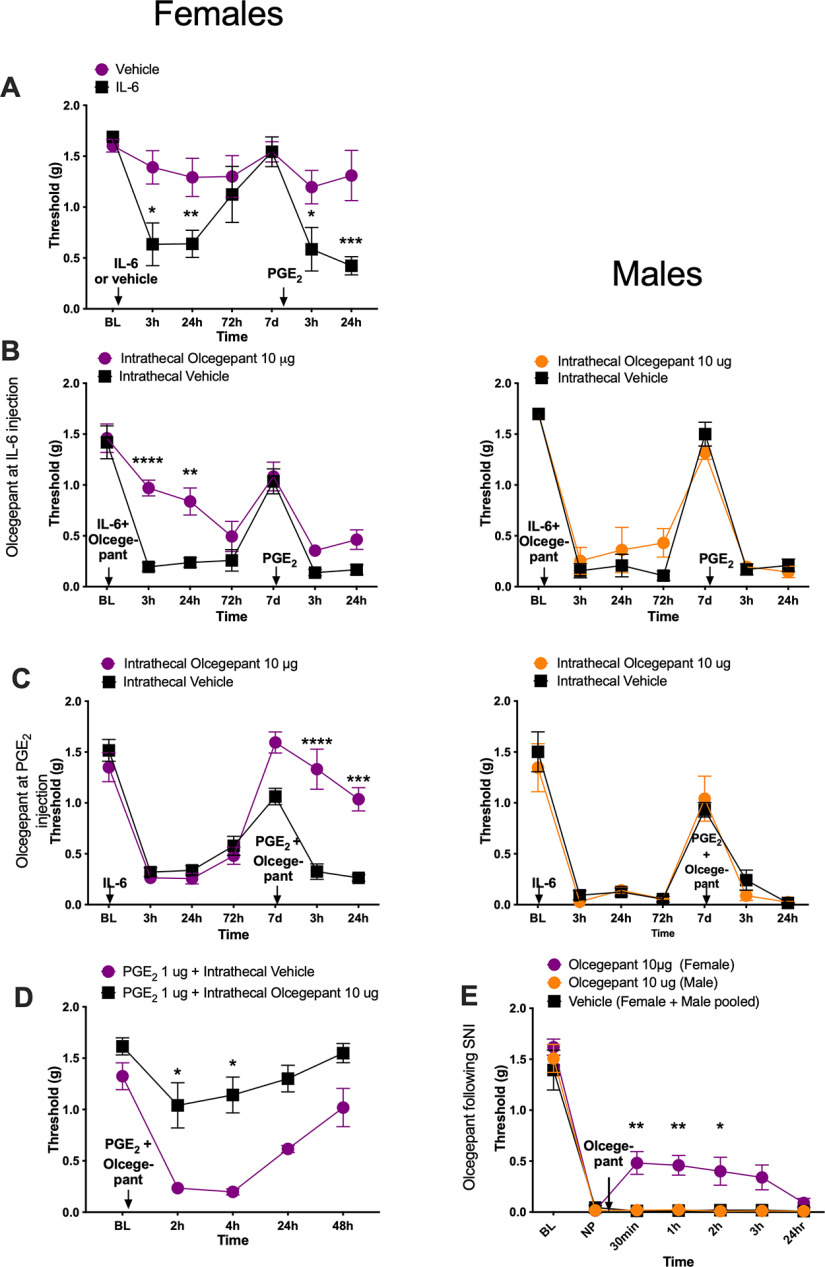
Intrathecal administration of olcegepant reduces mechanical hypersensitivity specifically in female mice. All graphs display mechanical withdrawal threshold. A, Female mice received an intraplantar injection of IL-6r or vehicle followed by the injection of 100 ng of PGE2 after the initial hypersensitivity had resolved (vehicle, n = 6; IL-6r, n = 5). B, Mice received an intrathecal injection of 10 μg of olcegepant before 0.1 ng intraplantar injection of IL-6r. A second intraplantar injection of 100 ng of PGE2 was given after initial mechanical sensitivity to IL-6r had resolved (n = 4 mice/group). C, Animals received an intraplantar injection of 0.1 ng of IL-6r. After initial mechanical hypersensitivity had resolved, animals received an intrathecal injection of 10 μg of olcegepant and an intraplantar injection of 100 ng PGE2 (n = 4 mice/group). D, Female mice received an intraplantar injection of PGE2 (10 µg) followed directly by an intrathecal dose of vehicle or olcegepant (vehicle, n = 6; olcegepant, n = 5). E, Animals underwent an SNI surgery. Twenty-one days postinjury, animals received a single intrathecal injection of 10 μg of olcegepant (males, n = 3; females, n = 4) or vehicle (pooled males and females, n = 5). Differences between groups were measured using a two-way ANOVA with Bonferroni's post hoc test: *p < 0.05, **p < 0.01, ***p < 0.001, ****p < 0.0001.
Figure 2.
Figure 2.
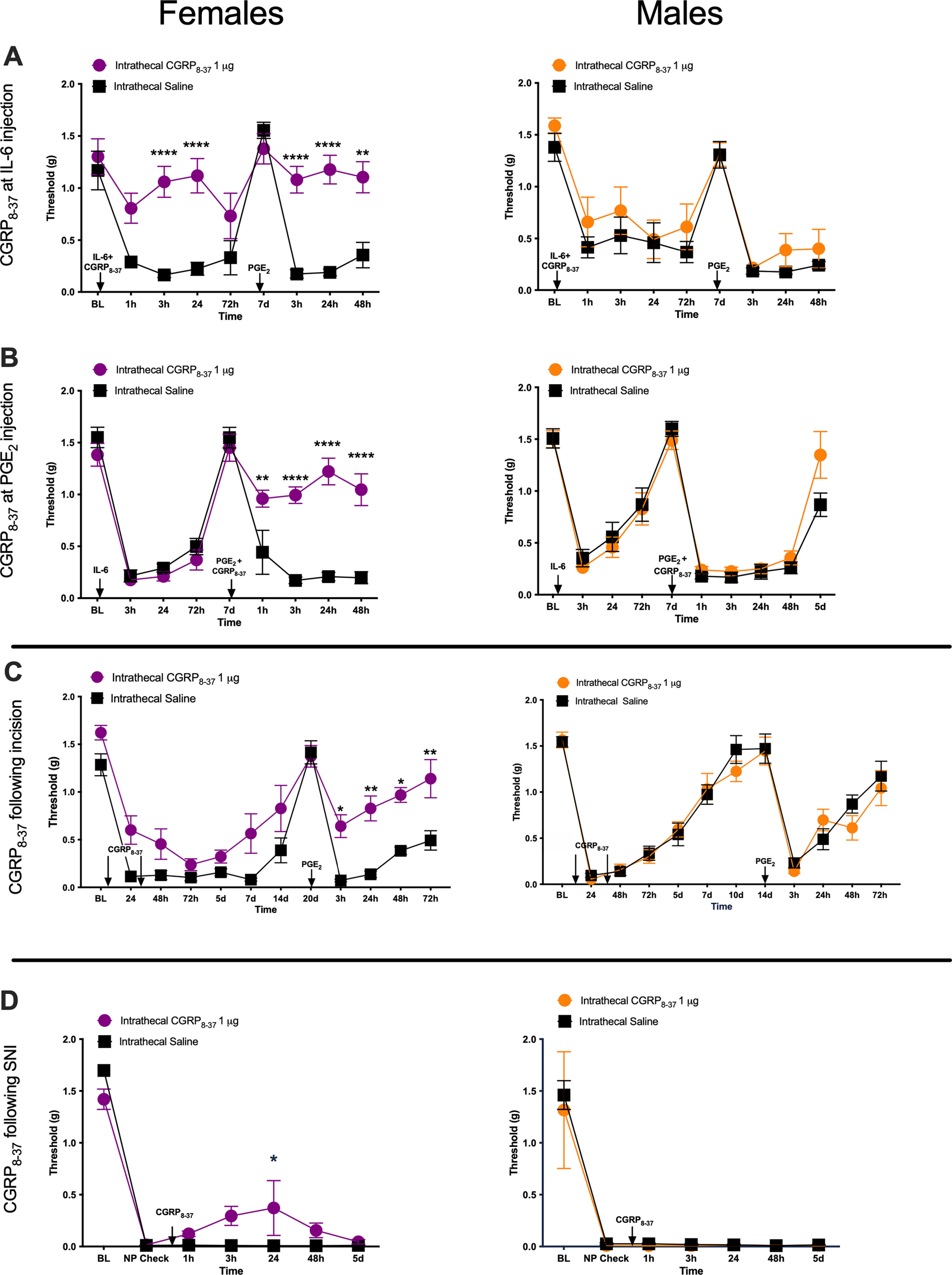
Intrathecal administration of CGRP8-37 reduces mechanical hypersensitivity specifically in female mice in three pain models. A, Animals received a single intrathecal injection of 1 μg of CGRP8-37 immediately before an intraplantar injection of 0.1 ng of IL-6r. Once initial hypersensitivity to intraplantar injection of IL-6r had resolved, animals received a second intraplantar injection of 100 ng of PGE2 (n = 8 mice/group). B, Animals received an intraplantar injection of 0.1 ng of IL-6r and then 7 d later an injection of 100 ng of PGE2. Immediately before the PGE2 injection, animals received an intrathecal injection of 1 μg of CGRP8-37 (n = 7–8 mice/group). C, Animals were given a hindpaw incision and an intrathecal injection of 1 μg of CGRP8-37 at the time of incision and then 24 h postincision. After the initial hypersensitivity following the incision had returned to baseline levels, animals received an intraplantar injection of 100 ng of PGE2 to test for hyperalgesic priming (n = 5–6 mice/group). D, Mice were given an SNI surgery and then a single intrathecal injection of 1 μg of CGRP8-37 21 d after initial injury (males, n = 3 mice/group; females, n = 4 mice/group). NP, Neuropathic pain. Differences between groups were measured using a two-way ANOVA with Bonferroni's post hoc test: *p < 0.05, **p < 0.01, ***p < 0.001, ****p < 0.0001.
Figure 3.
Figure 3.
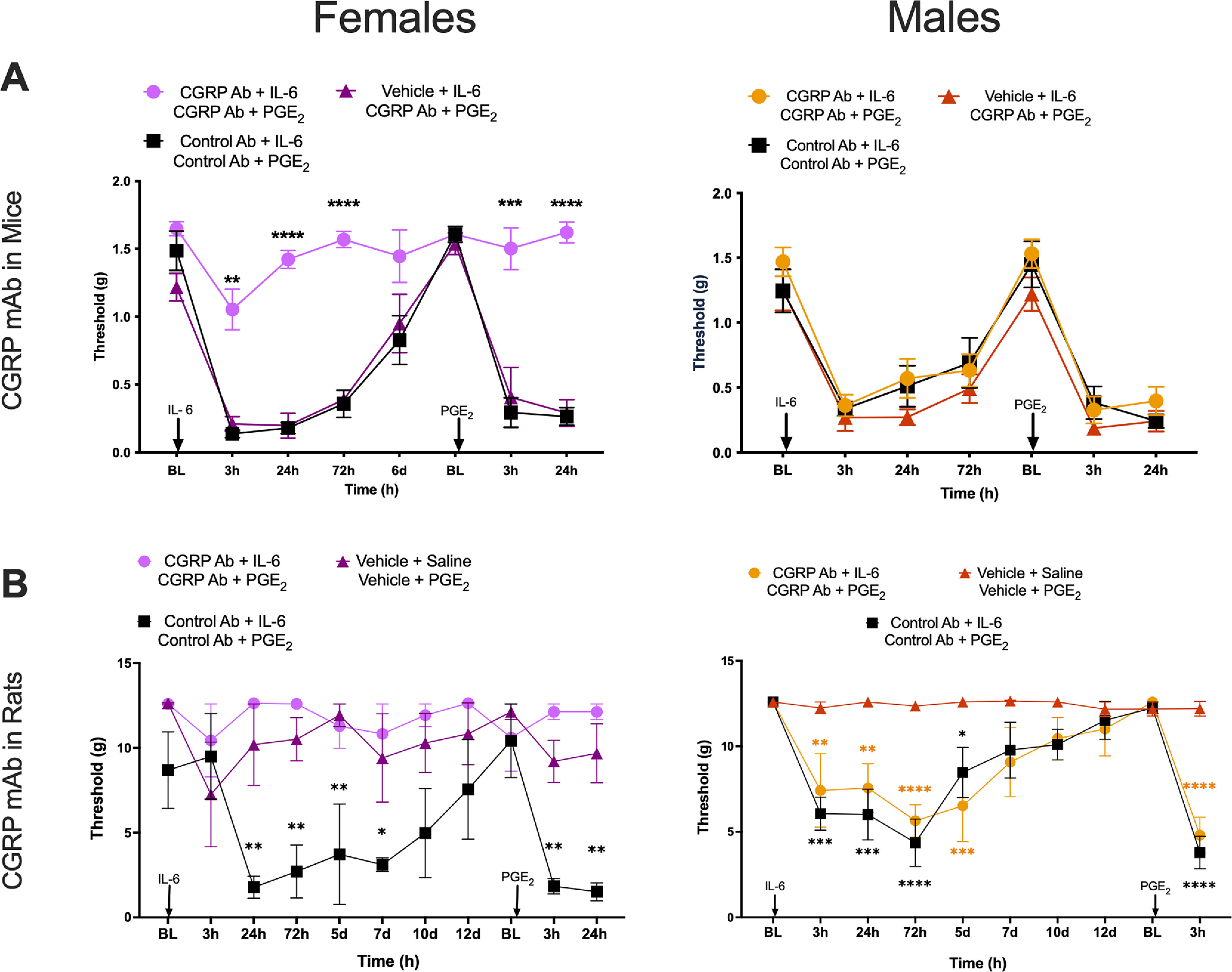
CGRP mAbs block IL-6-induced mechanical hypersensitivity and development of hyperalgesic priming in female mice and rats. A, Mice were given an intraperitoneal injection of 20 mg/kg CGRP mAb, 20 mg/kg control mAb, or vehicle 24 h before receiving an intraplantar injection of 0.1 ng of IL-6. After initial hypersensitivity had resolved, animals received an intraperitoneal injection of either CGRP mAb or control mAb at the doses described above 24 h before a 100 ng PGE2 intraplantar injection (n = 6 mice/group). Stars show significant differences versus control Ab. B, Rats received an intraperitoneal injection of 20 mg/kg CGRP mAb, 20 mg/kg control mAb, or vehicle 24 h before an intraplantar injection of 0.1 ng of IL-6 or saline, and, once mechanical hypersensitivity had resolved, animals received an intraperitoneal injection of the same drug or vehicle 24 h before intraplantar injection of 100 ng of PGE2 (n = 6 rats/group). Stars show significant differences versus vehicle treatment, color coded by group. Differences between groups were measured using a two-way ANOVA with Bonferroni's post hoc test: *p < 0.05, **p < 0.01, ***p < 0.001, ****p < 0.0001.
Figure 4.
Figure 4.
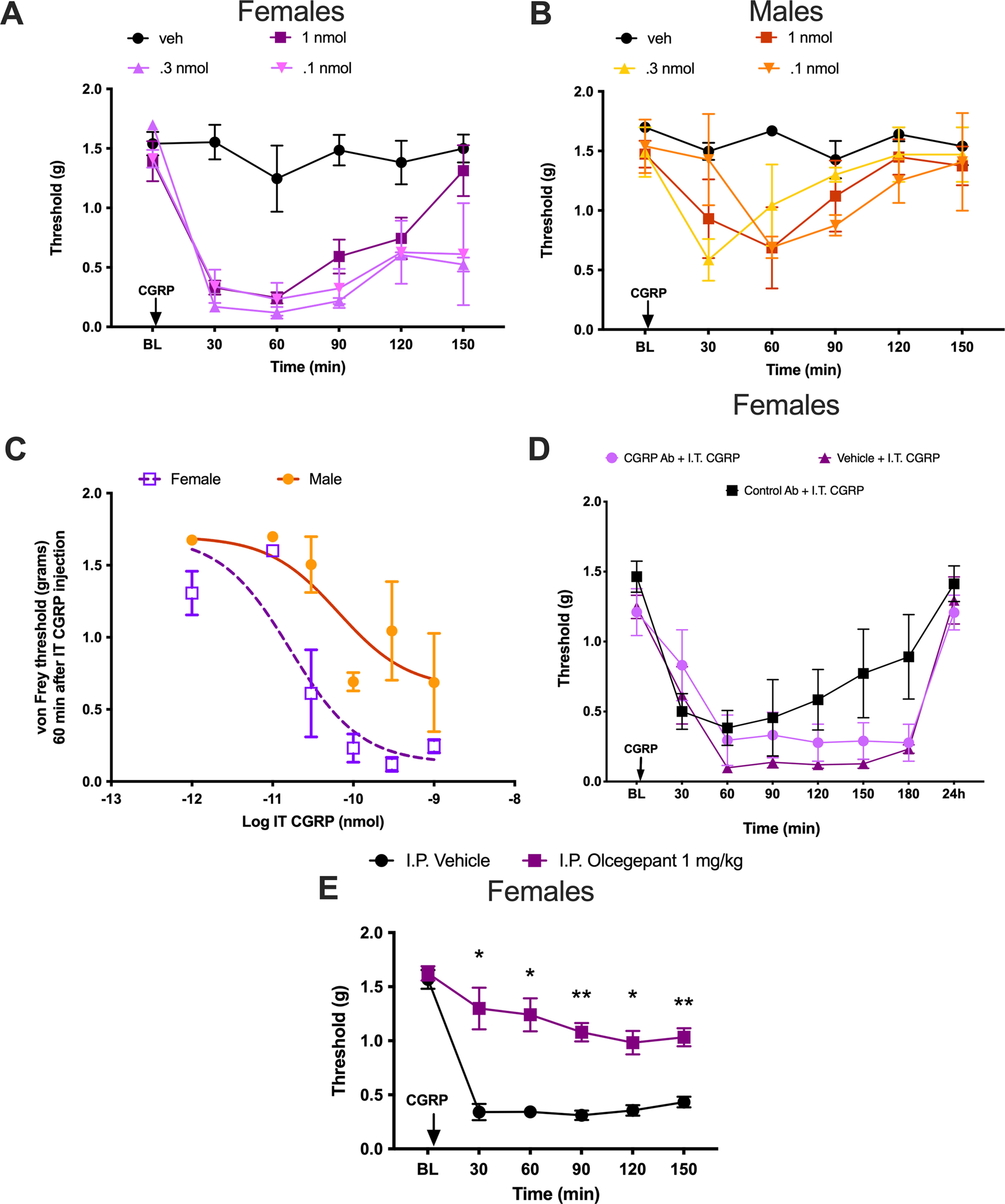
Intrathecal CGRP causes an increased response in female mice that is not blocked by systemic CGRP mAb but is blocked by systemic olcegepant. A, Female mice received an intrathecal injection of CGRP in half-log step increments of 0.1, 0.3, or 1 nmol rat α-CGRP (n = 2–4 mice/dose). B, Male mice received intrathecal injections of rat α-CGRP in the same doses as female mice (n = 2–4 mice/dose). C, Dose–response curve of male and female mice at 60 min post-intrathecal injection of CGRP. Six increasing doses of rat α-CGRP were administered to both males and females, as follows: 0.01, 0.03, 0.1, 0.3, and 1 nmol. Differences between slopes were determined using an ANCOVA: p-value = 0.0013 [F = 7.931 (df of the numerator = 2; df of the denominator = 39); n = 11 mice for female dose–response curve; n = 12 mice for male dose–response curve]. D, Female mice received an intraperitoneal injection of 20 mg/kg CGRP mAb, 20 mg/kg control mAb, or vehicle 24 h before intrathecal injection of 0.1 nmol rat α-CGRP, and mechanical hypersensitivity was measured following these intrathecal injections (n = 6 mice/group). E, Female mice received an intraperitoneal injection of 1 mg/kg olcegepant or vehicle 30 min before intrathecal injection of 0.1 nmol rat α-CGRP, and mechanical hypersensitivity was measured following these intrathecal injections (vehicle, n = 8; olcegepant, n = 5). Differences between groups were measured using a two-way ANOVA with Bonferroni's post hoc test: *p < 0.05, **p < 0.01. I.P., Intraperitoneal; I.T., intrathecal; veh, vehicle.
Figure 5.
Figure 5.
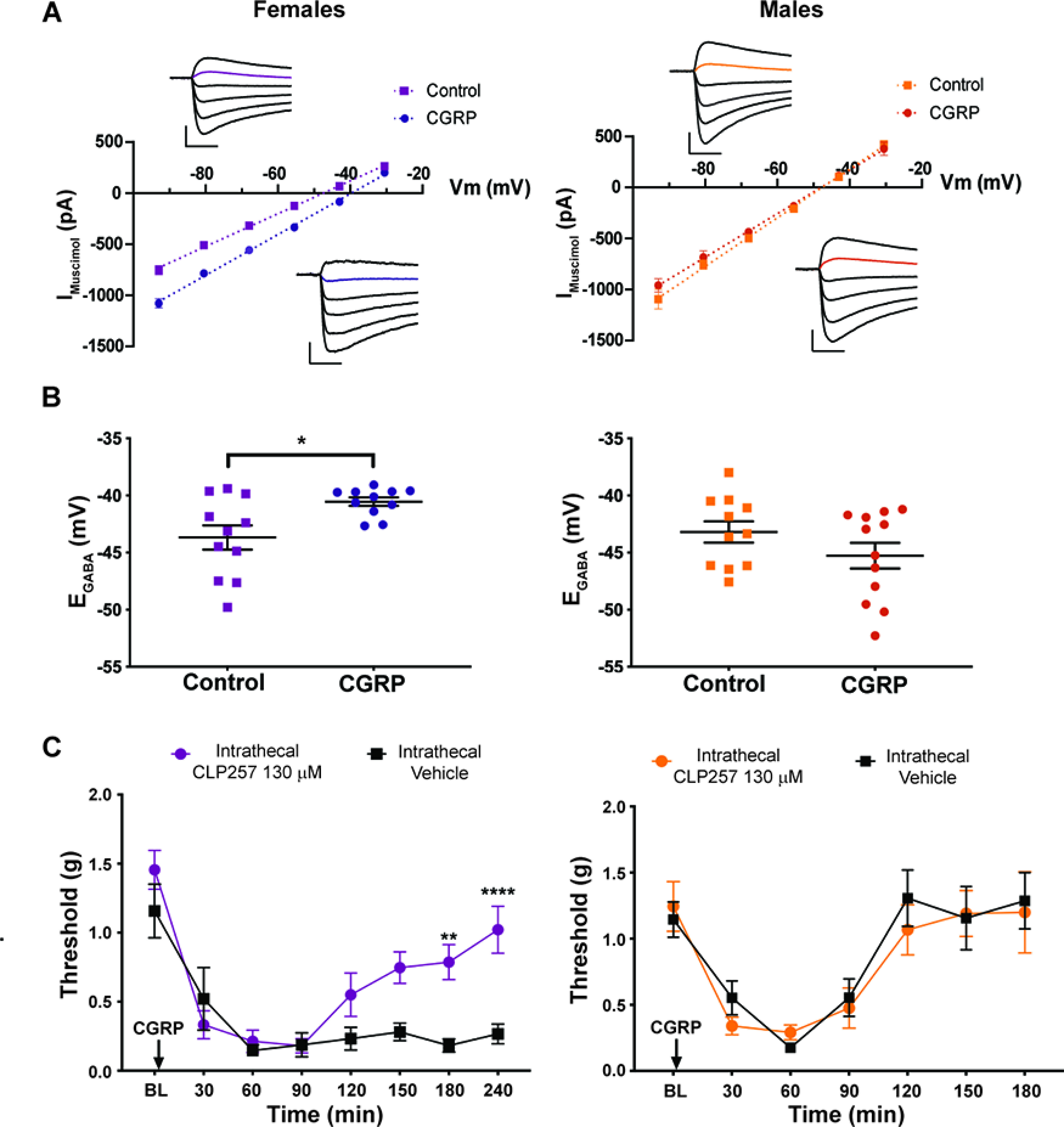
CGRP reduces Cl extrusion capacity in spinal dorsal horn neurons of female mice. A, IV plots of a representative neurons of each experimental group. Insets, Electrophysiological traces of the currents generated by 500 μmol muscimol puffs at different holding voltage steps (93–30.5 mV). Calibration: 300 pA, 100 ms. B, KCC2 activity in laminae I and II neurons was estimated from the GABAA IV curve under 29 mm Cl load. Incubation of spinal cord slices with 50 ng/ml CGRP for >2 h induced a depolarization of EGABA only in female tissue (n = 11–12 neurons/group). C, Male and female mice received an intrathecal injection of 130 μmol CLP257 immediately before intrathecal injection of 0.1 nmol CGRP. Mechanical hypersensitivity was measured using von Frey filament testing (n = 4 animals/group). Differences between groups were measured using a two-way ANOVA with Bonferroni's post hoc test: **p < 0.01, ***p <0.001, ****p < 0.0001.
Figure 6.
Figure 6.
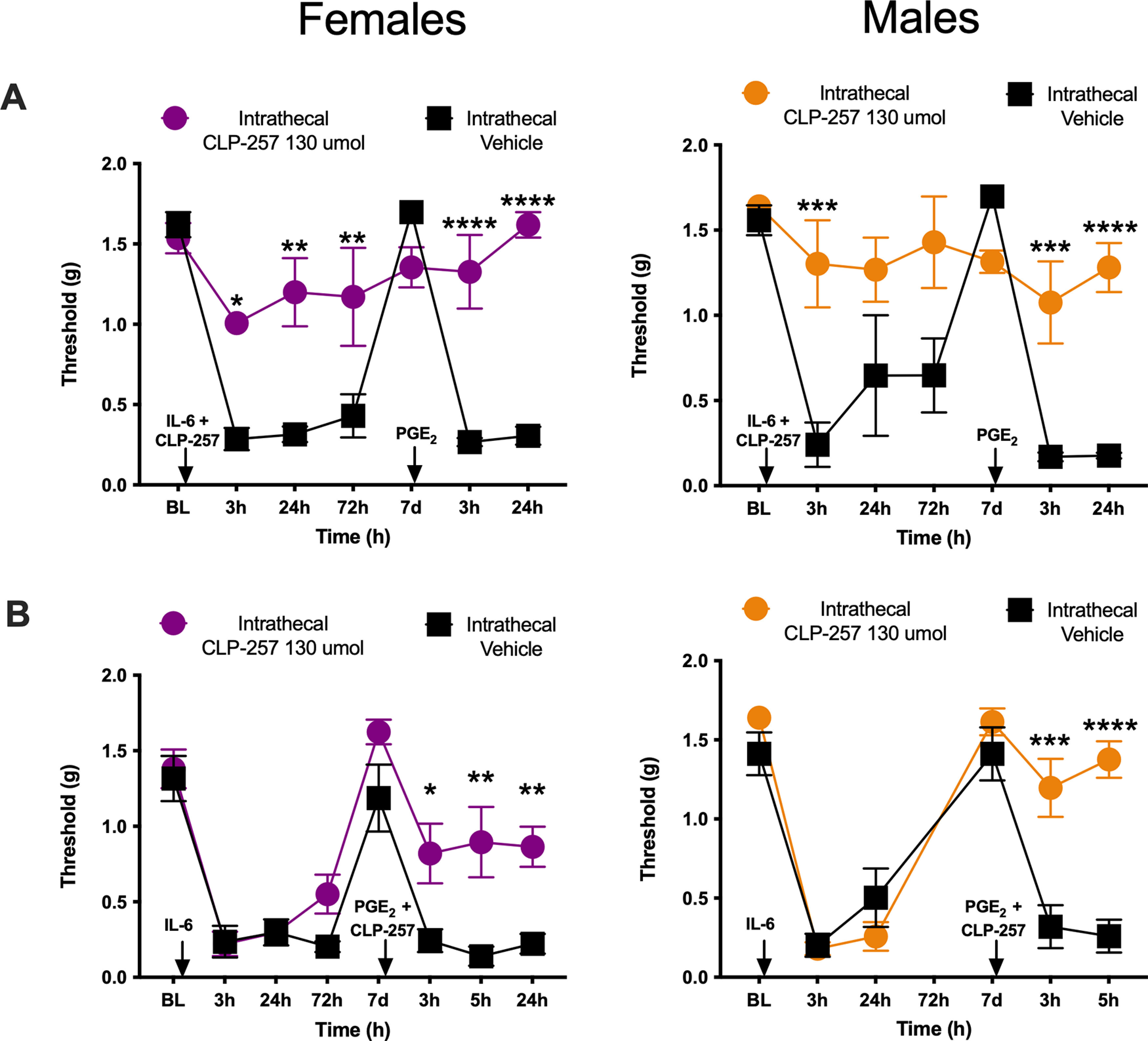
CLP257 blocks and reverses hyperalgesic priming in both male and female mice. A, Animals received an intrathecal injection of 130 μmol CLP257 immediately before an intraplantar injection of 0.1 ng of IL-6. After initial mechanical hypersensitivity to IL-6 had resolved, mice received an intraplantar injection of 100 ng of PGE2 (n = 4 mice/group). B, An intraplantar injection of 0.1 ng of IL-6 was given to animals and immediately before the intraplantar injection of 100 ng of PGE2 injection animals received an intrathecal injection of 130 μmol CLP257 (n = 4 mice/group). Differences between groups were measured using a two-way ANOVA with Bonferroni's post hoc test: *p < 0.05, **p < 0.01, ***p < 0.001, ****p < 0.0001.
Figure 7.
Figure 7.
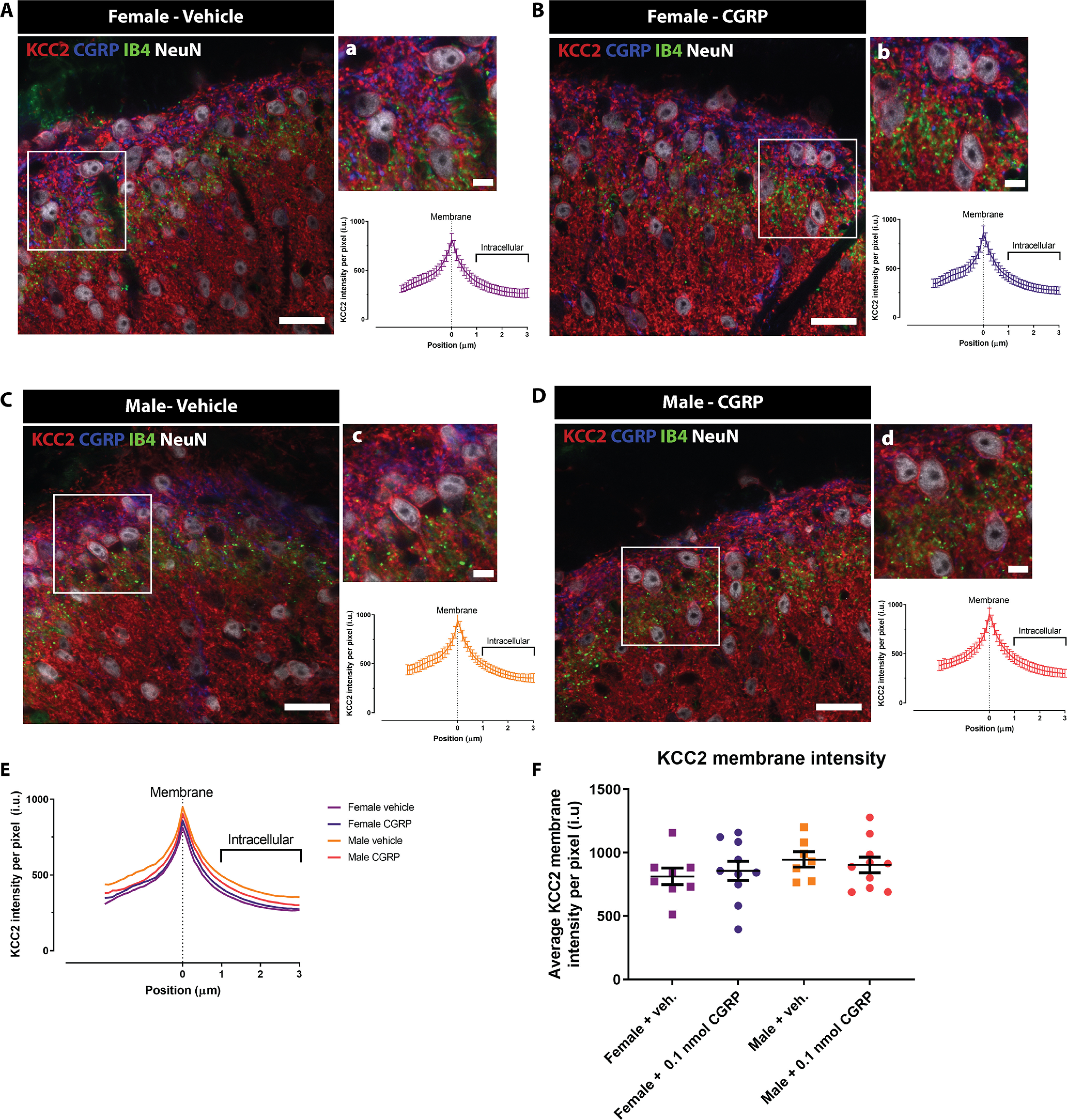
CGRP administration does not provoke KCC2 internalization in dorsal horn neurons in either female or male mice. A–D, Representative confocal images of the dorsal horn of spinal cord in female and male mice treated with either 0.1 nmol CGRP or vehicle showing CGRP, IB4, KCC2, and NeuN staining. Scale bars: A–D, 20 μm. a–d, High-magnification images of the areas highlighted in the white rectangle in A–D showing neurons expressing KCC2 (top) together with the average pixel KCC2 intensity plots versus distance to the membrane profile (bottom graphs). Scale bars: a–d, 5 μm. E, Average KCC2 intensity profiles from dorsal horn neurons of female mice treated with vehicle (violet line; n = 8 mice), female mice treated with 0.1 nmol CGRP (purple line; n = 10 mice), male mice treated with vehicle (orange line; n = 7 mice), and male mice treated with 0.1 nmol CGRP (red line; n = 10 mice). Results are presented as the mean per group for visualization purposes since the curves are duplications of the graphs in a–d. F, Membrane KCC2 intensity of the four experimental groups calculated at position zero. No significant differences were observed between vehicle or CGRP-treated female or male mice with Welch's ANOVA; n = 7-10 mice/group.
Figure 8.
Figure 8.
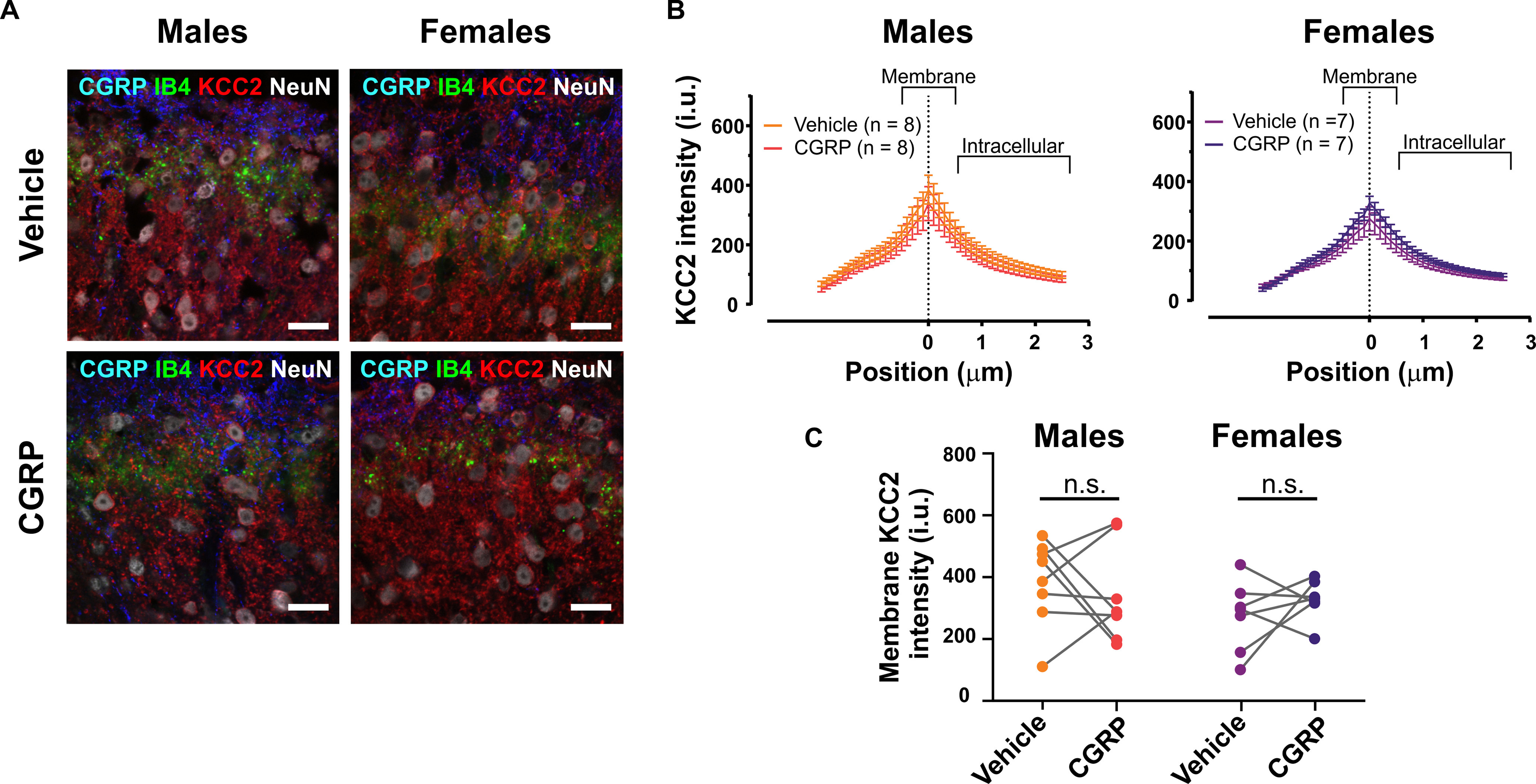
CGRP incubation for 3 h does not cause KCC2 internalization in superficial dorsal horn neurons in either female or male mice spinal cord explants. A, Representative confocal images of the dorsal horn of spinal cord explants from female and male mice incubated with either 50 nm CGRP or vehicle for 3 h, showing CGRP, IB4, KCC2, and NeuN staining. Scale bar, 20 μm. B, Average KCC2 intensity profiles from dorsal horn neurons of male (left; n = 8 mice) and female (right; n = 7 mice) mice explants incubated with vehicle (orange and violet lines) or 50 nm CGRP (red and purple lines). Results are presented as the mean per group. C, Membrane KCC2 intensity of the four experimental groups calculated at position zero. No significant differences were observed between vehicle- and CGRP-treated female or male mice spinal cord explants.

References

    1. Ashina M, Katsarava Z, Do TP, Buse DC, Pozo-Rosich P, Özge A, Krymchantowski AV, Lebedeva ER, Ravishankar K, Yu S, Sacco S, Ashina S, Younis S, Steiner TJ, Lipton RB (2021) Migraine: epidemiology and systems of care. Lancet 397:1485–1495. 10.1016/S0140-6736(20)32160-7 - DOI - PubMed
    1. Asiedu MN, Mejia G, Ossipov MK, Malan TP, Kaila K, Price TJ (2012) Modulation of spinal GABAergic analgesia by inhibition of chloride extrusion capacity in mice. J Pain 13:546–554. 10.1016/j.jpain.2012.03.002 - DOI - PMC - PubMed
    1. Avona A, Burgos-Vega C, Burton MD, Akopian AN, Price TJ, Dussor G (2019) Dural calcitonin gene-related peptide produces female-specific responses in rodent migraine models. J Neurosci 39:4323–4331. 10.1523/JNEUROSCI.0364-19.2019 - DOI - PMC - PubMed
    1. Avona A, Mason BN, Burgos-Vega C, Hovhannisyan AH, Belugin SN, Mecklenburg J, Goffin V, Wajahat N, Price TJ, Akopian AN, Dussor G (2021) Meningeal CGRP-prolactin interaction evokes female-specific migraine behavior. Ann Neurol 89:1129–1144. 10.1002/ana.26070 - DOI - PMC - PubMed
    1. Banik RK, Woo YC, Park SS, Brennan TJ (2006) Strain and sex influence on pain sensitivity after plantar incision in the mouse. Anesthesiology 105:1246–1253. 10.1097/00000542-200612000-00025 - DOI - PubMed

Publication types

Substances