. 2022 Jan 20;5(1):80.
doi: 10.1038/s42003-022-03031-6.

Cross-tissue transcriptome-wide association studies identify susceptibility genes shared between schizophrenia and inflammatory bowel disease

Affiliations

Cross-tissue transcriptome-wide association studies identify susceptibility genes shared between schizophrenia and inflammatory bowel disease

Florian Uellendahl-Werth et al. Commun Biol. .

Abstract

Genetic correlations and an increased incidence of psychiatric disorders in inflammatory-bowel disease have been reported, but shared molecular mechanisms are unknown. We performed cross-tissue and multiple-gene conditioned transcriptome-wide association studies for 23 tissues of the gut-brain-axis using genome-wide association studies data sets (total 180,592 patients) for Crohn's disease, ulcerative colitis, primary sclerosing cholangitis, schizophrenia, bipolar disorder, major depressive disorder and attention-deficit/hyperactivity disorder. We identified NR5A2, SATB2, and PPP3CA (encoding a target for calcineurin inhibitors in refractory ulcerative colitis) as shared susceptibility genes with transcriptome-wide significance both for Crohn's disease, ulcerative colitis and schizophrenia, largely explaining fine-mapped association signals at nearby genome-wide association study susceptibility loci. Analysis of bulk and single-cell RNA-sequencing data showed that PPP3CA expression was strongest in neurons and in enteroendocrine and Paneth-like cells of the ileum, colon, and rectum, indicating a possible link to the gut-brain-axis. PPP3CA together with three further suggestive loci can be linked to calcineurin-related signaling pathways such as NFAT activation or Wnt.


Conflict of interest statement

The authors declare no competing interests.

Figures
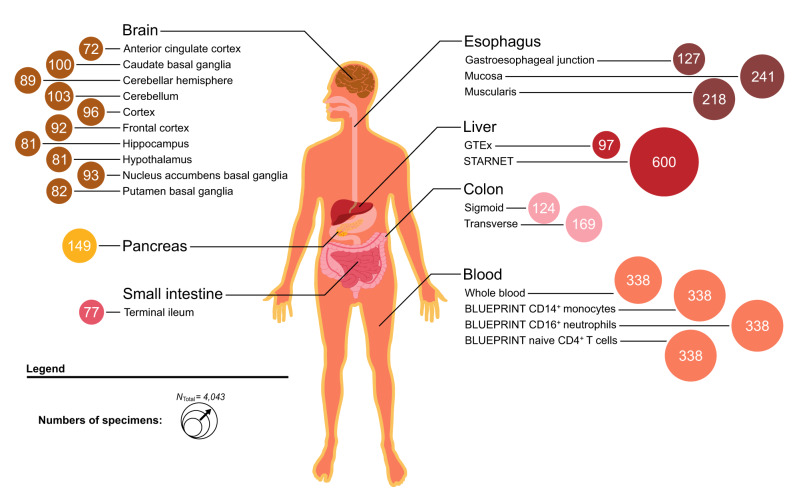
Fig. 1
Fig. 1. Selection of 23 tissue and cell types to perform transcriptome-wide association analyses (TWAS) for gut-brain axis (GBA) diseases.
We selected 23 tissues and cell types previously found to contribute to the heritability of psychiatric or immune-mediated disease (Methods). Cross-tissue TWAS training and imputation models were used using transcriptome-wide and genome-wide reference data from 4043 reference samples from 23 tissues and cell types (Supplementary Data 2) provided by consortium projects GTEx, STARNET, and BLUEPRINT (Methods): gastrointestinal and liver tissues (n = 9), brain tissues (n = 10), whole blood (n = 1), and immune cell types (CD14+ monocytes, CD16+ neutrophils, CD4+ T-cells; n = 3). Different colors represent biological samples from different tissue classes. The size of the circles corresponds to the number of reference samples of the respective tissue.
Fig. 2
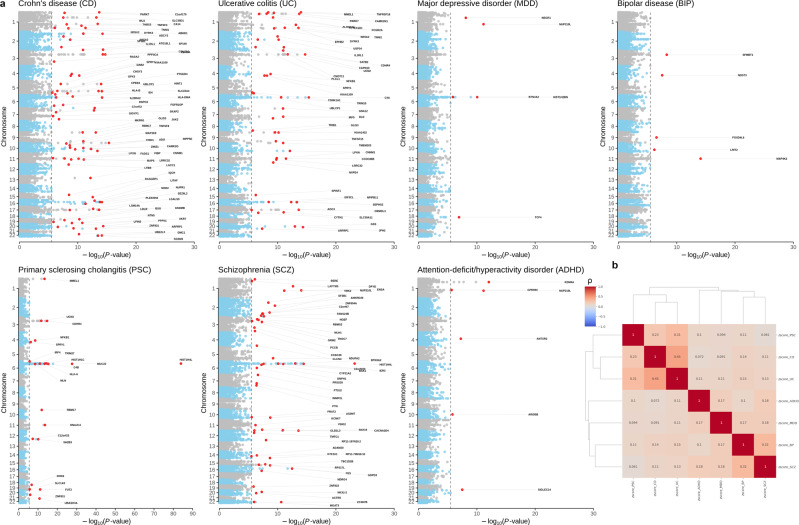
Fig. 2. Manhattan plots showing transcriptome-wide significant (Pconditional < 3.20 × 10−6 from GBJconditional) gene discoveries for psychiatric and immune phenotypes in 23 gut-brain-axis (GBA) tissues, and proportion of shared predicted transcriptome-wide disease-associated gene expression (ρE) for pairs of immune-mediated and psychiatric diseases averaged across 23 tissues of the GBA.
a Gray dotted line, transcriptome-wide significance threshold; red dots, lead gene-disease associations at TWAS loci (for regions of size ±1 Mb) and conditioned on all genes within ±1 Mb regions. CD Crohn’s disease, UC ulcerative colitis, PSC primary sclerosing cholangitis, SCZ schizophrenia, MDD major depressive disorder, BIP bipolar disease, ADHD attention-deficit/hyperactivity disorder. b Spearman’s trait correlation (ρ) values at the transcriptome-wide level of gene expression for each disease pair and averaged across 23 tissues of the GBA show that effects of genetic risk variants shared between psychiatric and immune phenotypes are largely mediated by gene expression. Strongest positive correlations across psychiatric and immune phenotypes were observed for pairs UC and BP (ρ^E = 0.15), CD and BP (ρ^E = 0.14), UC and SCZ (ρ^E = 0.13), and CD and SCZ (ρ^E = 0.11), which is in line with genome-wide genetic correlations (ρ^G) for pairs UC and BP (ρ^G = 0.23), CD and BP (ρ^G = 0.22), UC and SCZ (ρ^G = 0.14), and CD and SCZ (ρ^G = 0.12) reported by Tylee et al.. The dendrogram reflects the corresponding hierarchical single linkage clustering across diseases. Genetic trait correlations for single-tissue results (analysis Single-tissueconditional) are given in Supplementary Data 9, 10. For the selection of 23 tissues, see Fig. 1, Supplementary Data 2, and Methods. Results from unconditioned cross-tissue TWAS analysis (GBJmarginal; before multiple-gene-conditioned fine-mapping analysis) are shown in Supplementary Fig. 2.
Fig. 3
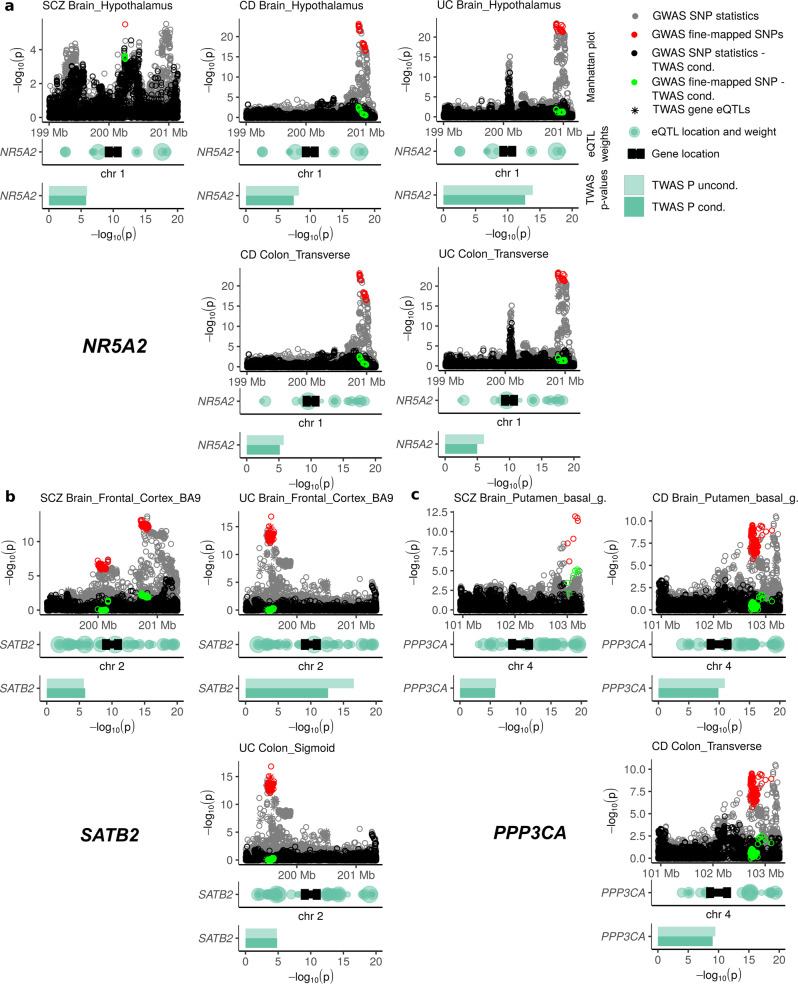
Fig. 3. The transcriptome-wide significant gene-disease association signals of NR5A2 (1q32.1), SATB2 (2q33.1), and PPP3CA (4q24) for SCZ, CD, and UC largely explain fine-mapped GWAS association signals from nearby GWAS susceptibility loci.
a The gene-disease association signal of NR5A2 is driven by the nearby but nonoverlapping established SCZ and CD/UC GWAS signals located 104 and 654 kilobases (kb) upstream of NR5A2, respectively (Table 2). Increased genetically regulated expression of NR5A2 in the hypothalamus and colon transversum was associated with increased risk for schizophrenia (SCZ), Crohn’s disease (CD), and ulcerative colitis (UC). b The association signal of SATB2 is driven by the nearby but nonoverlapping established SCZ and UC GWAS signals located 67 and 424 kilobases (kb) downstream and upstream of SATB2, respectively. Increased genetically regulated expression of SATB2 in frontal cortex BA9 and colon sigmoideum is associated with increased risk for SCZ and UC. Although 95% credible sets of variants most likely to be causal (red circles; upper part) differ between SCZ and UC, the distribution pattern of TWAS gene eQTLs of SATB2 (gray asterisks [upper part] and green transparent circles [middle part]) leads to the shared gene-disease association for SATB2 in both SCZ and UC. c The gene-disease association signal of PPP3CA is driven by the nearby (nonoverlapping) established SCZ and CD GWAS signals located 280 and 383 kilobases (kb) upstream of SATB2, respectively. Decreased genetically regulated expression of PPP3CA in putamen basal ganglia and colon transversum is associated with increased risk for SCZ and CD. Raw data of this figure can be found in Supplementary Data 16. Explanation of figure elements: Subplots include original consortium GWAS SNP summary statistics of size ±1 Mb (gray circles; upper part) around the gene, with the 95% credible sets of variants most likely to be causal at each locus (red circles; upper part) as defined by GWAS fine-mapping studies,. SNP summary stats were conditioned (black circles; upper part) on TWAS gene eQTLs (black asterisks [upper part] correspond to the green transparent circles [middle part], with the relative absolute weight of the eQTLs visualized by the size of green transparent circles) to examine if the original GWAS SNP statistics (gray circles [upper part]; gray asterisks correspond to the green transparent circles [middle part]) can be explained by genetically regulated expression of the gene (green rectangles depict unconditioned/conditioned TWAS P values from Single-tissueconditional analysis; lower part). GWAS SNP summary statistics of 95% credible sets of variants after joint GWAS/TWAS fine-mapping analysis are depicted as light green circles (upper part). Gene-start and gene end positions are marked by dumbbell-shaped black bars (middle part).
Fig. 4
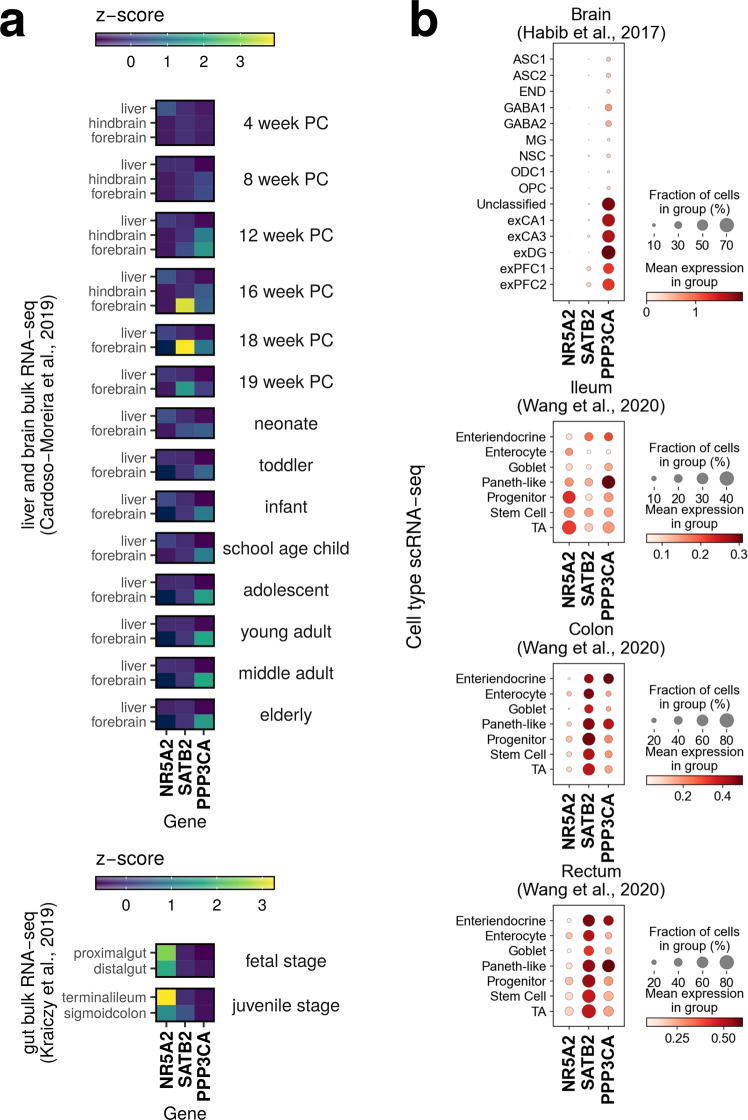
Fig. 4. Analysis of developmental and single-cell RNA-seq data suggest a cell-specific pleiotropic role of NR5A2, SATB2, and PPP3CA in SCZ, CD, and UC and showed that PPP3CA expression was strongest in neurons and enteroendocrine and Paneth-like cells of the ileum, colon, and rectum, indicating a possible link to the GBA.
Visualizations of bulk expression of the candidate genes can be found in Supplementary Fig. 42. a Brain expression data from humans of different ages confirm GTeX and BLUEPRINT tissue data and show that NR5A2 is almost absent in brain samples. SATB2 is strongly upregulated in the fetal forebrain in midfetal development. This suggests a developmental function that may predispose to disease when dysregulated. PPP3CA expression is strongest in the forebrain and increases with age. Expression in the liver is given for reference. PC, post conception. Data on expression in the developmental gut show that NR5A2 is strongly expressed in the ileum and less so in the colon, whereas SATB2 is more abundant in the colon than in the ileum. This is consistent with the observation that SATB2 is significant for UC but not for CD (Table 2). PPP3CA expression is not evident from bulk RNA-Seq data of intestinal tissue. b NR5A2 is expressed in ileal progenitor, stem cells, and transient amplifying (TA) cells, less strongly in colon and rectum, and not in the brain, consistent with bulk RNA-seq results. SATB2 is strongly expressed in all cell types of the colon and rectum. PPP3CA, despite weak expression in the ileum or colon, is enriched in enteroendocrine and Paneth-like cells of the colon and rectum, supporting a role in immunomodulation. In the brain, PPP3CA is enriched in neurons. Overall, these expression data indicate that separate functions are likely in the gut and brain-based on specific expression patterns. NR5A2 expression was not found in the brain, but literature results make brain-specific function highly likely (Supplementary Note 3). Raw data of this figure can be found in Supplementary Data 17. (exPFC glutamatergic neurons from the PFC, exCA1/3 pyramidal neurons from the Hip CA region, GABA GABAergic interneurons, exDG granule neurons from the Hip dentate gyrus region, ASC astrocytes, NSC neuronal stem cells, MG microglia, ODC oligodendrocytes, OPC oligodendrocyte precursor cells, NSC neuronal stem cells, SMC smooth muscle cells, END endothelial cells).
Fig. 5
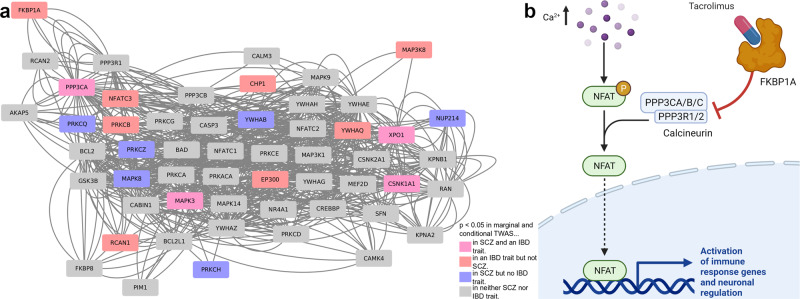
Fig. 5. Calcineurin-dependent NFAT signaling as shared signaling pathway for IBD and SCZ.
a 18 gene-disease associations with suggestive significance (PGBJ conditional < 0.05; i.e., after multiple-gene-conditioned fine-mapping analysis) are enriched in the “calcineurin-dependent NFAT signaling in leukocytes” pathway (comprising 55 genes; Methods), showing genetically altered gene expression for SCZ, CD, or UC compared to healthy controls. PPP3CA encodes the catalytic subunit calcineurin A; FKBP1A (also known as FKBP12) encodes a cis-trans prolyl isomerase that binds the immunosuppressant FK506 (tacrolimus). b The calcineurin inhibitor tacrolimus, used against various inflammatory diseases and as an immunosuppressant in organ-transplanted PSC-IBD patients, prevents NFAT signaling by binding to FKBP1A and causes inhibition of calcineurin. The reduced genetic expression of PPP3CA that we identified in intestinal and brain tissues causes an increased risk of SCZ and CD (Table 2). Raw data of this figure can be found in Supplementary Data 18.

References

    1. Heiss CN, Olofsson LE. The role of the gut microbiota in development, function and disorders of the central nervous system and the enteric nervous system. J Neuroendocrinol. 2019;31:e12684. - PubMed
    1. Skonieczna-Zydecka, K., Marlicz, W., Misera, A., Koulaouzidis, A. & Loniewski, I. Microbiome-The missing link in the gut-brain axis: focus on its role in gastrointestinal and mental health. J. Clin. Med.7, 521 (2018). - PMC - PubMed
    1. Kan JM, Cowan CSM, Ooi CY, Kasparian NA. What can the gut microbiome teach us about the connections between child physical and mental health? A systematic review. Dev. Psychobiol. 2019;61:700–713. - PubMed
    1. Ming X, et al. A gut feeling: a hypothesis of the role of the microbiome in attention-deficit/hyperactivity disorders. Child Neurol. Open. 2018;5:2329048X18786799. - PMC - PubMed
    1. Severance EG, Yolken RH, Eaton WW. Autoimmune diseases, gastrointestinal disorders and the microbiome in schizophrenia: more than a gut feeling. Schizophr. Res. 2016;176:23–35. - PMC - PubMed

Publication types