Review
. 2022 May;23(5):307-328.
doi: 10.1038/s41580-021-00446-7. Epub 2022 Jan 20.

Karyopherin-mediated nucleocytoplasmic transport

Affiliations
Review

Karyopherin-mediated nucleocytoplasmic transport

Casey E Wing et al. Nat Rev Mol Cell Biol. 2022 May.

Abstract

Efficient and regulated nucleocytoplasmic trafficking of macromolecules to the correct subcellular compartment is critical for proper functions of the eukaryotic cell. The majority of the macromolecular traffic across the nuclear pores is mediated by the Karyopherin-β (or Kap) family of nuclear transport receptors. Work over more than two decades has shed considerable light on how the different Kap family members bring their respective cargoes into the nucleus or the cytoplasm in efficient and highly regulated manners. In this Review, we overview the main features and established functions of Kap family members, describe how Kaps recognize their cargoes and discuss the different ways in which these Kap-cargo interactions can be regulated, highlighting new findings and open questions. We also describe current knowledge of the import and export of the components of three large gene expression machines - the core replisome, RNA polymerase II and the ribosome - pointing out the questions that persist about how such large macromolecular complexes are trafficked to serve their function in a designated subcellular location.


Conflict of interest statement

Competing interests

Y.M.C. is a consultant for Faze Medicines. The remaining authors declare no competing interests.

Figures
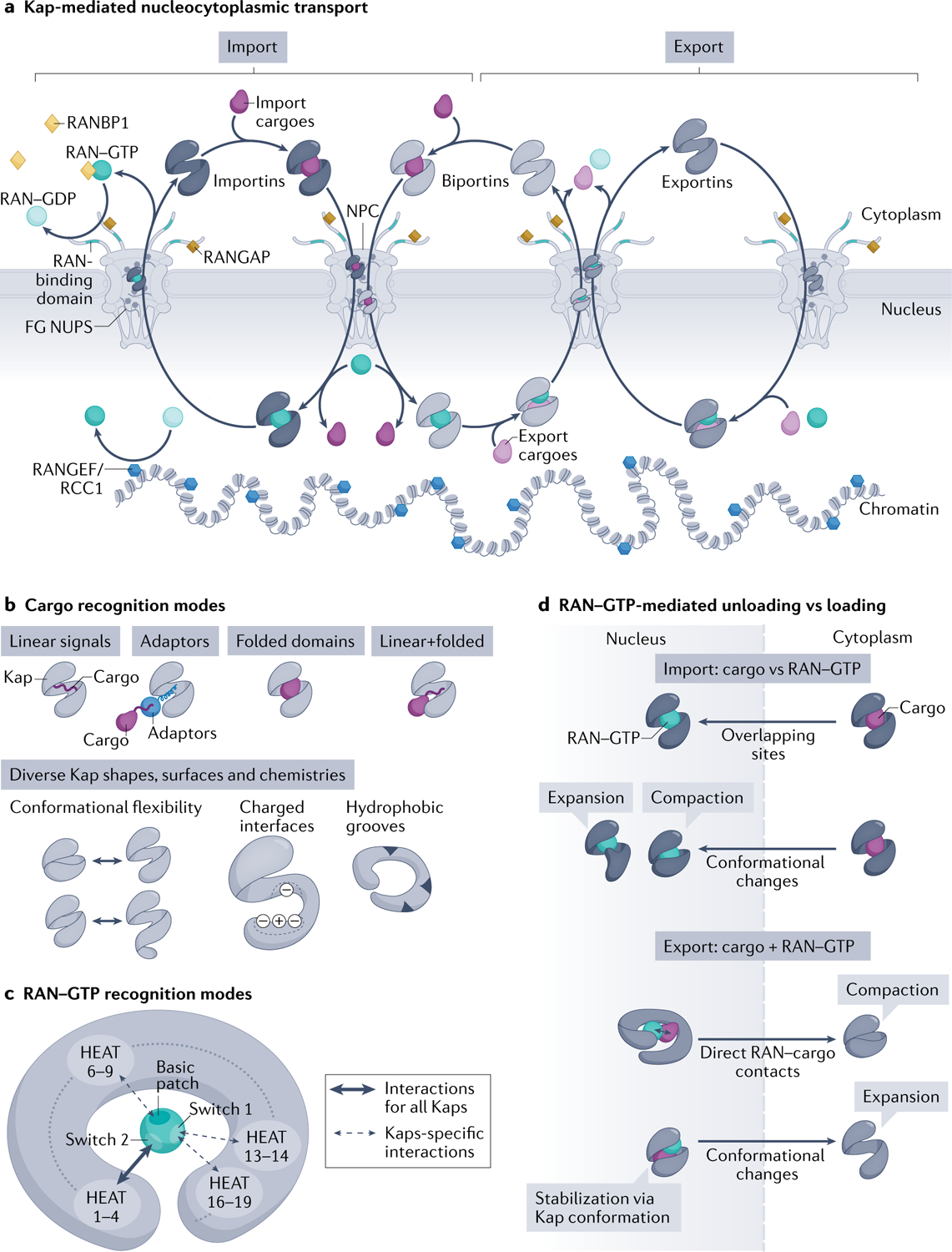
Fig. 1 |
Fig. 1 |. Kap-mediated nucleocytoplasmic transport and principles of Kap–cargo interactions and RAN–GTP-dependent loading/unloading.
a | Karyopherins (Kaps) (comprising importins, biportins and exportins; shown in grey) and the RAN–GTP gradient control directional transport of cargoes across nuclear pore complexes (NPCs). RAN–GTP (dark teal circles) enriched in the nucleus by the action of chromatin-bound nucleotide exchange factor RANGEF/RCC1 (blue hexagons). Cytoplasmic RAN–GDP (light teal circles) enriched by action of cytoplasmic RAN GTPase-activating protein (RANGAP) (gold squares), RAN-binding domains in nucleoporin RANBP2 (teal fibrils) and cytosolic RANBP1 (yellow diamonds), which accelerate GTP hydrolysis. Importins (left) and biportins (middle) bind cytosolic import cargoes (dark purple), translocate across NPCs by interacting with phenylalanine-glycine (FG) Nups and bind RAN–GTP in the nucleus to release cargoes. Importin–RAN–GTP complexes then exit the nucleus; RAN–GTP hydrolysis and release of RAN–GDP in the cytoplasm then frees importins for the next round of import. Biportins and exportins (right) cooperatively bind export cargoes (light purple) and RAN–GTP in the nucleus. GTP hydrolysis of RAN in the cytosol releases export cargoes and RAN–GDP. Biportins are free for import, whereas unliganded exportins return to the nucleus. b | Kaps use their HEAT repeats to bind cargoes. Kap-binding elements can be specific linear signals (nuclear localization signals and nuclear export signals) within the cargoes, linear signals within adaptor proteins (which then bind cargoes with linear signals), folded domains or the combination of both linear and folded domains. Kaps display various charged and hydrophobic surfaces and their HEAT repeats are also arranged into diverse shapes that undergo different conformational changes, all allowing engagement of many diverse cargoes. c | RAN–GTP recognition is achieved by contacts made between RAN–GTP-specific switch 1, switch 2 and the basic patch with various HEAT repeats in the concave surface of all Kaps. HEAT repeats 1–4 are used by all Kaps, whereas other HEAT repeats are additionally used only by specific Kaps. Some Kaps also use long loops between or within HEAT repeats to contact switch 1 and the basic patch of RAN–GTP (not shown). d | Import: Kap binding to RAN–GTP and import cargoes is mutually exclusive, as a result of overlapping binding sites and steric hindrance and/or conformational changes in the superhelix of Kap that favour binding to RAN–GTP or cargo. Export: Kaps bind cargo and RAN–GTP cooperatively; RAN–GTP–cargo contacts and Kap conformational changes stabilize the ternary export complexes.
Fig. 2 |
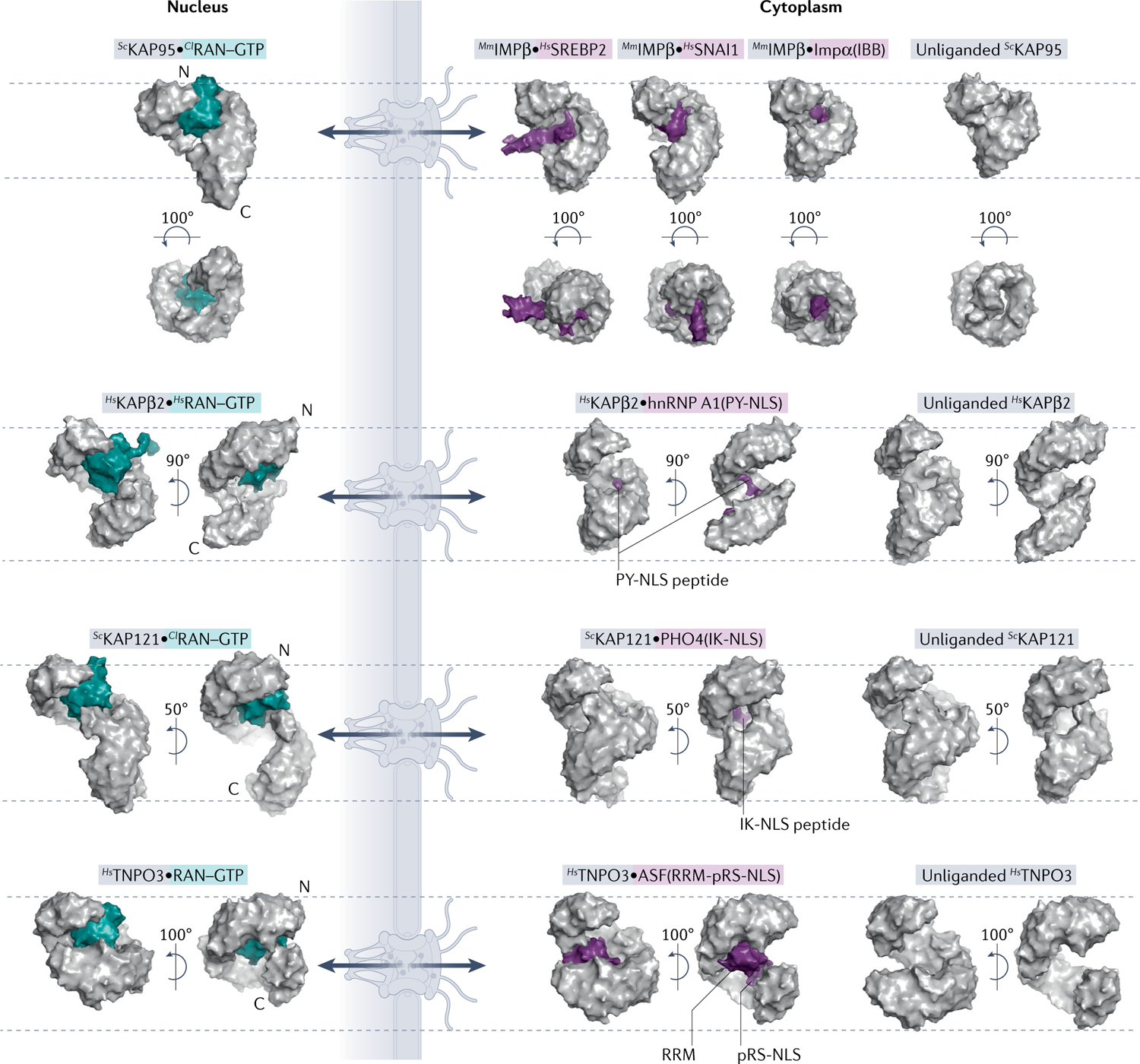
Fig. 2 |. Comparison of unliganded, cargo-bound and RAN-bound importins.
Surface representations of nuclear and cytoplasmic complexes of importins (grey) with RAN–GTP (teal) or cargo (purple). All importins are structurally aligned at residues 1–200 and displayed in the same orientation. Dashed lines mark top of first HEAT repeat and bottom of last HEAT repeat of each unliganded importin to help visualize importin conformational changes and differences in superhelical compactness. Cargo release by RAN–GTP results from either steric clash between RAN–GTP and cargo or conformational changes to the importin superhelix. PDB IDs (left to right): IMPβ [PDB:2BKU, PDB:1UKL, PDB:3W5K, PDB:1QGK, PDB:3ND2]; KAPβ2 [PDB:1QBK, PDB:2H4M, PDB:2QMR]; KAP121 [PDB:3W3Z, PDB:3W3X, PDB:3S3T]; and TNPO3 [PDB:4C0Q, PDB:4C0O, PDB:4C0P]. ASF, splicing factor 1; Cl, Canis lupus; hnRNP, heterogeneous nuclear RNP; Hs, Homo sapien; IBB, amino-terminal IMPβ-binding; IK-NLS, isoleucine-lysine nuclear localization signal; Kaps, Karyopherins; Mm, Mus musculus; PY-NLS, proline-tyrosine nuclear localization signal; RRM, RNA-recognition motif; RS-NLS, arginine-serine repeat nuclear localization signal; Sc, Saccharomyces cerevisiae; SREBP2, sterol regulatory element-binding protein 2.
Fig. 3 |
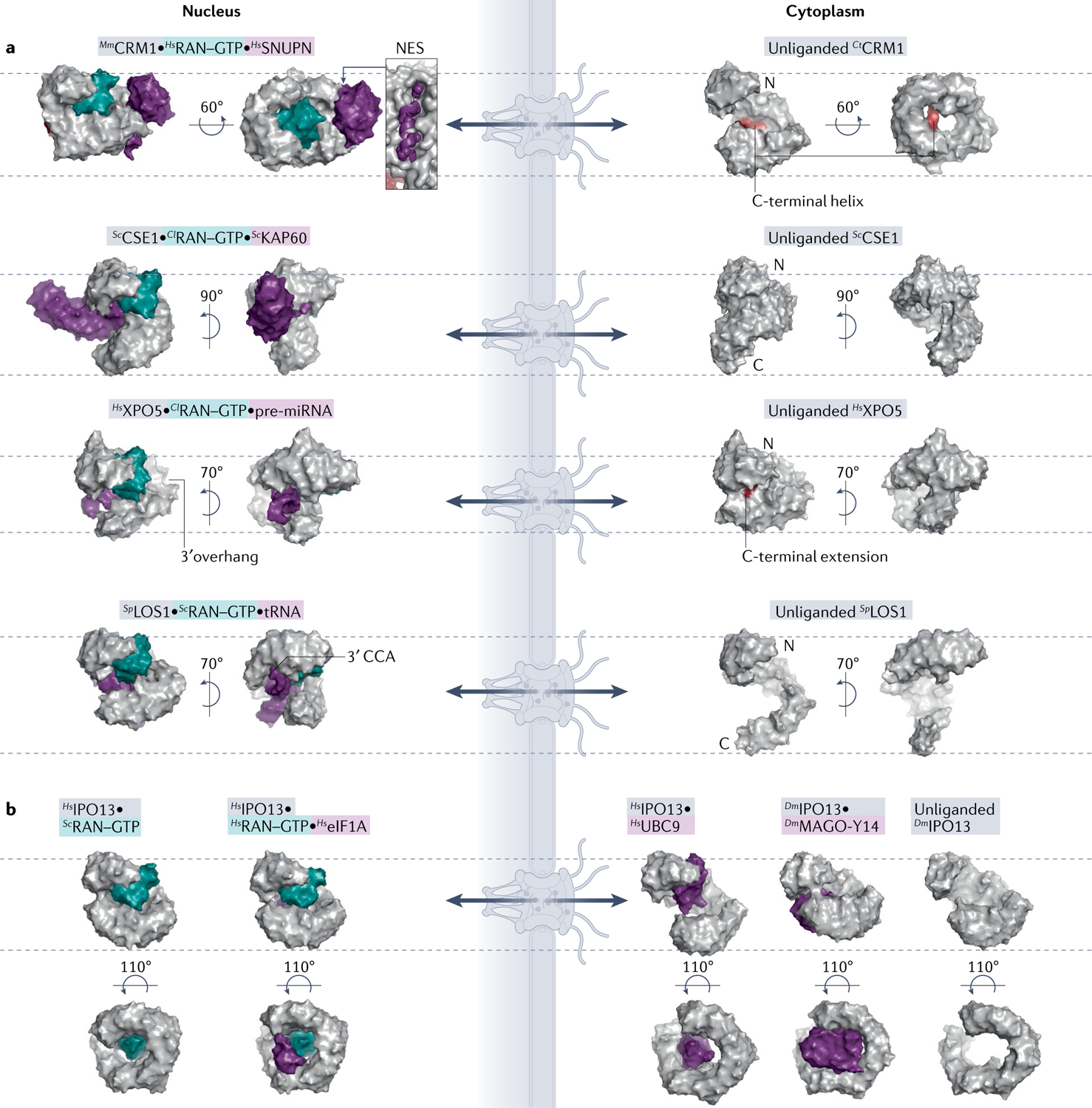
Fig. 3 |. Comparison of unliganded, cargo-bound and RAN-bound exportins and biportins.
Surface representations of Karyopherins (Kaps; grey), Kap–RAN–GTP (teal)–cargo (purple) or Kap–RAN–GTP complexes. All Kaps are aligned, displayed in same orientation and marked with dashed lines as in FIG. 2. a | Exportin structures. Autoinhibitory carboxy-terminal helix/loop (red) of CRM1 and XPO5 are shown in the unliganded exportins. Locations of 3′ overhangs of pre-microRNA (pre-miRNA) and tRNA, recognized by different regions of XPO5 and LOS1, respectively, are also indicated. RAN–GTP binding to XPO1 and XPOT cause ring compaction for cargo binding, whereas RAN–GTP binding to CSE1 and XPO5 opens them up to accommodate cargoes. b | Biportin IPO13 structures. Cargo release from IPO13 is induced by RAN–GTP using steric clash mechanism and conformational changes to the Kap superhelix, to bind specific import and export cargoes. PDB IDs (left to right): CRM1 [PDB:3GJX, PDB:4FGV]; CSE1 [PDB:1WA5, PDB:1Z3H]; XPO5 [PDB:3A6P, PDB:5YU7]; LOS1 [PDB:3ICQ, PDB:3IBV]; and IPO13 [PDB:2X19, PDB:3ZJY, PDB:2XWU, PDB:2X1G, PDB:3ZKV]. Cl, Canis lupus; Ct, Chaetomium thermophilum; Dm, Drosophila melanogaster; eIF1A, eukaryotic translation initiation factor 1A; Mm, Mus musculus; NES, nuclear export signal; Sc, Saccharomyces cerevisiae; Sp, Schizosaccharomyces pombe.
Fig. 4 |
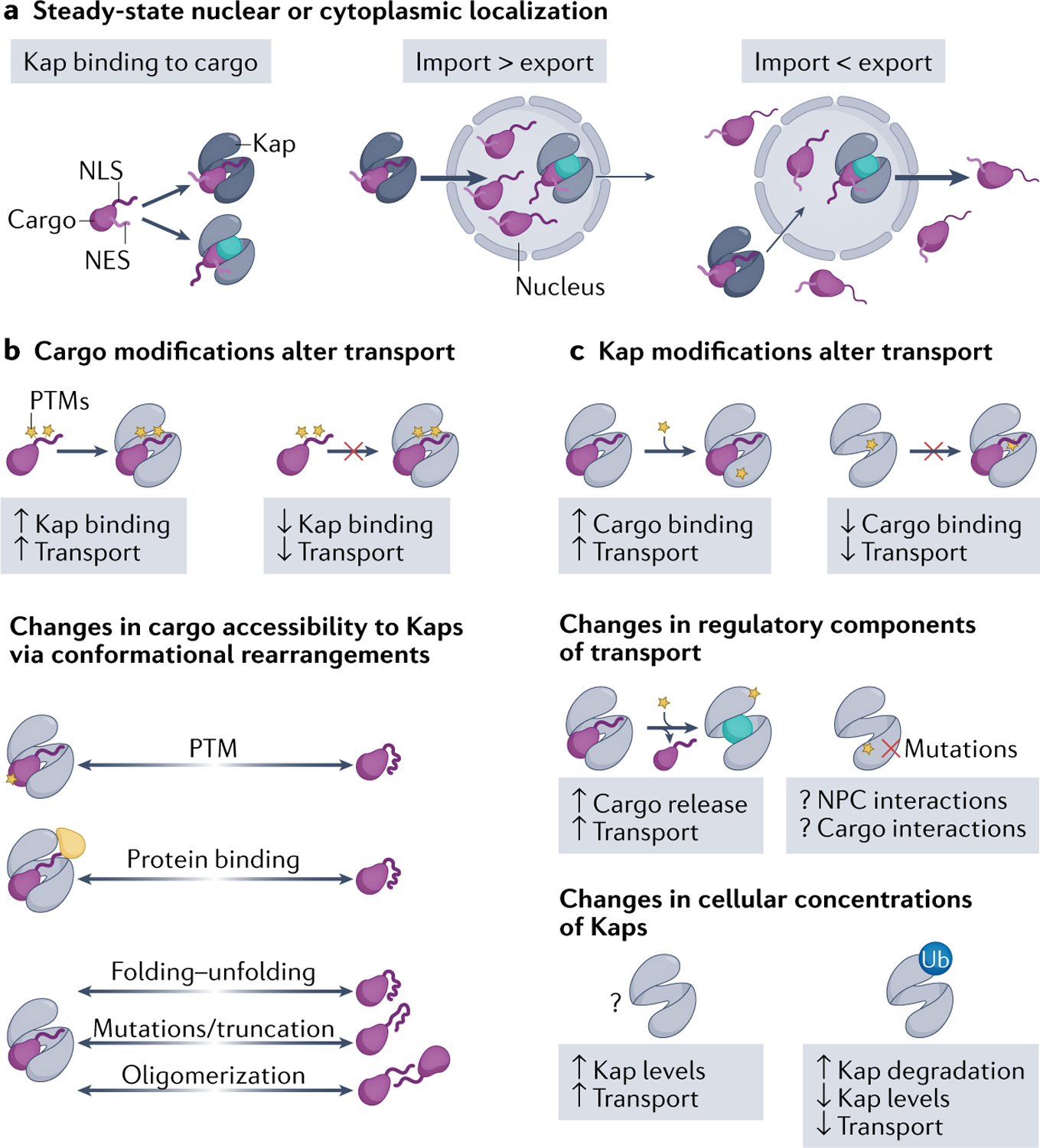
Fig. 4 |. Regulation of Kap–cargo interactions.
a | At steady state, cellular localization of cargo depends on whether the nuclear import or export flux is stronger. Overall transport flux can change due to various modifications on either particular cargoes (part b) or the Karyopherins (Kaps) that may affect transport of some or all cargoes (part c). b | Cargo modifications include post-translational modifications (PTMs), binding to a protein partner, mutations/truncations and changes to protein folding–unfolding and to cargo oligomerization state. PTMs can either activate or inactivate nuclear localization/export signals and directly affect Kap–cargo affinity to increase or decrease transport. Cargo modifications can also indirectly affect Kap–cargo affinity, by inducing conformational changes in the cargoes that then alter accessibility of the cargo elements that bind Kaps. c | Changes to Kaps that control transport flux include PTMs of Kaps and changes in Kap expression levels. PTMs of Kap can directly affect Kap–cargo binding affinities. PTMs can also alter Kap interactions with other regulatory components of transport, such as RAN–GTP, nucleoporins and other Kaps. Overall traffic can also be regulated by changes in Kap expression levels, whether physiological regulation by PTMs or aberrant accumulation in cancers and disease. NES, nuclear export signal; NLS, nuclear localization signal; NPC, nuclear pore complex; Ub, ubiquitylation.
Fig. 5 |
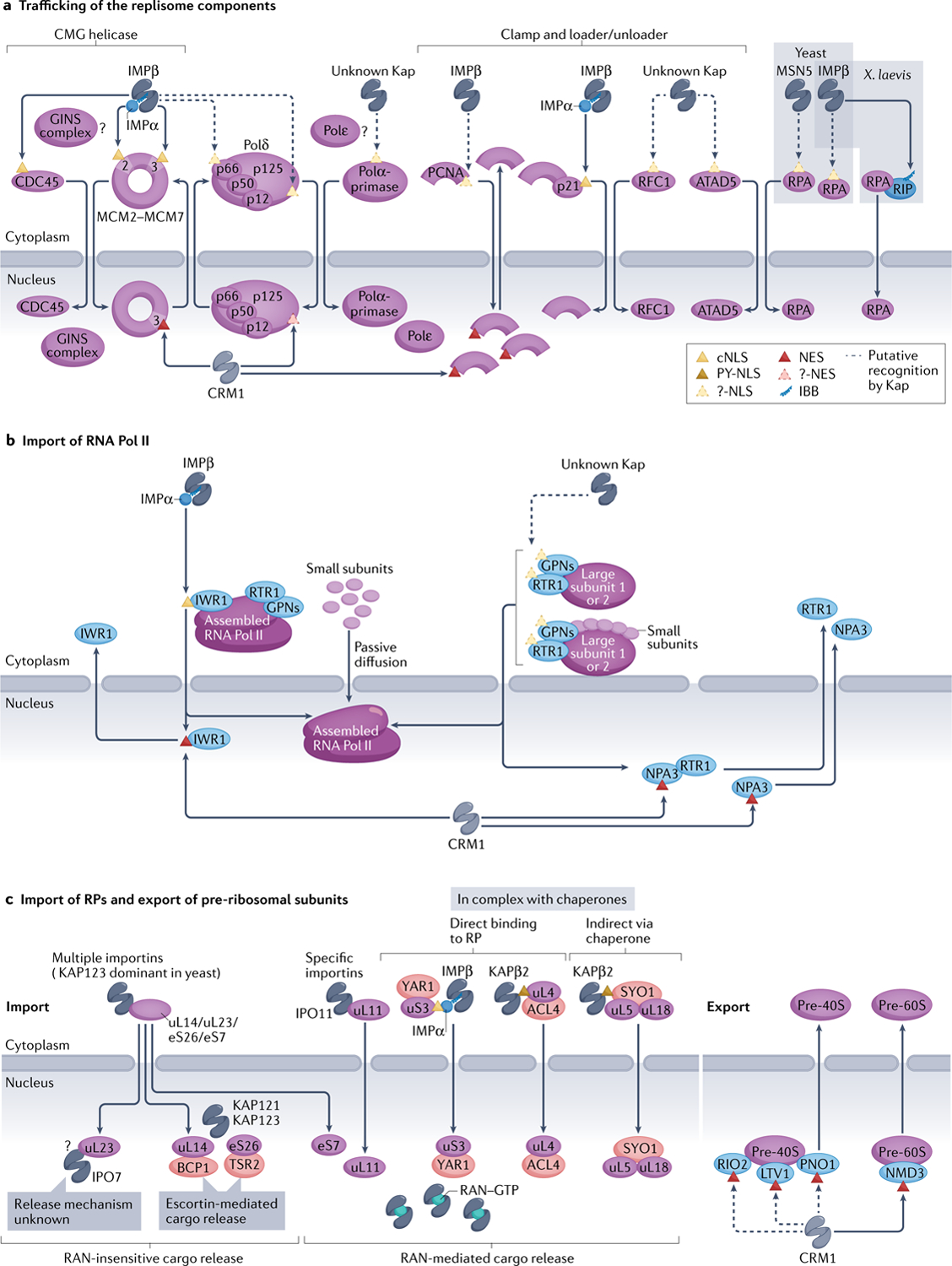
Fig. 5 |. Nuclear trafficking of three different gene ▶expression machineries.
a | Most replisome components are believed to be imported by importin IMPα–IMPβ, but only two proteins — cell division control protein 45 (CDC45) and minichrosome maintenance (MCM) complex — have validated classical nuclear localization signals (cNLSs; yellow triangles), whereas various others have only unverified NLSs or their NLSs have not be identified (?-NLS; dashed, yellow triangles). Xenopus laevis replication protein A (RPA) may be imported by IMPβ via adaptor RPA-interacting protein (RIP), which contains an IMPβ-binding (IBB) region. A few components of the replisome may be imported by other Karyopherins (Kaps), and trafficking of others, such as GINS complex and polymerase ε (Polε), are unstudied (?).Similarly, only a few components seem to have nuclear export signals (NESs; red triangles) and are exported by CRM1 — it is unclear whether others are recycled back to the cytosol. b | Import of the yeast RNA polymerase II (Pol II) complex. Interacting with RNA polymerase II protein 1 (IWR1) acts as an adaptor and binds IMPα–IMPβ to import fully assembled RNA Pol II. IWR1 is recycled back to the cytosol by CRM1 exportin. Alternative import pathways of partially assembled RNA Pol II were proposed, such as via passive diffusion of small components or additional factors such as Regulator of transcription 1 (RTR1), as well as Glycine-proline-asparagine (GPN)-loop GTPase proteins. These factors are exported by CRM1 possibly via the NES within GPN protein NPA3. c | Several ribosomal proteins (RPs), such as uL14, uL23, eS7 and eS26, are imported by multiple importins. Others, such as uL11, are imported by specific importins, and yet others are imported bound to their chaperones (red ovals). Nuclear RAN–GTP dissociates most Kap–RP complexes, releasing the RPs into the nucleoplasm for complex assembly; exceptions include those that require dedicated chaperones, called escortins, for release or other, unexplored mechanisms (?). Assembled and mature pre-40S and pre-60S subunits are exported either by CRM1 or alternate pathways that involve mRNA export receptor MEX67-MTR2 (not pictured). ACL4, assembly chaperone of RPL4; ATAD5, ATPase family AAA domain-containing protein 5; BCP1, Bacterioferritin co-migratory protein 1; GINS, ‘go-ichi-ni-san’ in Japanese meaning ‘5-3-2-1’ (SLD5-PSF1-PSF2-PSF3); LTV1, low-temperature viability protein 1; NMD3, nonsense-mediated mRNA decay protein 3; PCNA, proliferating cell nuclear antigen; PNO1, partner of NOB1 (nuclear integrity protein 1 (NIN1) binding protein 1); PY-NLS, proline-tyrosine nuclear localization signal; RFC1, replication factor C subunit 1; RIO2, RIO (right open reading frame)-type kinase 2; SYO, symportin 1; TSR2, 20S ribosomal RNA accumulation protein 2; YAR1, yeast ankyrin repeat-containing protein 1.

References

    1. Chook YM & Suel KE Nuclear import by karyopherin-βs: recognition and inhibition. Biochim. Biophys. Acta 1813, 1593–1606 (2011). - PMC - PubMed
    1. Matsuura Y Mechanistic insights from structural analyses of Ran-GTPase-driven nuclear export of proteins and RNAs. J. Mol. Biol 428, 2025–2039 (2016). - PubMed
    1. Kalita J, Kapinos LE & Lim RYH On the asymmetric partitioning of nucleocytoplasmic transport — recent insights and open questions. J. Cell Sci 134, jcs240382 (2021). - PubMed
    1. O’Reilly AJ, Dacks JB & Field MC Evolution of the karyopherin-β family of nucleocytoplasmic transport factors; ancient origins and continued specialization. PLoS ONE 6, e19308 (2011). - PMC - PubMed
    1. Thakar K, Karaca S, Port SA, Urlaub H & Kehlenbach RH Identification of CRM1-dependent nuclear export cargos using quantitative mass spectrometry. Mol. Cell Proteom 12, 664–678 (2013). - PMC - PubMed

Publication types

MeSH terms