


Translational Approaches for Brain Delivery of Biologics via Cerebrospinal Fluid
- PMID: 35064573
- PMCID: PMC9305158
- DOI: 10.1002/cpt.2531
Translational Approaches for Brain Delivery of Biologics via Cerebrospinal Fluid
Abstract
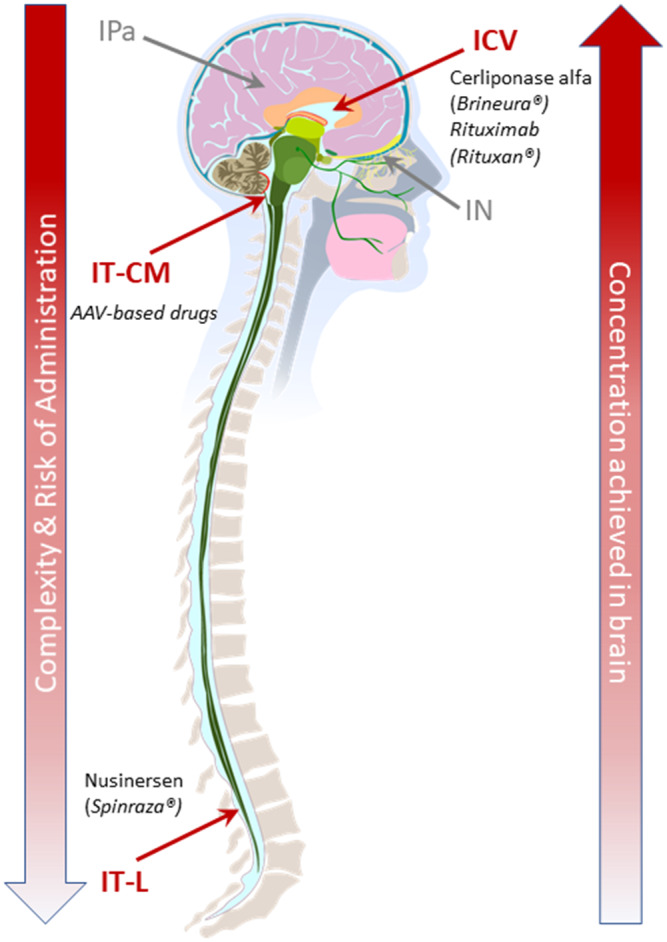
Delivery of biologics via cerebrospinal fluid (CSF) has demonstrated potential to access the tissues of the central nervous system (CNS) by circumventing the blood-brain barrier and blood-CSF barrier. Developing an effective CSF drug delivery strategy requires optimization of multiple parameters, including choice of CSF access point, delivery device technology, and delivery kinetics to achieve effective therapeutic concentrations in the target brain region, whereas also considering the biologic modality, mechanism of action, disease indication, and patient population. This review discusses key preclinical and clinical examples of CSF delivery for different biologic modalities (antibodies, nucleic acid-based therapeutics, and gene therapy) to the brain via CSF or CNS access routes (intracerebroventricular, intrathecal-cisterna magna, intrathecal-lumbar, intraparenchymal, and intranasal), including the use of novel device technologies. This review also discusses quantitative models of CSF flow that provide insight into the effect of fluid dynamics in CSF on drug delivery and CNS distribution. Such models can facilitate delivery device design and pharmacokinetic/pharmacodynamic translation from preclinical species to humans in order to optimize CSF drug delivery to brain regions of interest.
© 2022 Genentech, Inc. Clinical Pharmacology & Therapeutics published by Wiley Periodicals LLC on behalf of American Society for Clinical Pharmacology and Therapeutics.
Conflict of interest statement
The authors were affiliated with Genentech, Inc. when performing this work.
Figures
References
-
- Pardridge, W.M. CSF, blood‐brain barrier, and brain drug delivery. Expert Opin. Drug Del. 13, 963–975 (2016). - PubMed
Publication types
MeSH terms
Substances
LinkOut - more resources
Full Text Sources
