Artificial intelligence in thoracic surgery: a narrative review
- PMID: 35070380
- PMCID: PMC8743413
- DOI: 10.21037/jtd-21-761
Artificial intelligence in thoracic surgery: a narrative review
Abstract
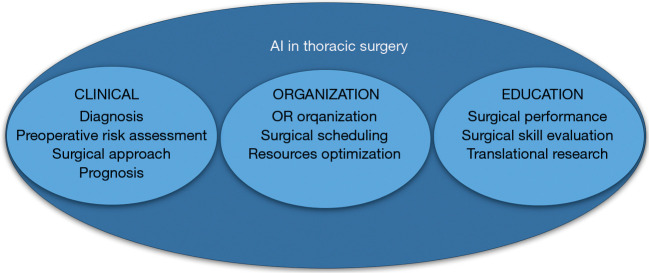
Objective: The aim of this article is to review the current applications of artificial intelligence in thoracic surgery, from diagnosis and pulmonary disease management, to preoperative risk-assessment, surgical planning, and outcomes prediction.
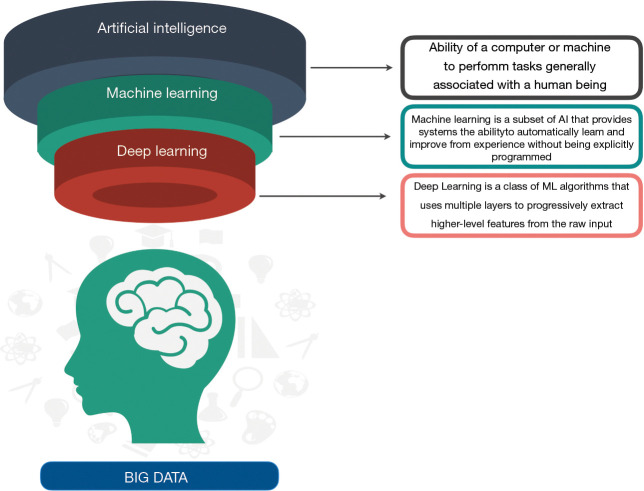
Background: Artificial intelligence implementation in healthcare settings is rapidly growing, though its widespread use in clinical practice is still limited. The employment of machine learning algorithms in thoracic surgery is wide-ranging, including all steps of the clinical pathway.
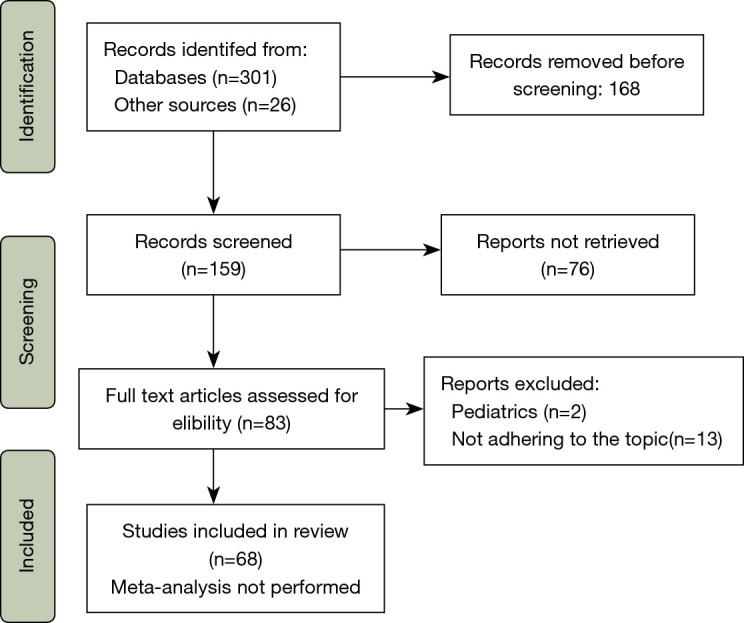
Methods: We performed a narrative review of the literature on Scopus, PubMed and Cochrane databases, including all the relevant studies published in the last ten years, until March 2021.
Conclusion: Machine learning methods are promising encouraging results throughout the key issues of thoracic surgery, both clinical, organizational, and educational. Artificial intelligence-based technologies showed remarkable efficacy to improve the perioperative evaluation of the patient, to assist the decision-making process, to enhance the surgical performance, and to optimize the operating room scheduling. Still, some concern remains about data supply, protection, and transparency, thus further studies and specific consensus guidelines are needed to validate these technologies for daily common practice.
Keywords: Artificial intelligence (AI); thoracic surgery; machine learning; lung resection; perioperative medicine.
2021 Journal of Thoracic Disease. All rights reserved.
Conflict of interest statement
Conflicts of Interest: The authors have completed the ICMJE uniform disclosure form (available at https://dx.doi.org/10.21037/jtd-21-761). The series “Artificial Intelligence in Thoracic Disease: From Bench to Bed” was commissioned by the editorial office without any funding or sponsorship. The authors have no other conflicts of interest to declare.
Figures
References
-
- Goodfellow I, Bengio B, Courville A. Deep Learning. MIT Press 2016.
-
- Accenture. Artificial Intelligence: Healthcare’s New Nervous System. Accenture Report, 2017. Available online: https://www.accenture.com/_acnmedia/PDF-49/Accenture-Health-Artificial-I...
Publication types
LinkOut - more resources
Full Text Sources