


Regressed testicular germ cell tumour in a post-pubertal male
- PMID: 35070726
- PMCID: PMC8761703
- DOI: 10.1016/j.eucr.2022.101997
Regressed testicular germ cell tumour in a post-pubertal male
Abstract
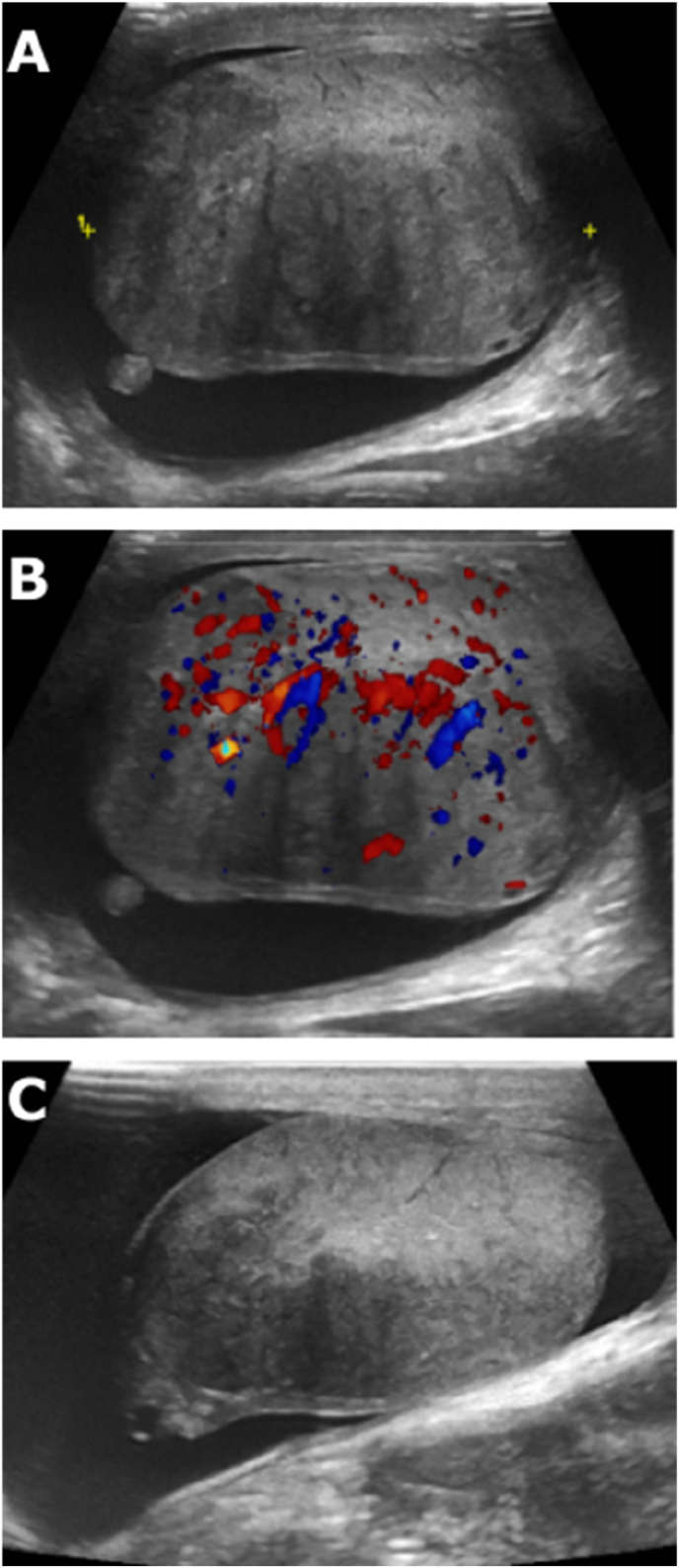
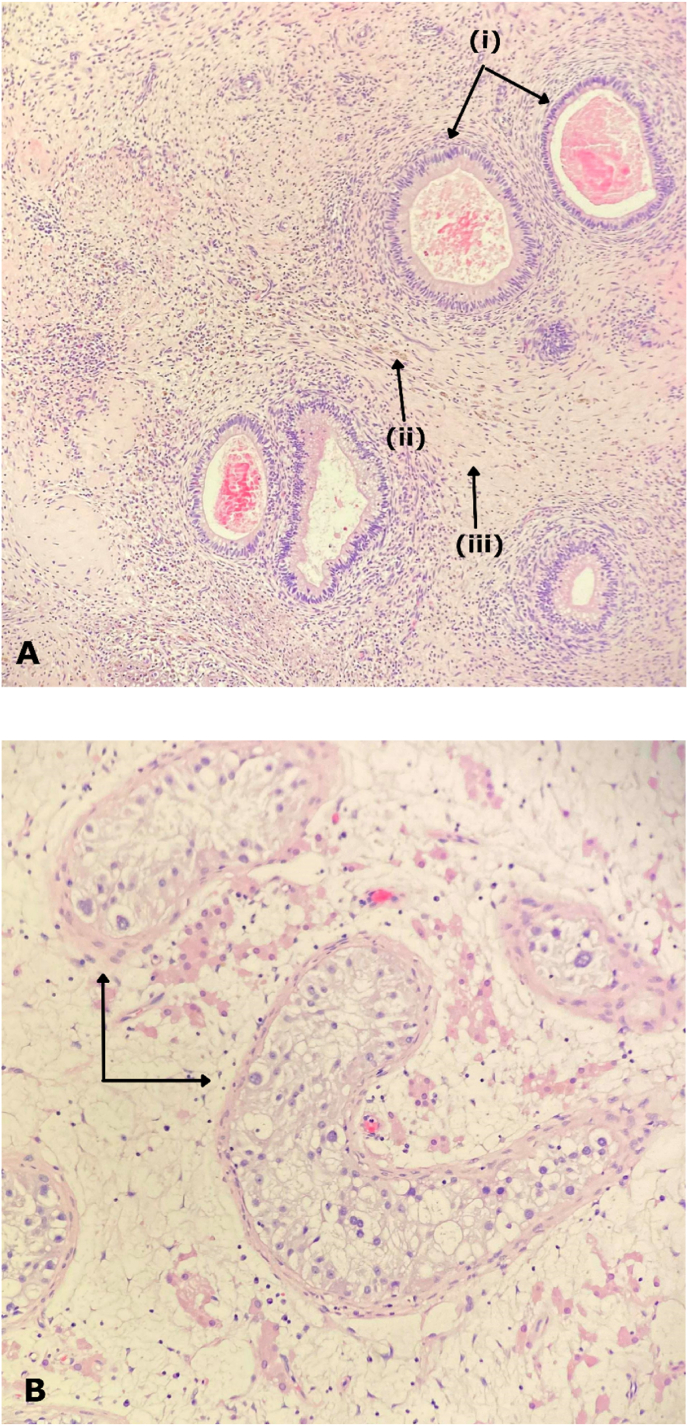
Testicular germ cell regression is a rare, generally metastatic phenomenon which describes the spontaneous, complete, or partial regression of a testicular germ cell tumour. As a result, studies have focused on defining specific histopathological criteria to establish if the resected testis is the primary source of the germ cell tumour. There are few publications which describe its presentation in the absence of distant metastases with elevated tumour markers and suspicious findings on testicular ultrasound. We present the clinical presentation and radiological features of a non-metastatic regressed testicular germ cell tumour following scrotal trauma in a post pubertal male.
Keywords: Burned-out tumour; GCNIS, germ cell neoplasia in-situ; GCT, Germ cell tumour(s); Germ cell tumour; Teratoma; Testicle; Tumour regression.
© 2022 The Authors. Published by Elsevier Inc.
Conflict of interest statement
None.
Figures
References
-
- Williamson S., Delahunt B., Magi-Galluzzi C., et al. The World Health organization 2016 classification of testicular germ cell tumours: a review and update from the international society of urological pathology testis consultation panel. Histopathology. 2016;70(3):335–346. https://doiorg.proxy.library.rcsi.ie/10.1111/his.13102 - DOI - PubMed
-
- Rocher L., Glas L., Bellin M., et al. Burned-out testis tumors in asymptomatic infertile men: multiparametric sonography and MRI findings. J Ultrasound Med. 2016;36(4):821–831. https://doi-org.proxy.library.rcsi.ie/10.7863/ultra.15.08037 - DOI - PubMed
Publication types
LinkOut - more resources
Full Text Sources
Research Materials
