The SARS-CoV-2 monoclonal antibody combination, AZD7442, is protective in nonhuman primates and has an extended half-life in humans
- PMID: 35076282
- PMCID: PMC8939769
- DOI: 10.1126/scitranslmed.abl8124
The SARS-CoV-2 monoclonal antibody combination, AZD7442, is protective in nonhuman primates and has an extended half-life in humans
Abstract
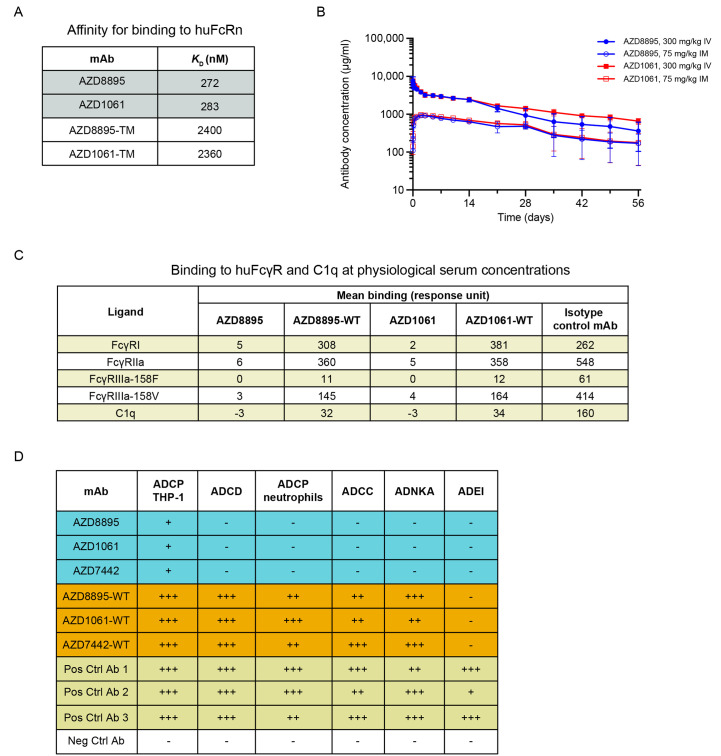
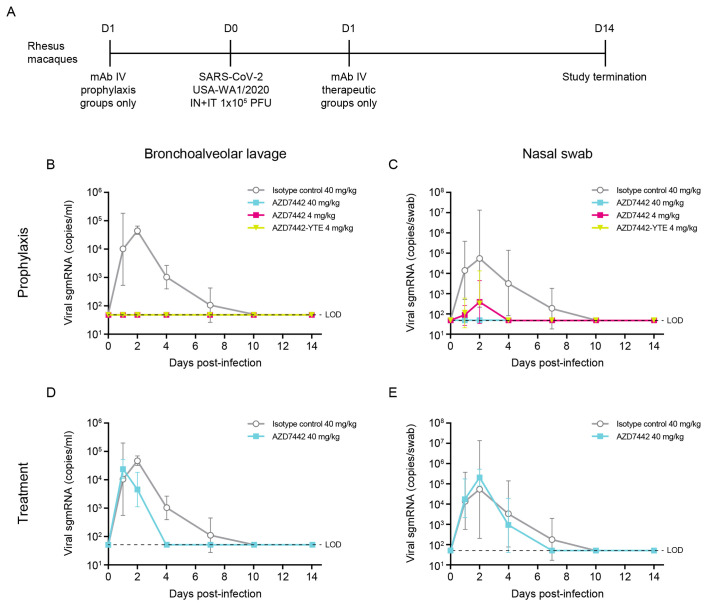
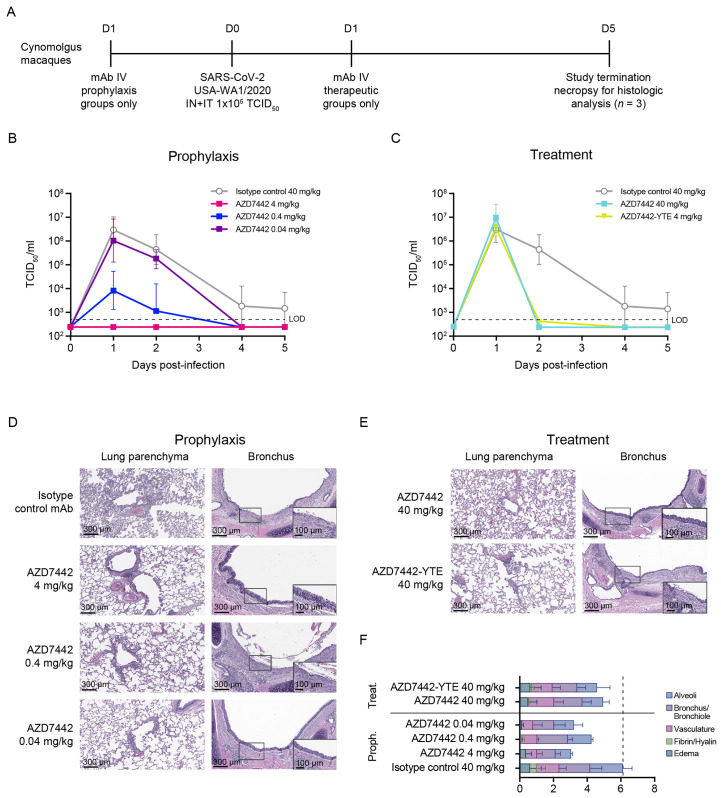
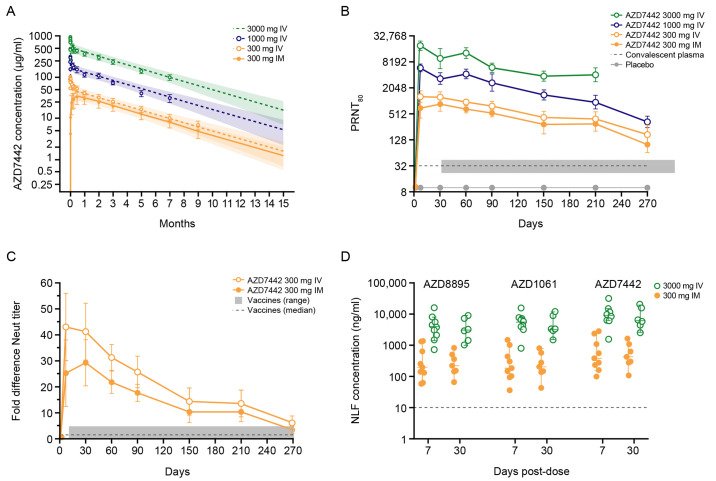
Despite the success of severe acute respiratory syndrome coronavirus 2 (SARS-CoV-2) vaccines, there remains a need for more prevention and treatment options for individuals remaining at risk of coronavirus disease 2019 (COVID-19). Monoclonal antibodies (mAbs) against the viral spike protein have potential to both prevent and treat COVID-19 and reduce the risk of severe disease and death. Here, we describe AZD7442, a combination of two mAbs, AZD8895 (tixagevimab) and AZD1061 (cilgavimab), that simultaneously bind to distinct, nonoverlapping epitopes on the spike protein receptor binding domain to neutralize SARS-CoV-2. Initially isolated from individuals with prior SARS-CoV-2 infection, the two mAbs were designed to extend their half-lives and reduce effector functions. The AZD7442 mAbs individually prevent the spike protein from binding to angiotensin-converting enzyme 2 receptor, blocking virus cell entry, and neutralize all tested SARS-CoV-2 variants of concern. In a nonhuman primate model of SARS-CoV-2 infection, prophylactic AZD7442 administration prevented infection, whereas therapeutic administration accelerated virus clearance from the lung. In an ongoing phase 1 study in healthy participants (NCT04507256), a 300-mg intramuscular injection of AZD7442 provided SARS-CoV-2 serum geometric mean neutralizing titers greater than 10-fold above those of convalescent serum for at least 3 months, which remained threefold above those of convalescent serum at 9 months after AZD7442 administration. About 1 to 2% of serum AZD7442 was detected in nasal mucosa, a site of SARS-CoV-2 infection. Extrapolation of the time course of serum AZD7442 concentration suggests AZD7442 may provide up to 12 months of protection and benefit individuals at high-risk of COVID-19.
Figures

References
-
- Lopez Bernal J., Andrews N., Gower C., Robertson C., Stowe J., Tessier E., Simmons R., Cottrell S., Roberts R., O’Doherty M., Brown K., Cameron C., Stockton D., McMenamin J., Ramsay M., Effectiveness of the Pfizer-BioNTech and Oxford-AstraZeneca vaccines on covid-19 related symptoms, hospital admissions, and mortality in older adults in England: Test negative case-control study. BMJ 373, n1088 (2021). 10.1136/bmj.n1088 - DOI - PMC - PubMed
-
- Haas E. J., Angulo F. J., McLaughlin J. M., Anis E., Singer S. R., Khan F., Brooks N., Smaja M., Mircus G., Pan K., Southern J., Swerdlow D. L., Jodar L., Levy Y., Alroy-Preis S., Impact and effectiveness of mRNA BNT162b2 vaccine against SARS-CoV-2 infections and COVID-19 cases, hospitalisations, and deaths following a nationwide vaccination campaign in Israel: An observational study using national surveillance data. Lancet 397, 1819–1829 (2021). 10.1016/S0140-6736(21)00947-8 - DOI - PMC - PubMed
-
- Grupper A., Sharon N., Finn T., Cohen R., Israel M., Agbaria A., Rechavi Y., Schwartz I. F., Schwartz D., Lellouch Y., Shashar M., Humoral response to the Pfizer BNT162b2 vaccine in patients undergoing maintenance hemodialysis. Clin. J. Am. Soc. Nephrol. 16, 1037–1042 (2021). 10.2215/CJN.03500321 - DOI - PMC - PubMed
-
- Monin L., Laing A. G., Muñoz-Ruiz M., McKenzie D. R., Del Molino Del Barrio I., Alaguthurai T., Domingo-Vila C., Hayday T. S., Graham C., Seow J., Abdul-Jawad S., Kamdar S., Harvey-Jones E., Graham R., Cooper J., Khan M., Vidler J., Kakkassery H., Sinha S., Davis R., Dupont L., Francos Quijorna I., O’Brien-Gore C., Lee P. L., Eum J., Conde Poole M., Joseph M., Davies D., Wu Y., Swampillai A., North B. V., Montes A., Harries M., Rigg A., Spicer J., Malim M. H., Fields P., Patten P., Di Rosa F., Papa S., Tree T., Doores K. J., Hayday A. C., Irshad S., Safety and immunogenicity of one versus two doses of the COVID-19 vaccine BNT162b2 for patients with cancer: Interim analysis of a prospective observational study. Lancet Oncol. 22, 765–778 (2021). 10.1016/S1470-2045(21)00213-8 - DOI - PMC - PubMed
Publication types
MeSH terms
Substances
Supplementary concepts
LinkOut - more resources
Full Text Sources
Other Literature Sources
Medical
Miscellaneous