


Glyphosate vs. Glyphosate-Based Herbicides Exposure: A Review on Their Toxicity
- PMID: 35076536
- PMCID: PMC8788447
- DOI: 10.3390/jox12010003
Glyphosate vs. Glyphosate-Based Herbicides Exposure: A Review on Their Toxicity
Abstract
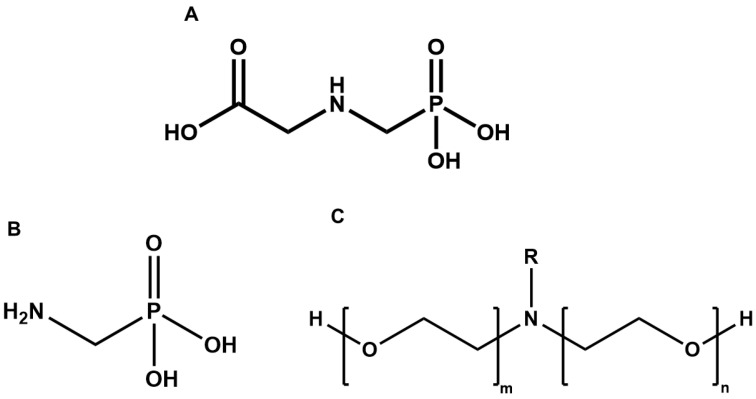
Glyphosate-based herbicide has been the first choice for weed management worldwide since the 1970s, mainly due to its efficacy and reported low toxicity, which contributed to its high acceptance. Many of the recent studies focus solely on the persistence of pesticides in soils, air, water or food products, or even on the degree of exposure of animals, since their potential hazards to human health have raised concerns. Given the unaware exposure of the general population to pesticides, and the absence of a significant number of studies on occupational hazards, new glyphosate-induced toxicity data obtained for both residual and acute doses should be analyzed and systematized. Additionally, recent studies also highlight the persistence and toxicity of both glyphosate metabolites and surfactants present in herbicide formulations. To renew or ban the use of glyphosate, recently published studies must be taken into account, aiming to define new levels of safety for exposure to herbicide, its metabolites, and the toxic excipients of its formulations. This review aims to provide an overview of recent publications (2010-present) on in vitro and in vivo studies aimed at verifying the animal toxicity induced by glyphosate, its metabolite aminomethylphosphonic acid (AMPA) and glyphosate-based formulations, evaluated in various experimental models. Apart from glyphosate-induced toxicity, recent data concerning the role of surfactants in the toxicity of glyphosate-based formulations are discussed.
Keywords: AMPA; animal models; glyphosate; glyphosate-based herbicides; metabolism; toxicity; xenobiotics.
Conflict of interest statement
The authors declare no conflict of interest.
Figures
References
-
- Pereira A.E.S., Grillo R., Mello N.F.S., Rosa A.H., Fraceto L.F. Application of poly(epsilon-caprolactone) nanoparticles containing atrazine herbicide as an alternative technique to control weeds and reduce damage to the environment. J. Hazard. Mater. 2014;268:207–215. doi: 10.1016/j.jhazmat.2014.01.025. - DOI - PubMed
-
- Trebst A. In: Chapter 8—The Mode of Action of Triazine Herbicides in Plants, in the Triazine Herbicides. LeBaron H.M., McFarland J.E., Burnside O.C., editors. Elsevier; Amesterdam, The Netherlands: 2008. pp. 101–110. - DOI
Publication types
Grants and funding
LinkOut - more resources
Full Text Sources
