High Prevalence of Antibodies against Canine Parvovirus and Canine Distemper Virus among Coyotes and Foxes from Pennsylvania: Implications for the Intersection of Companion Animals and Wildlife
- PMID: 35080421
- PMCID: PMC8791182
- DOI: 10.1128/spectrum.02532-21
High Prevalence of Antibodies against Canine Parvovirus and Canine Distemper Virus among Coyotes and Foxes from Pennsylvania: Implications for the Intersection of Companion Animals and Wildlife
Abstract
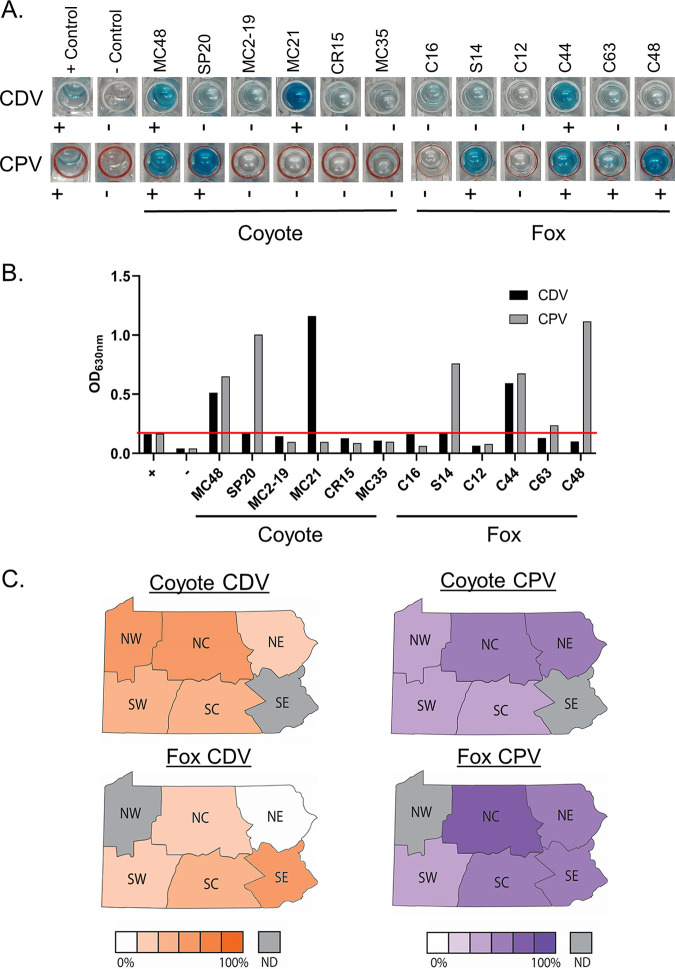
Canine distemper virus (CDV) and Canine parvovirus (CPV) can cause deadly infections in wildlife and companion animals. In this report, we screened serum from free-ranging eastern coyotes (Canis latrans; N = 268), red foxes (Vulpes vulpes; N = 63), and gray foxes (Urocyon cinereoargenteus; N = 16) from Pennsylvania, USA, for antibodies (Abs) to CDV and CPV. This comprehensive screening was achieved using a commercially available enzyme-linked immunosorbent assay (ELISA)-based colorimetric assay. Abs to CDV and CPV were detected in 25.4% and 45.5% of coyotes, 36.5% and 52.4% of red foxes, and 12.5% and 68.8% of gray foxes, respectively. Abs to both viruses were detected in 9.7% of coyotes, 19.1% of red foxes, and 12.5% of gray foxes. This study demonstrates significant wildlife exposure in a northeastern state to CDV and CPV. As wildlife species continue to urbanize, the probability of spillover between domestic animals and wildlife will increase. Ongoing surveillance of wildlife for CDV and CPV exposure is warranted. IMPORTANCECanine distemper virus (CDV) and Canine parvovirus (CPV) are significant health threats to domestic dogs (Canis familiaris) and wildlife. CDV and CPV have been identified in diverse vertebrates, including endangered wildlife species. Susceptibility to these viral pathogens varies significantly among geographic regions and between host species. High morbidity and mortality have been reported with infection by either virus in susceptible species, including dogs. As humans and companion animals encroach on wildlife habitat, and as wildlife becomes increasingly urbanized, the potential for transmission between species increases. This study assessed CPV and CDV Ab prevalence in wild canids (eastern coyotes, red foxes, and gray foxes) harvested in Pennsylvania between 2015 and 2020. High Ab prevalence was demonstrated for both viruses in each species. Ongoing monitoring of CPV and CDV in wildlife and increased efforts to vaccinate dogs and prevent spillover events are essential.
Keywords: Canine distemper virus; Canine parvovirus; Pennsylvania; coyote; gray fox; red fox; wildlife.
Conflict of interest statement
The authors declare no conflict of interest.
Figures
References
Publication types
MeSH terms
Substances
Grants and funding
LinkOut - more resources
Full Text Sources
Research Materials