


The most used questionnaires for evaluating satisfaction, usability, acceptance, and quality outcomes of mobile health
- PMID: 35081953
- PMCID: PMC8793175
- DOI: 10.1186/s12911-022-01764-2
The most used questionnaires for evaluating satisfaction, usability, acceptance, and quality outcomes of mobile health
Abstract
Background: Various questionnaires are used for evaluating satisfaction, usability, acceptance, and quality outcomes of mobile health (mHealth) services. Using the best one to meet the needs of an mHealth study is a challenge for researchers. Therefore, this study aimed to review and determine the frequently used questionnaires for evaluating the mentioned outcomes of mHealth services.
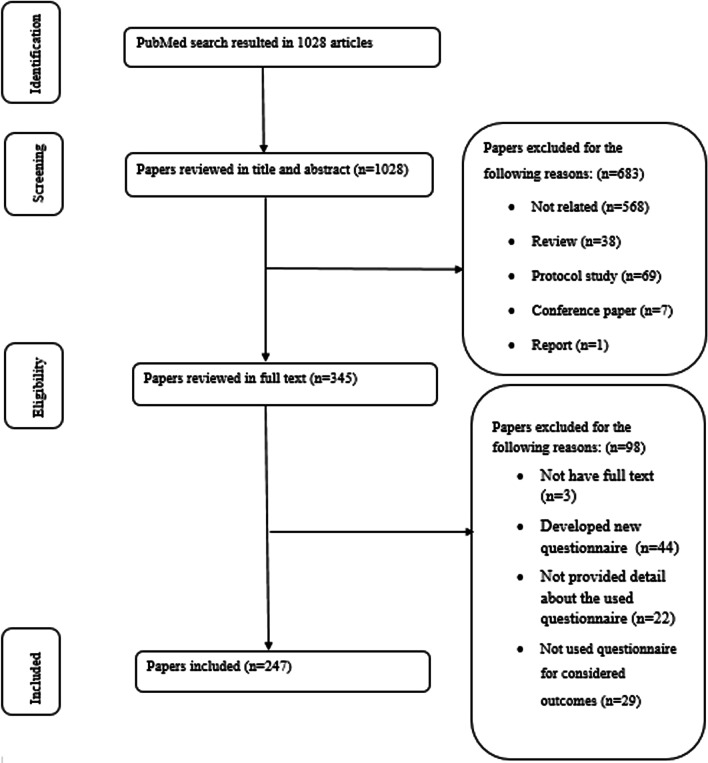
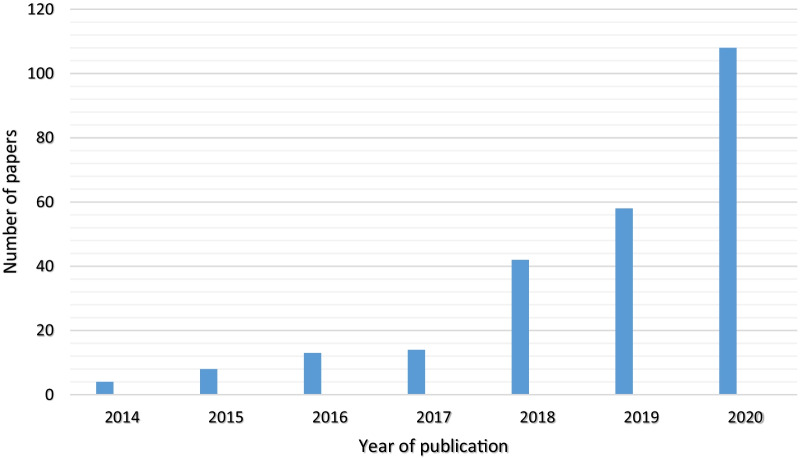
Methods: The PubMed database was searched for conducting this review in April 2021. Papers that used a referenced questionnaire to evaluate the satisfaction, usability, acceptance, or quality outcomes of mHealth were included. The first author's name, year of publication, evaluation outcome, and evaluation questionnaire were extracted from relevant papers. Data were analyzed using descriptive statistics.
Results: In total, 247 papers were included in the study. Questionnaires were used for usability (40%), quality (34.5%), acceptance (8.5%), and satisfaction (4%) outcomes, respectively. System usability scale (36.5%), mobile application rating scale (35.5%), post study system usability questionnaire (6%), user mobile application rating scale (5%), technology acceptance model (4.5%), computer system usability questionnaire (2.5%), net promoter score (2%), health information technology usability evaluation scale (2%), the usefulness, satisfaction, and ease of use (1.5%), client satisfaction questionnaire (1.5%), unified theory of acceptance and use of technology (1.5%), questionnaire for user interaction satisfaction (1%), user experience questionnaire (1%), and after-scenario questionnaire (1%) were the most used questionnaires, respectively.
Conclusion: Despite the existence of special questionnaires for evaluating several outcomes of mHealth, general questionnaires with fewer items and higher reliability have been used more frequently. Researchers should pay more attention to questionnaires with a goal-based design.
Keywords: Evaluation; Mobile health; Questionnaire.
© 2022. The Author(s).
Conflict of interest statement
The authors declare that there are no competing interests.
Figures
References
-
- Kao CK, Liebovitz DM. Consumer mobile health apps: current state, barriers, and future directions. PM & R J Inj Funct Rehabil. 2017;9(5s):S106–S115. - PubMed
-
- Singh K, Landman AB. Mobile health. In: Sheikh A, Bates D, Wright A, Cresswell K, editors. Key advances in clinical informatics: Transforming health care through health information technology. London: Academic Press; 2018. pp. 183–196.
-
- World Health Organization. mHealth: New horizons for health through mobile technologies. 2011. Available from: https://www.who.int/goe/publications/goe_mhealth_web.pdf.
-
- Mangkunegara C, Azzahro F, Handayani P. Analysis of factors affecting user's intention in using mobile health application: a case study of halodoc. 2018. p. 87–92
Publication types
MeSH terms
LinkOut - more resources
Full Text Sources
Medical
Miscellaneous
