. 2022 Jan 26;12(1):15.
doi: 10.1038/s41408-022-00610-y.

Clonal and subclonal TP53 molecular impairment is associated with prognosis and progression in multiple myeloma

Affiliations

Clonal and subclonal TP53 molecular impairment is associated with prognosis and progression in multiple myeloma

M Martello et al. Blood Cancer J. .

Abstract

Aberrations on TP53, either as deletions of chromosome 17p (del17p) or mutations, are associated with poor outcome in multiple myeloma (MM), but conventional detection methods currently in use underestimate their incidence, hindering an optimal risk assessment and prognostication of MM patients. We have investigated the altered status of TP53 gene by SNPs array and sequencing techniques in a homogenous cohort of 143 newly diagnosed MM patients, evaluated both at diagnosis and at first relapse: single-hit on TP53 gene, either deletion or mutation, detected both at clonal and sub-clonal level, had a minor effect on outcomes. Conversely, the coexistence of both TP53 deletion and mutation, which defined the so-called double-hit patients, was associated with the worst clinical outcome (PFS: HR 3.34 [95% CI: 1.37-8.12] p = 0.008; OS: HR 3.47 [95% CI: 1.18-10.24] p = 0.02). Moreover, the analysis of longitudinal samples pointed out that TP53 allelic status might increase during the disease course. Notably, the acquisition of TP53 alterations at relapse dramatically worsened the clinical course of patients. Overall, our analyses showed these techniques to be highly sensitive to identify TP53 aberrations at sub-clonal level, emphasizing the poor prognosis associated with double-hit MM patients.


Conflict of interest statement

The authors declare no competing interests.

Figures
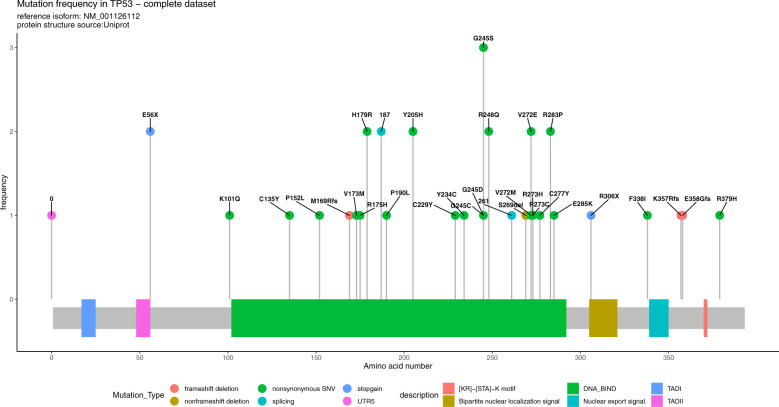
Fig. 1
Fig. 1. Lollipop plot representing TP53 number and frequency of mutations.
Most of the SNVs are restricted to the DNA binding domain; however, other SNVs are detected in other flaking domains.
Fig. 2
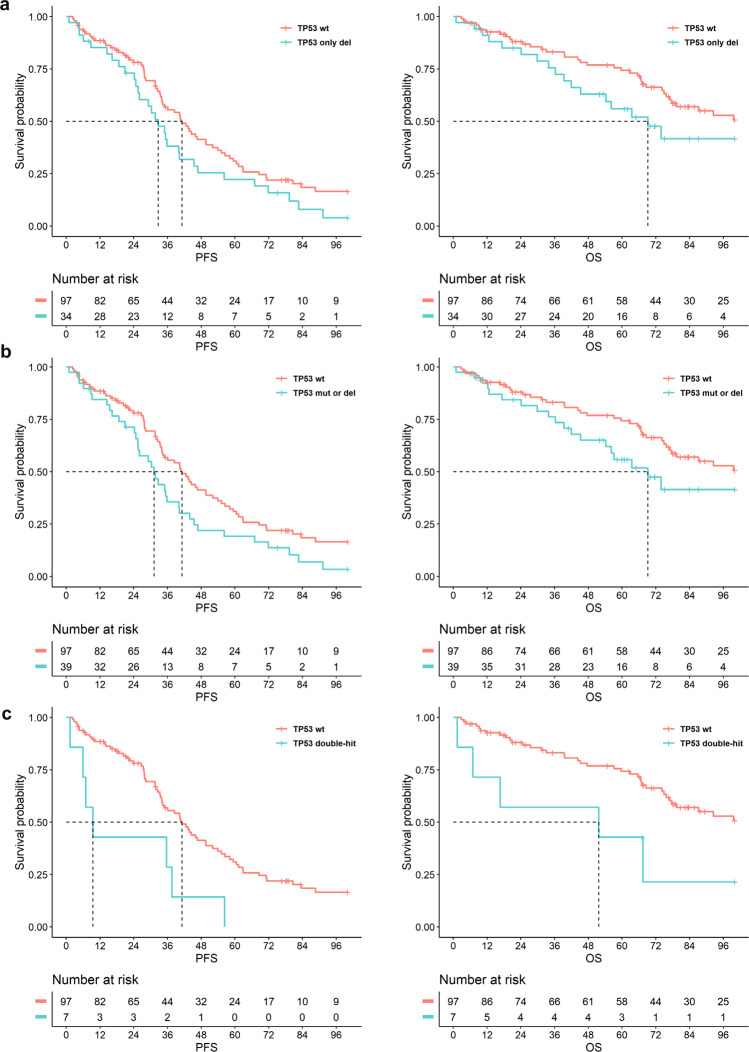
Fig. 2. Clinical impact of clonal and subclonal TP53 aberrations at diagnosis.
Effect on PFS and OS of a TP53 deletion as a single-hit (cut-off ≥10%) as detected by SNP array (PFS: p = 0.06, HR 1.57, 95% CI: 1.02–2.43; OS: p = 0.05, HR 1.79, 95% CI: 1.01–3.2); b TP53 deletion or mutation (VAF ≥ 5%) (PFS: p = 0.02, HR 1.63, 95% CI: 1.07–2.48; OS: p = 0.05, HR 1.82, 95% CI: 1.02–3.26); c coexistence of both deletions and mutations on TP53, which defined the so-called double-hit patients (PFS: p = 0.01, HR 3.34, 95% CI: 1.37–8.12; OS: p = 0.02, HR 3.47, 95% CI: 1.18–10.24).
Fig. 3
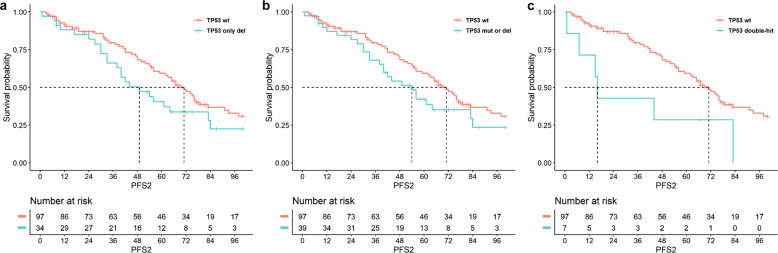
Fig. 3. Risk of second relapses resulted higher in patients carrying at diagnosis TP53 deletion or mutation, including double-hit events, as compared to patients carrying wild-type TP53.
Effect on PFS2 of a TP53 deletion as a single-hit (cut-off ≥10%) as detected by SNP array (p = 0.04, HR 1.71, 95% CI: 1.03–2.84); b TP53 deletion or mutation (VAF ≥ 5%) (p = 0.05, HR 1.62, 95% CI: 0.99–2.66); c coexistence of both deletions and mutations on TP53 (p = 0.02, HR 3.10, 95% CI: 1.18–8.17).
Fig. 4
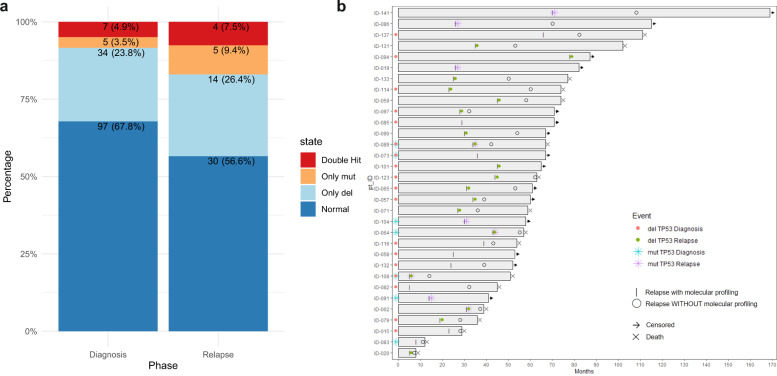
Fig. 4. TP53 molecular status might change during the disease progression and impact in long-term outcomes.
a Histogram representing the frequencies of TP53 aberrations across diagnosis and relapse. Overall, we observed an increase of the relative percentage of patients carrying TP53 aberrations at relapse ([45/143] 32% at diagnosis vs. [23/53] 44% at relapse; p < 0.05). b Swimmerplot representing how TP53 molecular status change across disease phases (e.g., diagnosis and relapse). Even though in most patients the TP53 status (either altered or not) remained stable along the disease course, 14/53 patients acquired either deletion (8/53), or mutations (4/53) or double-hit events (2/53) at relapse.
Fig. 5
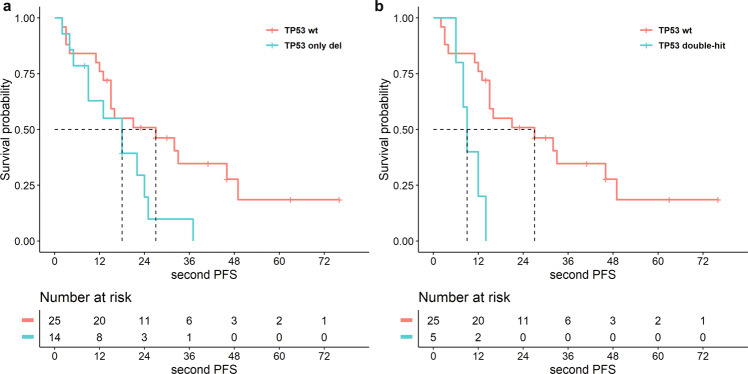
Fig. 5. The acquisition of TP53 alterations at relapse dramatically threatened patients’ clinical course.
Analysis of 2nd PFS of a patients with TP53 deletion (cut-off ≥10%) (p = 0.05, HR 2.39, 95% CI: 1.01–5.64); b coexistence of both deletions and mutations on TP53 (p = 0.02, HR 4.80, 95% CI: 1.27–18.13).

References

    1. Robles AI, Jen J, & Harris CC. Clinical Outcomes of TP53 Mutations in Cancers. Cold Spring Harb Perspect Med. 2016. 10.1101/cshperspect.a026294. - PMC - PubMed
    1. Chng WJ, Price-Troska T, Gonzalez-Paz N, Van Wier S, Jacobus S, Blood E, et al. Clinical significance of TP53 mutation in myeloma. Leukemia. 2007;21:582–4. doi: 10.1038/sj.leu.2404524. - DOI - PubMed
    1. Jovanovic KK, Escure G, Demonchy J, Willaume A, Van de Wyngaert Z, Farhat M, et al. Deregulation and targeting of TP53 pathway in multiple myeloma. Front Oncol. 2018;8:665.. doi: 10.3389/fonc.2018.00665. - DOI - PMC - PubMed
    1. Munawar U, Roth M, Barrio S, Wajant H, Siegmund D, Bargou R, et al. Assessment of TP53 lesions for p53 system functionality and drug resistance in multiple myeloma using an isogenic cell line model. Sci Rep. 2019;9:18062.. doi: 10.1038/s41598-019-54407-4. - DOI - PMC - PubMed
    1. Deng S, Xu Y, An G, Sui W, Zou D, Zhao Y, et al. Features of extramedullary disease of multiple myeloma: high frequency of p53 deletion and poor survival: a retrospective single-center study of 834 cases. Clin Lymphoma Myeloma Leuk. 2015;15:286–91. doi: 10.1016/j.clml.2014.12.013. - DOI - PubMed

Publication types

Substances