


Diagnosis delays in the UK according to pre or postmigration acquisition of HIV
- PMID: 35084383
- PMCID: PMC7612284
- DOI: 10.1097/QAD.0000000000003110
Diagnosis delays in the UK according to pre or postmigration acquisition of HIV
Abstract
Objectives: The aim of this study was to evaluate whether infection occurred pre or postmigration and the associated diagnosis delay in migrants diagnosed with HIV in the UK.
Design: We analyzed a cohort of individuals diagnosed with HIV in the UK in 2014-2016 born in Africa or elsewhere in Europe. Inclusion criteria were arrival within 15 years before diagnosis, availability of HIV pol sequence, and viral subtype shared by at least 10 individuals.
Methods: We examined phylogenies for evidence of infection after entry into the UK and incorporated this information into a Bayesian analysis of timing of infection using biomarkers of CD4+ cell count, avidity assays, proportion of ambiguous nucleotides in viral sequences, and last negative test dates where available.
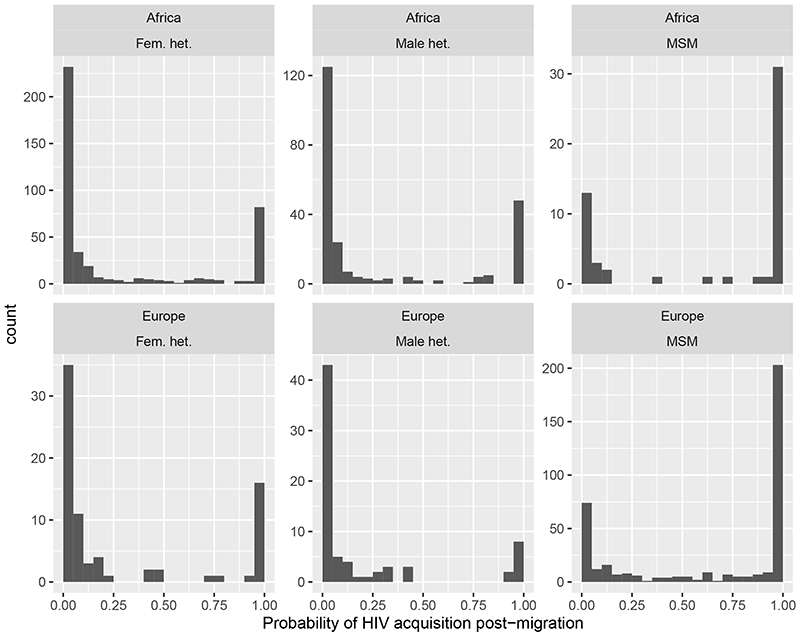
Results: One thousand, two hundred and fifty-six individuals were included. The final model indicated that HIV was acquired postmigration for most MSM born in Europe (posterior expectation 65%, 95% credibility interval 64-67%) or Africa (65%, 62-69%), whereas a minority (20-30%) of men and women with heterosexual transmission acquired HIV postmigration. Estimated diagnosis delays were lower for MSM than for those with heterosexual transmission, and were lower for those with postmigration infection across all subgroups. For MSM acquiring HIV postmigration, the estimated mean time to diagnosis was less than one year, but for those who acquired HIV premigration, the mean time from infection to diagnosis was more than five years for all subgroups.
Conclusion: Acquisition of HIV postmigration is common, particularly among MSM, calling for prevention efforts aimed at migrant communities. Delays in diagnosis reinforce the need for targeted testing initiatives.
Copyright © 2021 Wolters Kluwer Health, Inc. All rights reserved.
Conflict of interest statement
FB has received conference support and consultancy fees from Gilead Sciences Ltd and Viiv Healthcare. The remaining authors do not have any competing interests to disclose.
Figures

References
-
- Nash S, Desai S, Croxford S, Guerra L, Lowndes C, Connor N, et al. Progress towards ending the HIV epidemic in the United Kingdom: 2018 report. Public Health England; London: 2018.
-
- Brown A, Nash S, Connor N, Kirwan P, Ogaz D, Croxford S, et al. Towards elimination of HIV transmission, AIDS and HIV-related deaths in the UK. HIV Medicine. 2018;19(8):505–512. - PubMed
-
- Rodger AJ, Cambiano V, Bruun T, Vernazza P, Collins S, Degen O, et al. Risk of HIV transmission through condomless sex in serodifferent gay couples with the HIV-positive partner taking suppressive antiretroviral therapy (PARTNER): final results of a multicentre, prospective, observational study. The Lancet. 2019;393(10189):2428–2438. - PMC - PubMed
-
- Shah A, Sun S, Brown A, Nash S, Harris R, Kirwan P, et al. Trends in HIV testing, new diagnoses and people receiving HIV-related care in the United Kingdom: data to the end of December 2019 Health Protection Report. 20 Vol. 14. Public Health England; London: 2020.
-
- Rice BD, Elford J, Yin Z, Delpech VC. A new method to assign country of HIV infection among heterosexuals born abroad and diagnosed with HIV. AIDS. 2012;26(15):1961–1966. - PubMed
Publication types
MeSH terms
Grants and funding
LinkOut - more resources
Full Text Sources
Medical
Research Materials
