


Surveillance of leishmaniasis cases from 15 European centres, 2014 to 2019: a retrospective analysis
- PMID: 35086613
- PMCID: PMC8796293
- DOI: 10.2807/1560-7917.ES.2022.27.4.2002028
Surveillance of leishmaniasis cases from 15 European centres, 2014 to 2019: a retrospective analysis
Abstract
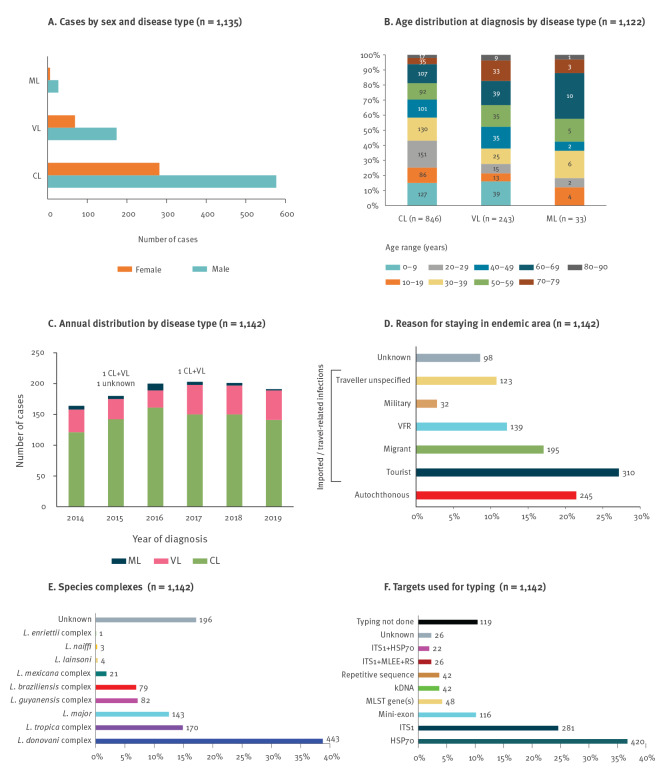
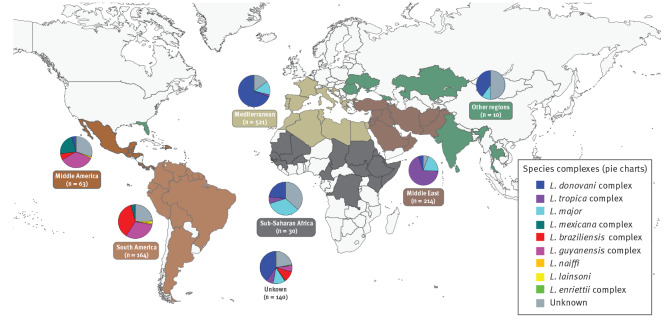
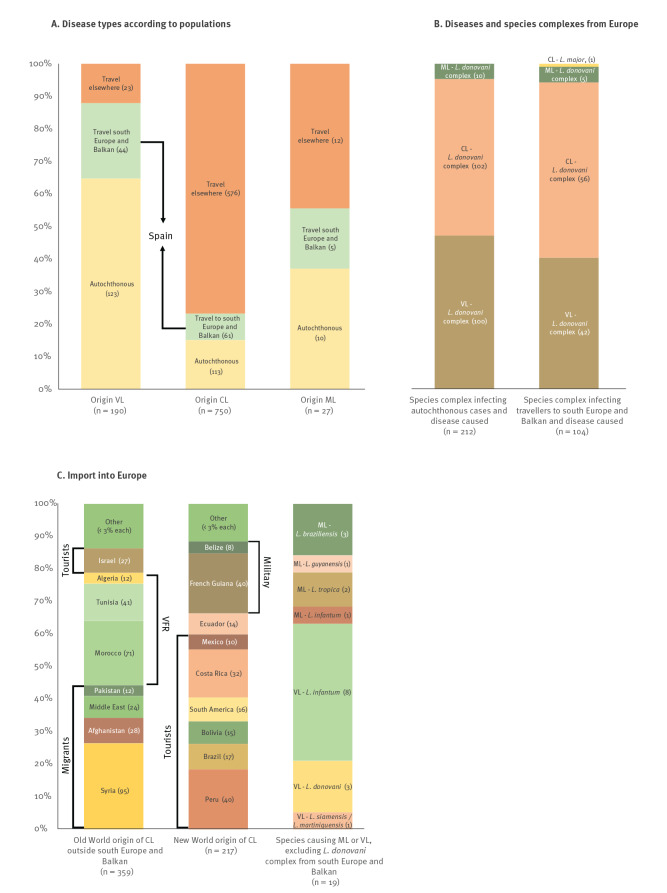
BackgroundSurveillance of human leishmaniasis in Europe is mostly limited to country-specific information from autochthonous infections in the southern part. As at the end of 2021, no integrated analysis has been performed for cases seen across centres in different European countries.AimTo provide a broad perspective on autochthonous and imported leishmaniasis cases in endemic and non-endemic countries in Europe.MethodsWe retrospectively collected records from cutaneous, mucosal and visceral leishmaniasis cases diagnosed in 15 centres between 2014 and 2019. Centres were located in 11 countries: Belgium, France, Germany, Italy, the Netherlands, Norway, Portugal, Spain, Sweden, Switzerland and the United Kingdom. Data on country of infection, reason for travelling, infecting species, age and sex were analysed.ResultsWe obtained diagnostic files from 1,142 cases, of which 76%, 21% and 3% had cutaneous, visceral, and mucosal disease, respectively. Of these, 68% were men, and 32% women, with the median age of 37 years (range: 0-90) at diagnosis. Visceral leishmaniasis was mainly acquired in Europe (88%; 167/190), while cutaneous leishmaniasis was primarily imported from outside Europe (77%; 575/749). Sixty-two percent of cutaneous leishmaniasis cases from outside Europe were from the Old World, and 38% from the New World. Geographic species distribution largely confirmed known epidemiology, with notable exceptions.ConclusionsOur study confirms previous reports regarding geographic origin, species, and traveller subgroups importing leishmaniasis into Europe. We demonstrate the importance of pooling species typing data from many centres, even from areas where the aetiology is presumably known, to monitor changing epidemiology.
Keywords: Europe; Leishmania; authochthonous; imported; leishmaniasis; surveillance; travel.
Conflict of interest statement
Figures
References
MeSH terms
LinkOut - more resources
Full Text Sources
Medical
Research Materials