


Age-related changes in oral sensitivity, taste and smell
- PMID: 35087097
- PMCID: PMC8795375
- DOI: 10.1038/s41598-022-05201-2
Age-related changes in oral sensitivity, taste and smell
Abstract
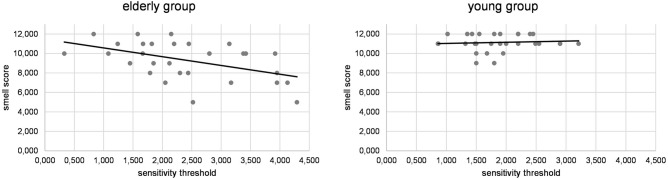
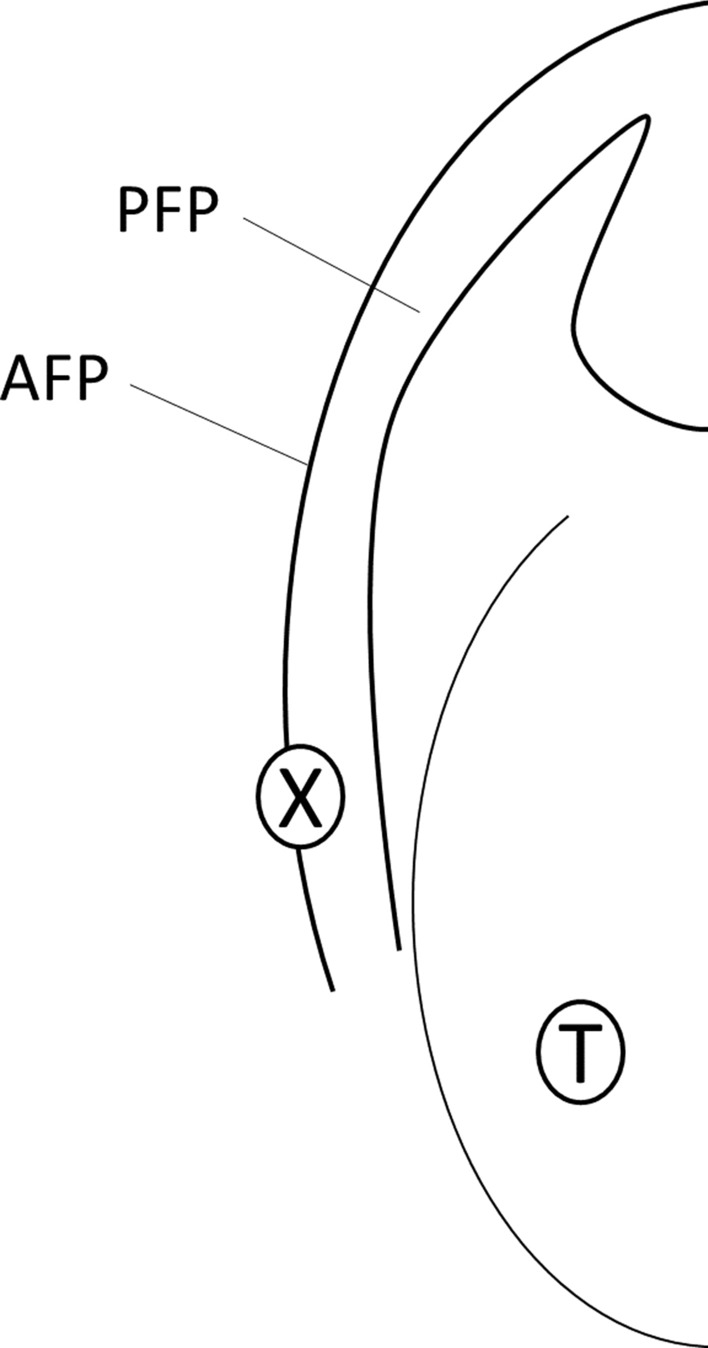
Oropharyngeal sensitivity plays a vital role in the initiation of the swallowing reflex and is thought to decline as part of the aging-process. Taste and smell functions appear to decline with age as well. The aim of our study was to generate data of oral sensitivity in healthy participants for future studies and to analyse age-related changes and their interdependence by measuring oral sensitivity, taste, and smell function. The experiment involved 30 participants younger than and 30 participants older than 60. Sensitivity threshold as a surrogate of oral sensitivity was measured at the anterior faucial pillar by electrical stimulation using commercially available pudendal electrode mounted on a gloved finger. Smell and taste were evaluated using commercially available test kits. Mean sensitivity was lower in young participants compared to older participants (1.9 ± 0.59 mA vs. 2.42 ± 1.03 mA; p = 0.021). Young participants also performed better in smell (Score 11.13 ± 0.86 vs 9.3 ± 1.93; p < 0.001) and taste examinations (Score 11.83 ± 1.86 vs 8.53 ± 3.18; p < 0.001). ANCOVA revealed a statistical association between sensitivity and smell (p = 0.08) that was moderated by age (p = 0.044). Electrical threshold testing at the anterior faucial pillar is a simple, safe, and accurate diagnostic measure of oral sensitivity. We detected a decline of oral sensitivity, taste, and smell in older adults.Trial registration: Clinicaltrials.gov, NCT03240965. Registered 7th August 2017- https://clinicaltrials.gov/ct2/show/NCT03240965 .
© 2022. The Author(s).
Conflict of interest statement
The authors declare no competing interests.
Figures
References
-
- Smithard DG, Smeeton NC, Wolfe CDA. Long-term outcome after stroke: Does dysphagia matter? Age Ageing. 2007;36:90–94. - PubMed
-
- Martino R, et al. Dysphagia after stroke: Incidence, diagnosis, and pulmonary complications. Stroke. 2005;36:2756–2763. - PubMed
-
- Heuschmann PU, et al. Predictors of in-hospital mortality and attributable risks of death after ischemic stroke: The German Stroke Registers Study Group. Arch. Intern. Med. 2004;164:1761–1768. - PubMed
Publication types
MeSH terms
Associated data
LinkOut - more resources
Full Text Sources
Medical
