Stem cells to reverse aging
- PMID: 35089883
- PMCID: PMC9276428
- DOI: 10.1097/CM9.0000000000001984
Stem cells to reverse aging
Abstract
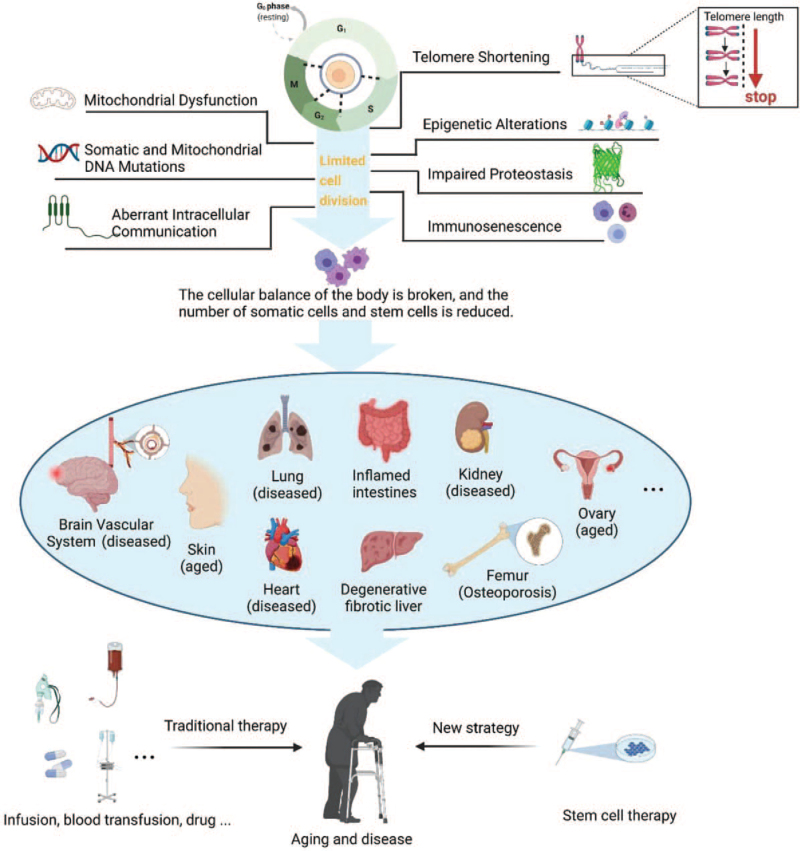
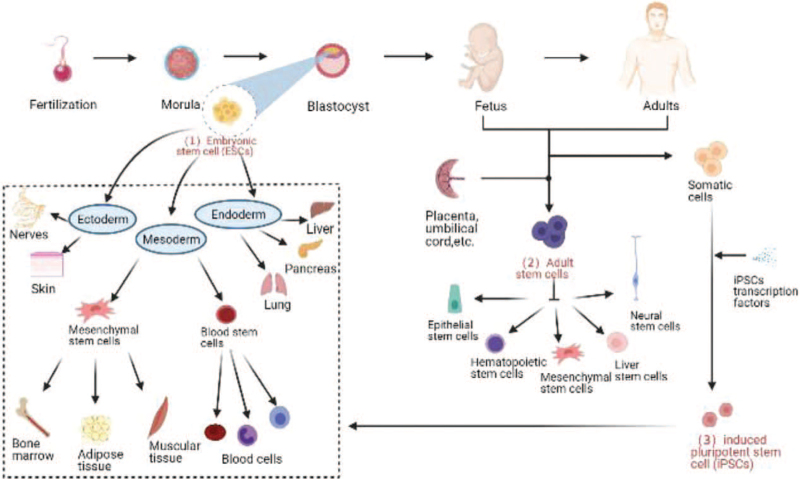
As human life expectancy continues to increase and the birth rate continues to decline, the phenomenon of aging is becoming more prominent worldwide. Therefore, addressing the problems associated with global aging has become a current research focus. The main manifestations of human aging are structural degeneration and functional decline of aging tissues and organs, quality of life decline, decreased ability to resist diseases, and high incidence rates of a variety of senile degenerative diseases. Thus far, no ideal treatments have been found. Stem cell (SC) therapies have broad application prospects in the field of regenerative medicine due to the inherent biological characteristics of SCs, such as their plasticity, self-renewal, and multidirectional differentiation potential. Thus, SCs could delay or even reverse aging. This manuscript reviews the causes of human aging, the biological characteristics of SCs, and research progress on age reversal.
Copyright © 2022 The Chinese Medical Association, produced by Wolters Kluwer, Inc. under the CC-BY-NC-ND license.
Conflict of interest statement
None.
Figures
References
-
- Annual population data of the National Bureau of Statistics. China: National Bureau of Statistics; 2021. Available from: https://data.stats.gov.cn/easyquery.htm?cn=C01.
-
- Sun XX, Gao Y, Yuan X, Wang ZX. Analysis and prediction of birth rate in China (in Chinese). J Shandong Normal Univ (Nat Sci) 2020; 35:256–264. doi: 10.3969/j.issn.1001-4748.2020.03.002.
-
- Cong XL, Wang XJ, Cui L. Standardized guide for anti-aging technology of stem cells (in Chinese). Chin J Health Care Med 2017; 19:185–186. doi: CNKI:SUN:JFJB.0.2017-02-033.
MeSH terms
LinkOut - more resources
Full Text Sources
Other Literature Sources
Medical