


Plasmodium falciparum histidine-rich protein 2 and 3 genes deletion in global settings (2010-2021): a systematic review and meta-analysis
- PMID: 35093092
- PMCID: PMC8800273
- DOI: 10.1186/s12936-022-04051-7
Plasmodium falciparum histidine-rich protein 2 and 3 genes deletion in global settings (2010-2021): a systematic review and meta-analysis
Abstract
Background: The usefulness of histidine-rich protein-2/3 (HRP2/3)-based rapid diagnostic tests of malaria due to Plasmodium falciparum has been threatened by the appearance of mutant PfHRP2/3 genes. This study was undertaken to determine the global pooled estimates of PfHRP2/3gene deletions.
Methods: Relevant publications were identified from electronic databases such as; PubMed, EMBASE, and MEDLINE online. Besides, all the relevant literatures were retrieved through Google and Google Scholar. STATA software was used for data analysis. The pooled estimates were calculated using random effect model. The summary estimates were presented using forest plots and tables.
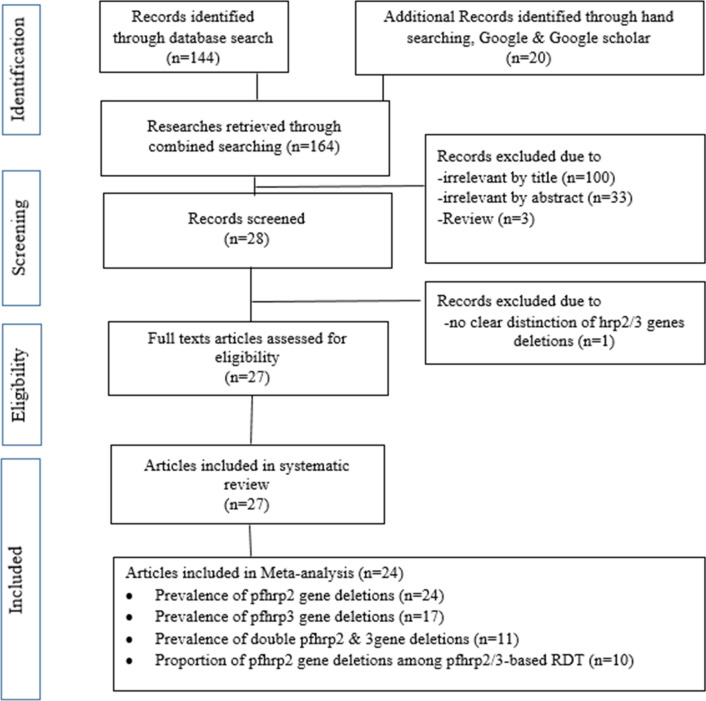
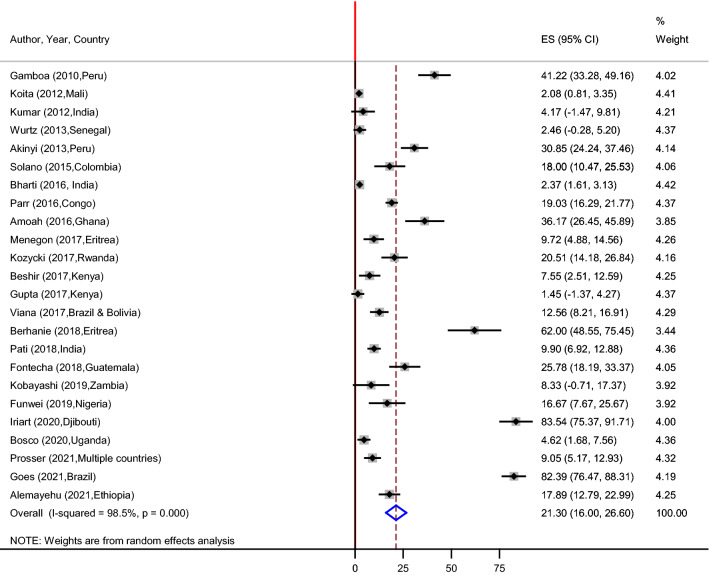
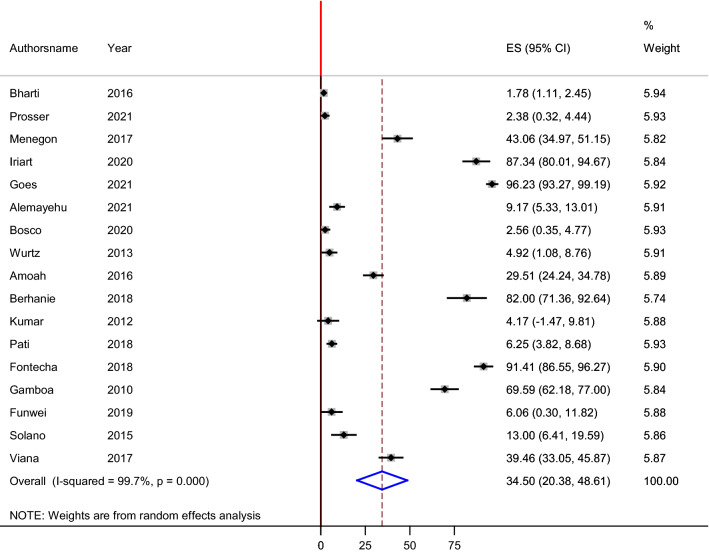
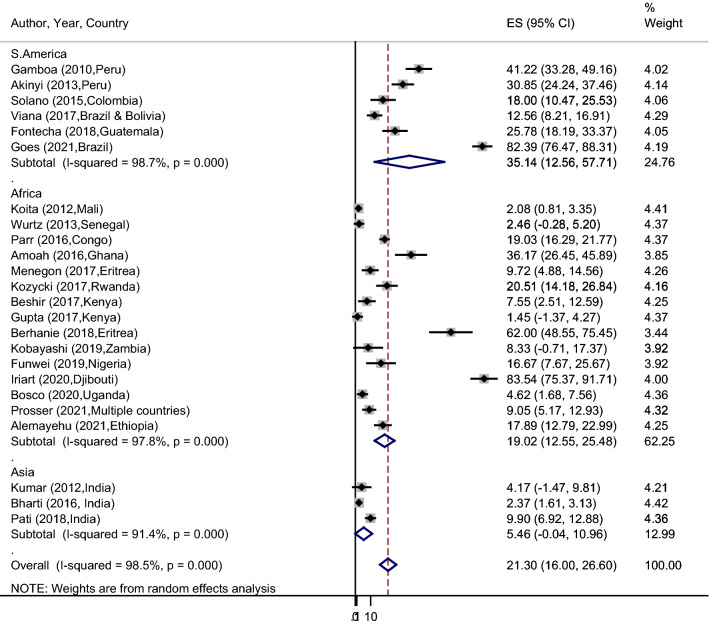
Results: A total of 27 studies were included in the systematic review. However, only 24 and 17 studies were included for PfHRP2 and 3 gene deletion meta-analysis, respectively. The prevalence of PfHRP2 gene deletion across the individual studies ranged from the highest 100% to the lowest 0%. However, the meta-analysis result showed that the global pooled prevalence of PfHRP2 and PfHRP3 gene deletions were 21.30% and 34.50%, respectively. The pooled proportion of PfHRP2 gene deletion among false negative PfHRP2-based RDTs results was found to be 41.10%. The gene deletion status was higher in South America and followed by Africa. The pooled estimate of PfHRP2 gene deletion among studies, which did not follow the WHO PfHRP2/3 gene deletion analysis protocol was higher than their counter parts (21.3% vs 10.5%).
Conclusions: This review showed that there is a high pooled prevalence of PfHRP2/3 gene deletions in Plasmodium falciparum confirmed isolates and also a high proportion of their deletions among false-negative malaria cases using PfHRP2-based RDT results. Hence, malaria diagnosis based on PfHRP2-based rapid tests seems to be less sensitive and warrants further evaluation of PfHRP2/3 gene deletions.
Keywords: Deletions; Histidine-rich protein; Meta-analysis; Systematic review.
© 2022. The Author(s).
Conflict of interest statement
The authors declare that they have no competing interests.
Figures
References
-
- WHO . Guideline for the treatment of malaria. Geneva: World Health Organization; 2010.
-
- WHO . Good practices for selecting and procuring rapid diagnostic tests for malaria. Geneva: World Health Organization; 2011.
Publication types
MeSH terms
Substances
LinkOut - more resources
Full Text Sources
