


Antiplatelet Use in Ischemic Stroke
- PMID: 35094598
- PMCID: PMC9393649
- DOI: 10.1177/10600280211073009
Antiplatelet Use in Ischemic Stroke
Abstract
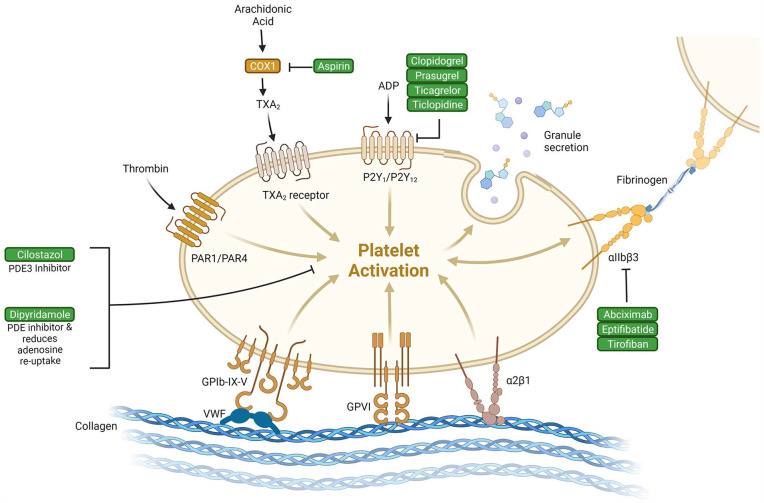
Objective: A literature review of antiplatelet agents for primary and secondary stroke prevention, including mechanism of action, cost, and reasons for lack of benefit.
Data sources: Articles were gathered from MEDLINE, Cochrane Reviews, and PubMed databases (1980-2021). Abstracts from scientific meetings were considered. Search terms included ischemic stroke, aspirin, clopidogrel, dipyridamole, ticagrelor, cilostazol, prasugrel, glycoprotein IIb/IIIa inhibitors.
Study selection and data extraction: English-language original and review articles were evaluated. Guidelines from multiple countries were reviewed. Articles were evaluated independently by 2 authors.
Data synthesis: An abundance of evidence supports aspirin and clopidogrel use for secondary stroke prevention. In the acute phase (first 21 days postinitial stroke), these medications have higher efficacy for preventing further stroke when combined, but long-term combination therapy is associated with higher hemorrhage rates. Antiplatelet treatment failure is influenced by poor adherence and genetic polymorphisms. Antiplatelet agents such as cilostazol may provide extra benefit over clopidogrel and aspirin, in certain racial groups, but further research in more diverse ethnic populations is needed.
Relevance to patient care and clinical practice: This review presents the data available on the use of different antiplatelet agents poststroke. Dual therapy, recurrence after initiation of secondary preventative therapy, and areas for future research are discussed.
Conclusions: Although good evidence exists for the use of certain antiplatelet agents postischemic stroke, there are considerable opportunities for future research to investigate personalized therapies. These include screening patients for platelet polymorphisms that confer antiplatelet resistance and for randomized trials including more racially diverse populations.
Keywords: antiplatelets; aspirin; cilostazol; clopidogrel; prasugrel; stroke; ticagrelor; ticlopidine.
Conflict of interest statement
Figures
Comment in
-
Comment: Antiplatelet Use in Ischemic Stroke.Ann Pharmacother. 2022 Dec;56(12):1384-1385. doi: 10.1177/10600280221096862. Epub 2022 May 3. Ann Pharmacother. 2022. PMID: 35503757 No abstract available.
-
Reply: Antiplatelet Use in Ischemic Stroke.Ann Pharmacother. 2022 Dec;56(12):1386-1387. doi: 10.1177/10600280221096865. Epub 2022 May 3. Ann Pharmacother. 2022. PMID: 35503804 No abstract available.
References
Publication types
MeSH terms
Substances
Grants and funding
LinkOut - more resources
Full Text Sources
Medical
