


The Benefits of Utilizing Continuous Glucose Monitoring of Diabetes Mellitus in Primary Care: A Systematic Review
- PMID: 35100891
- PMCID: PMC10210096
- DOI: 10.1177/19322968211070855
The Benefits of Utilizing Continuous Glucose Monitoring of Diabetes Mellitus in Primary Care: A Systematic Review
Abstract
Background: Continuous glucose monitoring (CGM) and intermittently scanned CGM (is-CGM) have shown to effectively manage diabetes in the specialty setting, but their efficacy in the primary care setting remains unknown. Does CGM/is-CGM improve glycemic control, decrease rates of hypoglycemia, and improve staff/physician satisfaction in primary care? If so, what subgroups of patients with diabetes are most likely to benefit?
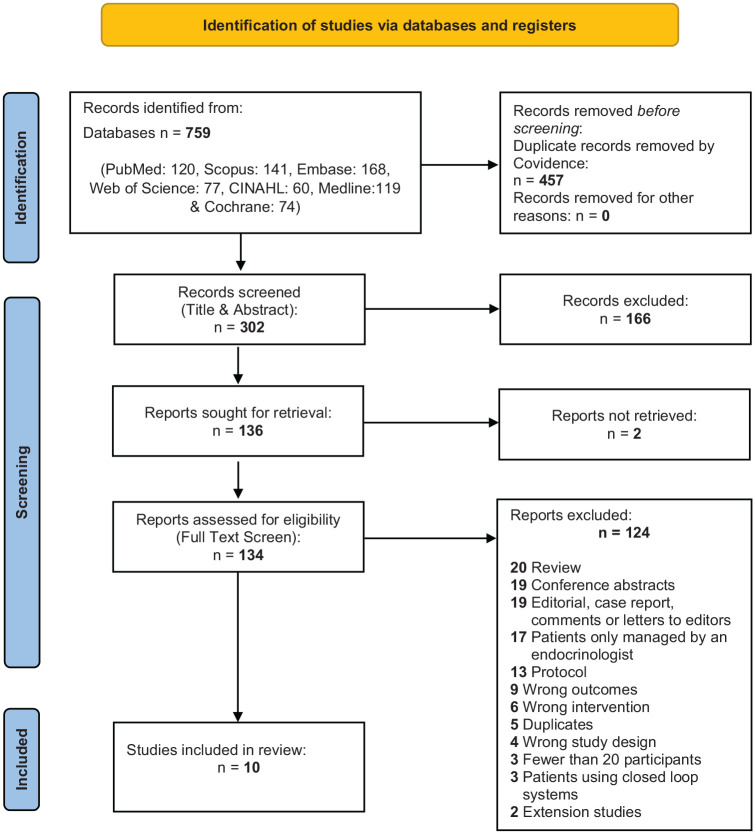
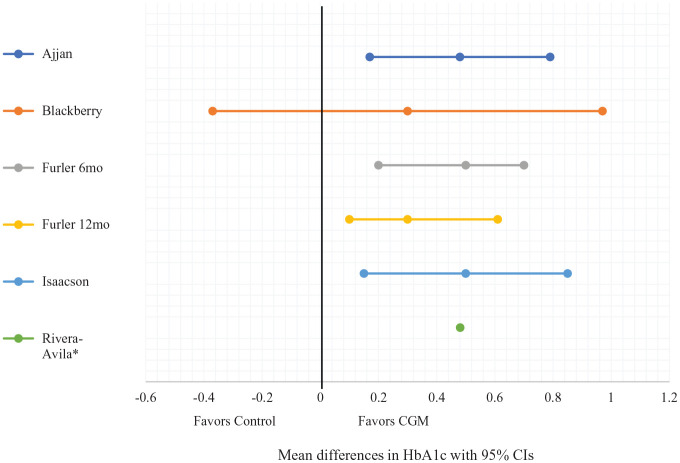
Methods: A comprehensive search in seven databases was performed in June 2021 for primary studies examining any continuous glucose monitoring system in primary care. We excluded studies with fewer than 20 participants, specialty care only, or hospitalized participants. The National Heart, Lung and Blood Institute and Grading of Recommendations Assessment, Development and Evaluation were used for the quality assessment. The weighted mean difference (WMD) of HbA1c between CGM/is-CGM and usual care with 95% confidence interval was calculated. A narrative synthesis was conducted for change of time in, above, or below range (TIR, TAR, and TBR) hypoglycemic events and staff/patient satisfaction.
Results: From ten studies and 4006 participants reviewed, CGM was more effective at reducing HbA1c compared with usual care (WMD -0.43%). There is low certainty of evidence that CGM/is-CGM improves TIR, TAR, or TBR over usual care. The CGM can reduce hypoglycemic events and staff/patient satisfaction is high. Patients with intensive insulin therapy may benefit more from CGM/is-CGM.
Conclusions: Compared with usual care, CGM/is-CGM can reduce HbA1c, but most studies had notable biases, were short duration, unmasked, and were sponsored by industry. Further research needs to confirm the long-term benefits of CGM/is-CGM in primary care.
Keywords: continuous glucose monitor (CGM); flash glucose monitor (FGM); primary care; systematic review; type 1 diabetes; type 2 diabetes.
Conflict of interest statement
The author(s) declared no potential conflicts of interest with respect to the research, authorship, and/or publication of this article.
Figures
References
-
- Barr ELM, Zimmet PZ, Welborn TA, et al. Risk of cardiovascular and all-cause mortality in individuals with diabetes mellitus, impaired fasting glucose, and impaired glucose tolerance: the Australian Diabetes, Obesity, and Lifestyle Study (AusDiab). Circulation. 2007;116:151-157. - PubMed
Publication types
MeSH terms
Substances
LinkOut - more resources
Full Text Sources
Medical
