


Severity of thermal burn injury is associated with systemic neutrophil activation
- PMID: 35102298
- PMCID: PMC8803945
- DOI: 10.1038/s41598-022-05768-w
Severity of thermal burn injury is associated with systemic neutrophil activation
Abstract
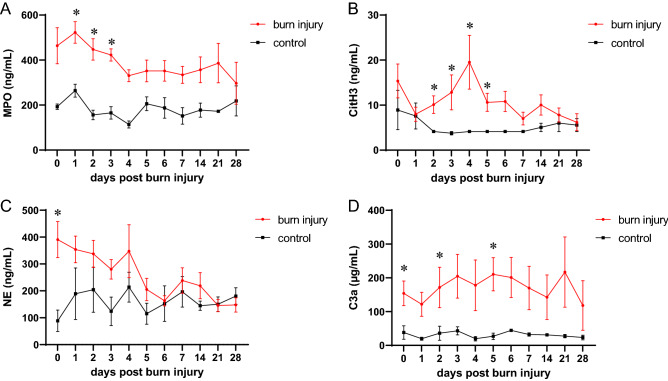
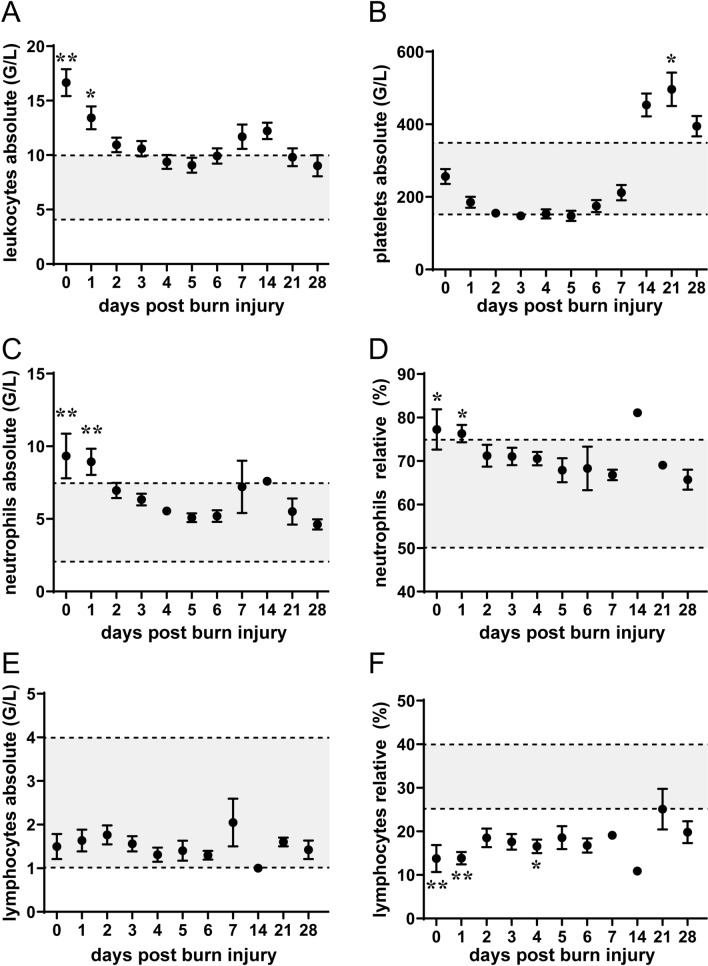
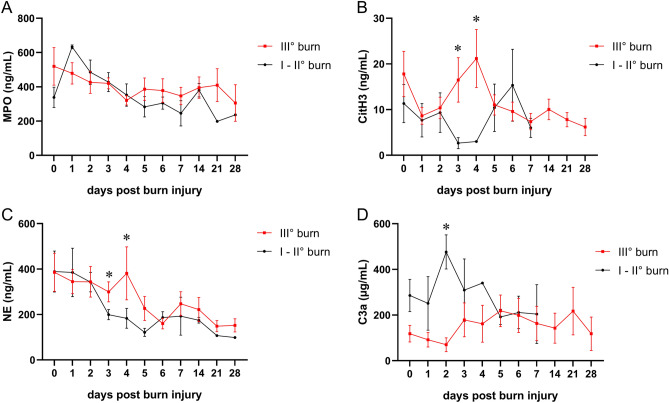
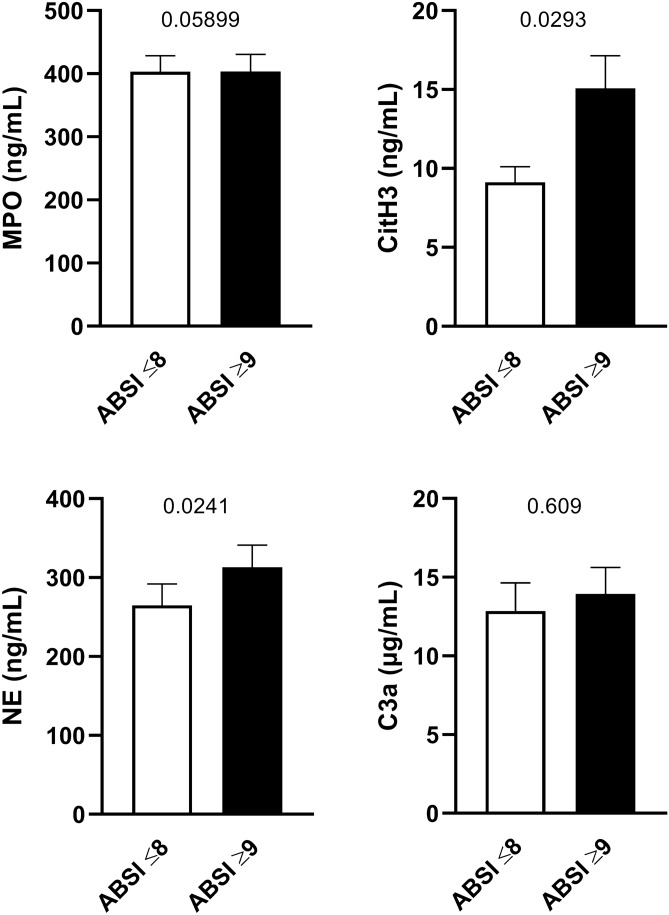
Burn injuries elicit a unique and dynamic stress response which can lead to burn injury progression. Though neutrophils represent crucial players in the burn-induced immunological events, the dynamic secretion pattern and systemic levels of neutrophil-derived factors have not been investigated in detail so far. Serum levels of neutrophil elastase (NE), myeloperoxidase (MPO), citrullinated histone H3 (CitH3), and complement factor C3a were quantified in burn victims over 4 weeks post injury. Furthermore, the potential association with mortality, degree of burn injury, and inhalation trauma was evaluated. In addition, leukocyte, platelet, neutrophil, and lymphocyte counts were assessed. Lastly, we analyzed the association of neutrophil-derived factors with clinical severity scoring systems. Serum levels of NE, MPO, CitH3, and C3a were remarkably elevated in burn victims compared to healthy controls. Leukocyte and neutrophil counts were significantly increased on admission day and day 1, while relative lymphocytes were decreased in the first 7 days post burn trauma. Though neutrophil-derived factors did not predict mortality, patients suffering from 3rd degree burn injuries displayed increased CitH3 and NE levels. Accordingly, CitH3 and NE were elevated in cases with higher abbreviated burn severity indices (ABSI). Taken together, our data suggest a role for neutrophil activation and NETosis in burn injuries and burn injury progression. Targeting exacerbated neutrophil activation might represent a new therapeutic option for severe cases of burn injury.
© 2022. The Author(s).
Conflict of interest statement
The authors declare no competing interests.
Figures
References
-
- Association AB. National Burn Repository 2019 Update: Report of Data from 2009 to 2018. American Burn Association; 2019.
-
- Mason SA, Nathens AB, Byrne JP, Diong C, Fowler RA, Karanicolas PJ, et al. Increased rate of long-term mortality among burn survivors: A population-based matched cohort study. Ann. Surg. 2019;269(6):1192–1199. - PubMed
-
- Guillory AN, Porter C, Suman OE, Zapata-Sirvent RL, Finnerty CC, Herndon DN. Modulation of the hypermetabolic response after burn injury. Total Burn Care. 301–6 (2018).
-
- Agay D, Andriollo-Sanchez M, Claeyssen R, Touvard L, Denis J, Roussel AM, et al. Interleukin-6, TNF-alpha and interleukin-1 beta levels in blood and tissue in severely burned rats. Eur. Cytokine Netw. 2008;19(1):1–7. - PubMed
Publication types
MeSH terms
Substances
LinkOut - more resources
Full Text Sources
Medical
Research Materials
Miscellaneous
