


Increased elasticity of sucrose demand during hyperdopaminergic states in rats
- PMID: 35102422
- PMCID: PMC8891210
- DOI: 10.1007/s00213-022-06068-x
Increased elasticity of sucrose demand during hyperdopaminergic states in rats
Abstract
Rationale: Deficits in cost-benefit decision-making are a core feature of several psychiatric disorders, including substance addiction, eating disorders and bipolar disorder. Mesocorticolimbic dopamine signalling has been implicated in various processes related to cognition and reward, but its precise role in reward valuation and cost-benefit trade-off decisions remains incompletely understood.
Objectives: We assessed the role of mesocorticolimbic dopamine signalling in the relationship between price and consumption of sucrose, to better understand its role in cost-benefit decisions.
Methods: Dopamine neurons in the ventral tegmental area (VTA) were chemogenetically activated in rats, and a behavioural economics approach was used to quantify the relationship between price and consumption of sucrose. Motivation for sucrose was also assessed under a progressive ratio (PR) schedule of reinforcement. To further gauge the role of dopamine in cost-benefit trade-offs for sucrose, the effects of treatment with D-amphetamine and the dopamine receptor antagonist alpha-flupentixol were assessed.
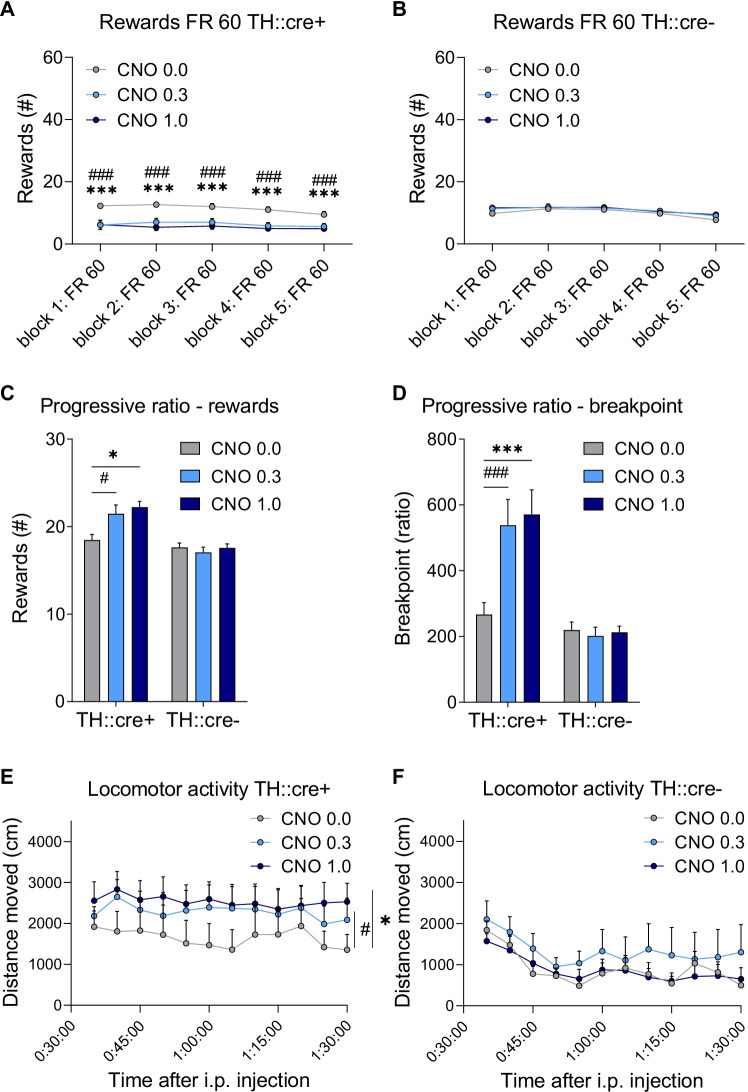
Results: Chemogenetic activation of VTA dopamine neurons increased demand elasticity, while responding for sucrose under a PR schedule of reinforcement was augmented upon stimulation of VTA dopamine neurons. Treatment with amphetamine partially replicated the effects of chemogenetic dopamine neuron activation, whereas treatment with alpha-flupentixol reduced free consumption of sucrose and had mixed effects on demand elasticity.
Conclusions: Stimulation of mesocorticolimbic dopaminergic neurotransmission altered cost-benefit trade-offs in a complex manner. It reduced the essential value of palatable food, increased incentive motivation and left free consumption unaltered. Together, these findings imply that mesocorticolimbic dopamine signalling differentially influences distinct components of cost expenditure processes aimed at obtaining rewards.
Keywords: Behavioural economics,; Chemogenetics,; Demand,; Dopamine,; Motivation,; Rats,; Ventral tegmental area.
© 2022. The Author(s).
Figures




References
-
- Aberman JE, Salamone JD. Nucleus accumbens dopamine depletions make rats more sensitive to high ratio requirements but do not impair primary food reinforcement. Neuroscience. 1999;92:545–552. - PubMed
-
- Aberman JE, Ward SJ, Salamone JD. Effects of dopamine antagonists and accumbens dopamine depletions on time-constrained progressive-ratio performance. Pharmacol Biochem Behav. 1998;61:341–348. - PubMed
-
- American Psychiatric Association (2013) DSM-5: Diagnostic and Statistical Manual of Mental Disorders. American Psychiatric Association, Washington, DC, USA.
MeSH terms
Substances
Grants and funding
LinkOut - more resources
Full Text Sources
Research Materials
