Management of bladder dysfunction in multiple sclerosis: a systematic review and meta-analysis of studies regarding bladder rehabilitation
- PMID: 35102733
- PMCID: PMC9980558
- DOI: 10.23736/S1973-9087.22.07217-3
Management of bladder dysfunction in multiple sclerosis: a systematic review and meta-analysis of studies regarding bladder rehabilitation
Abstract
Introduction: The aim of the study was to investigate the efficacy of rehabilitation programs for bladder disorders in patients with multiple sclerosis (MS) and to guide physicians in delineating therapeutic tools and programs for physiatrists, using the best current strategies.
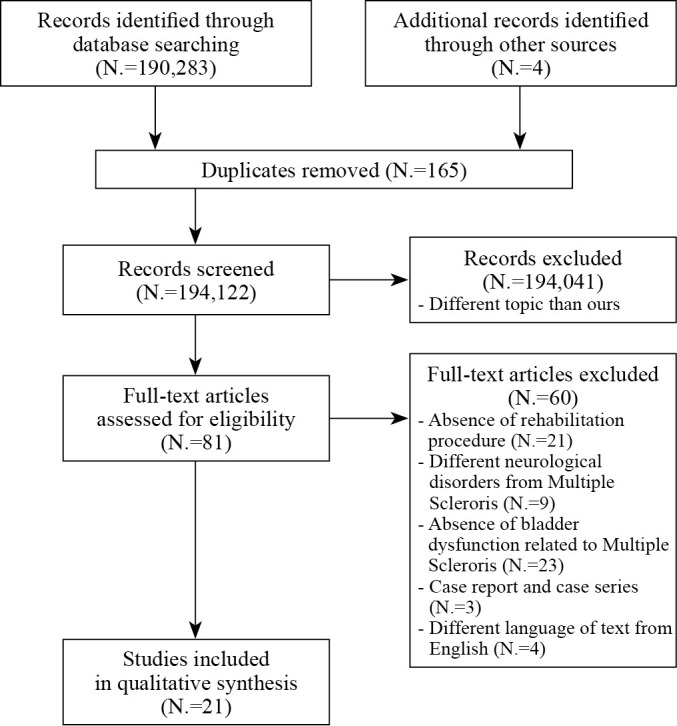
Evidence acquisition: A search was conducted on PubMed, EMBASE, the Cochrane Library and Web of Science. Studies were eligible if they included adults with bladder disorders related to MS and described specific treatments of rehabilitation interest. The search identified 190,283 articles using the key words "multiple sclerosis" AND "rehabilitation" AND "urinary" OR "bladder," of which the reviewers analyzed 81 full-texts; 21 publications met the criteria and were included in the systematic review.
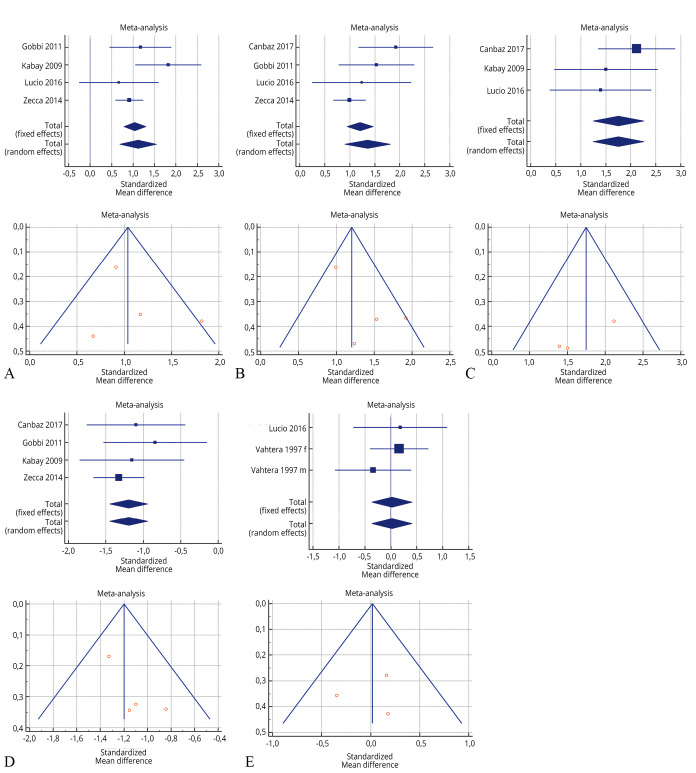
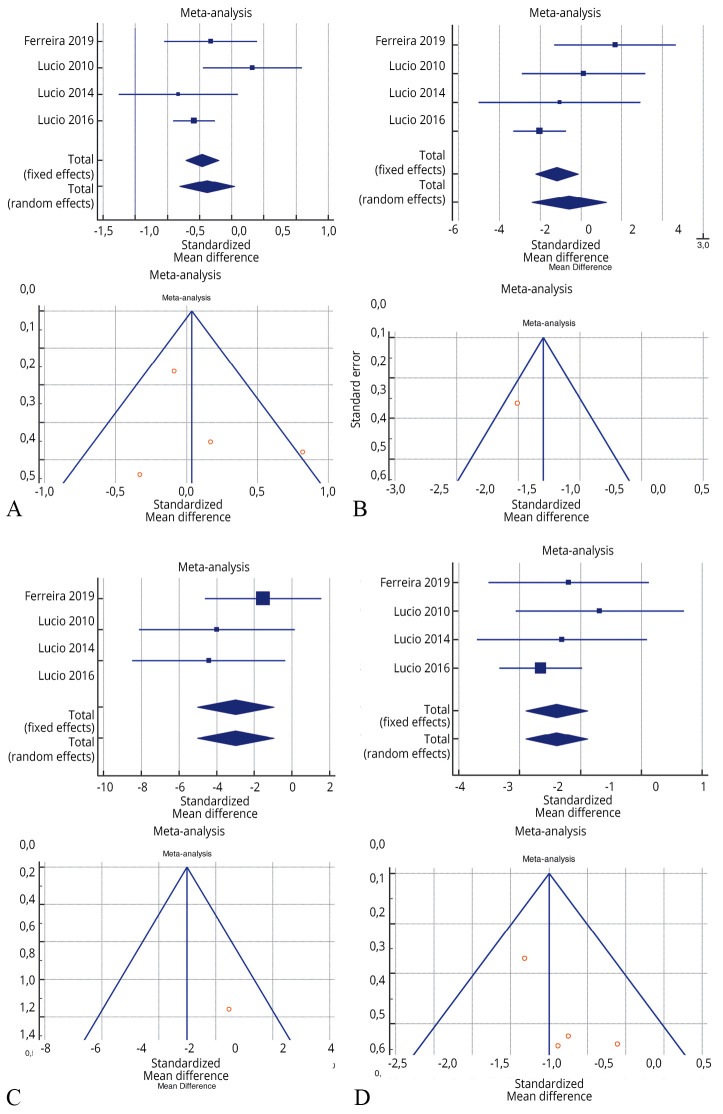
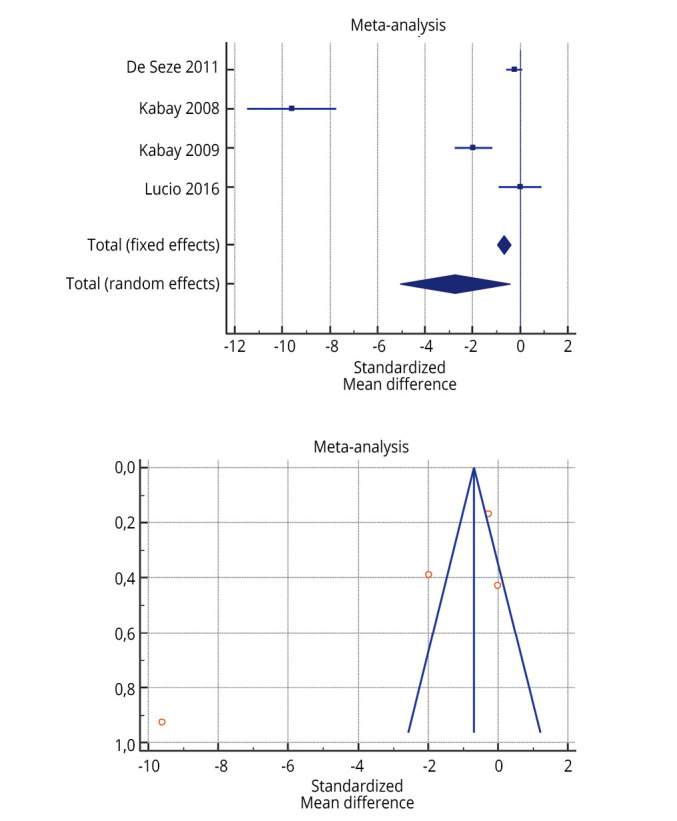
Evidence synthesis: The systematic review identified the specific rehabilitation treatments reported in the current literature. The meta-analysis compared the scores and scales used to quantify bladder disorders due to MS, both before and after rehabilitation or in a comparison with a control group.
Conclusions: The present study suggests the need of a specific therapeutic protocol, based on the degree of disability and symptom complexity in patients with MS-related neurogenic lower urinary tract dysfunction (NLUTD). Particularly, the meta-analysis shows the effectiveness of peripheral tibial nerve stimulation (PTNS) and pelvic floor muscle training (PFMT) for neurogenic detrusor overactivity (NDO). However, the goal of physiotherapy is to treat incontinence without making urinary retention worse and vice-versa, reducing the loss of urine urgency, while ensuring the emptying of the bladder.
Conflict of interest statement
Figures
References
-
- European Multiple Sclerosis Platform. Recommendations on rehabilitation services for persons with multiple sclerosis in Europe. Brussels: EMSP; 2004.
-
- Amarenco G, de Sèze M, Ruffion A, Sheikh Ismael S. Clinical and urodynamic evaluations of urinary disorders in multiple sclerosis. Ann Phys Rehabil Med 2014;57:277–87. https://www.ncbi.nlm.nih.gov/entrez/query.fcgi?cmd=Retrieve&db=PubMed&l... 10.1016/j.rehab.2014.05.006 - DOI - PubMed
-
- Al Dandan HB, Coote S, McClurg D. Prevalence of Lower Urinary Tract Symptoms in People with Multiple Sclerosis: A Systematic Review and Meta-analysis. Int J MS Care 2020;22:91–9. https://www.ncbi.nlm.nih.gov/entrez/query.fcgi?cmd=Retrieve&db=PubMed&l... 10.7224/1537-2073.2019-030 - DOI - PMC - PubMed
-
- de Sèze M, Ruffion A, Denys P, Joseph PA, Perrouin-Verbe B; GENULF. The neurogenic bladder in multiple sclerosis: review of the literature and proposal of management guidelines. Mult Scler 2007;13:915–28. https://www.ncbi.nlm.nih.gov/entrez/query.fcgi?cmd=Retrieve&db=PubMed&l... 10.1177/1352458506075651 - DOI - PubMed
-
- Lúcio AC, Perissinoto MC, Natalin RA, Prudente A, Damasceno BP, D’ancona CA. A comparative study of pelvic floor muscle training in women with multiple sclerosis: its impact on lower urinary tract symptoms and quality of life. Clinics (São Paulo) 2011;66:1563–8. https://www.ncbi.nlm.nih.gov/entrez/query.fcgi?cmd=Retrieve&db=PubMed&l... 10.1590/S1807-59322011000900010 - DOI - PMC - PubMed
Publication types
MeSH terms
LinkOut - more resources
Full Text Sources
Medical
Miscellaneous