Prevalence of Common Infectious Diseases After COVID-19 Vaccination and Easing of Pandemic Restrictions in Israel
- PMID: 35103792
- PMCID: PMC8808334
- DOI: 10.1001/jamanetworkopen.2021.46175
Prevalence of Common Infectious Diseases After COVID-19 Vaccination and Easing of Pandemic Restrictions in Israel
Abstract
Importance: Social restrictions intended to limit the transmission of SARS-CoV-2 may have also been associated with decreased rates of other communicable diseases. Evidence suggests that infection incidence rates (IRs) are rebounding after easing of social restrictions (eg, mask mandates). The reemergence of infectious disease complicates efforts to manage the ongoing COVID-19 pandemic.
Objective: To examine IRs of frequently occurring infectious diseases after a successful SARS-CoV-2 vaccination campaign in Israel and cessation of social restrictions.
Design, setting, and participants: This cross-sectional study was conducted using records for respiratory and gastrointestinal infectious diseases at 209 community clinics in southern Israel from 2017 to 2021. Included patients attended community clinics from January 1, 2017, to June 30, 2021.
Exposures: Incidence of infectious diseases was estimated in the first 3 months after the easing of social restrictions (ie, April-June 2021) across age groups.
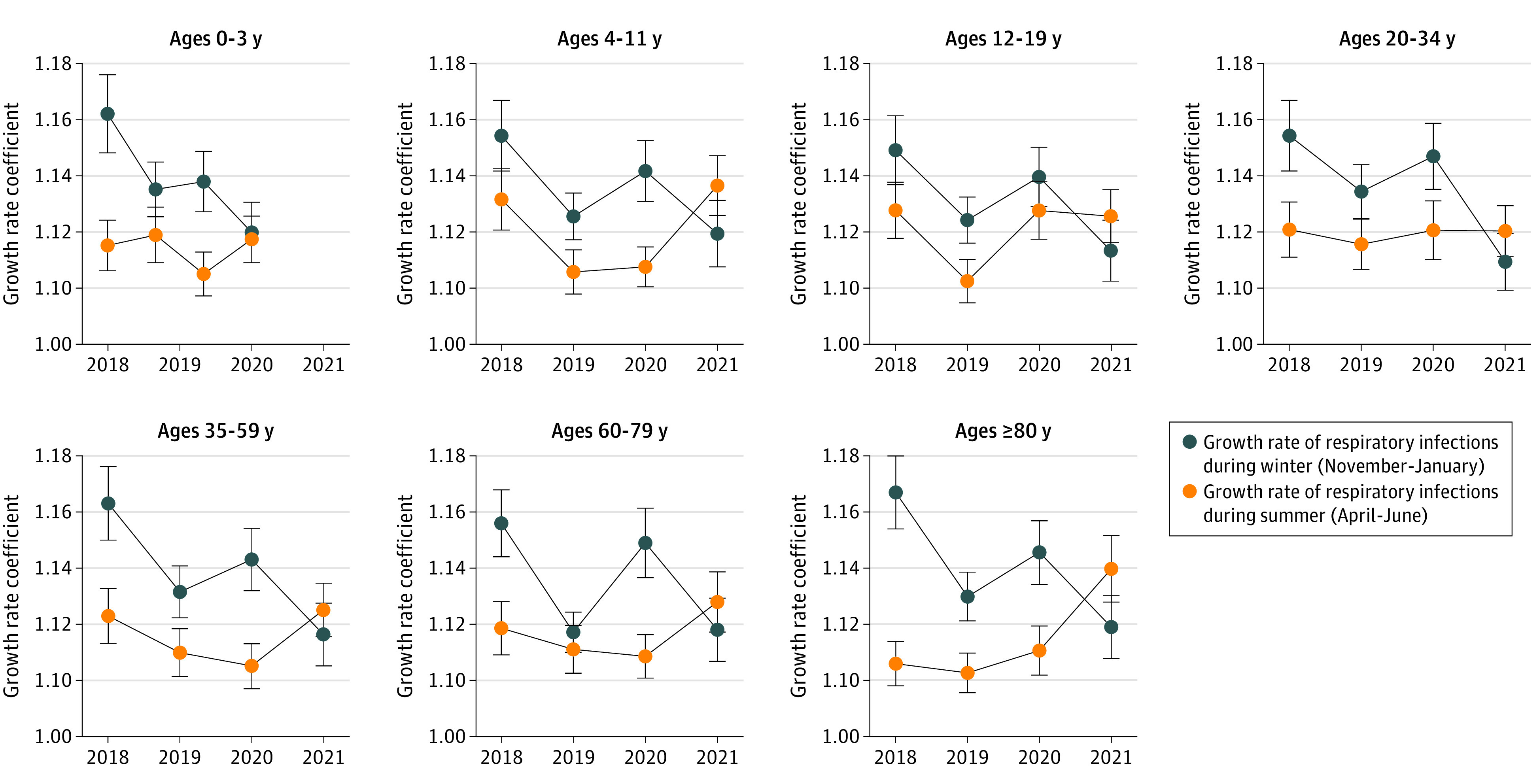
Main outcomes and measures: Age-specific and disease-specific weekly IRs per 100 000 population for April to June were compared between 2017 and 2021 and expected current IR was estimated using segmented linear regression. Growth rates of respiratory infections across years and weekly diagnoses detected by real-time polymerase chain reaction testing were also compared.
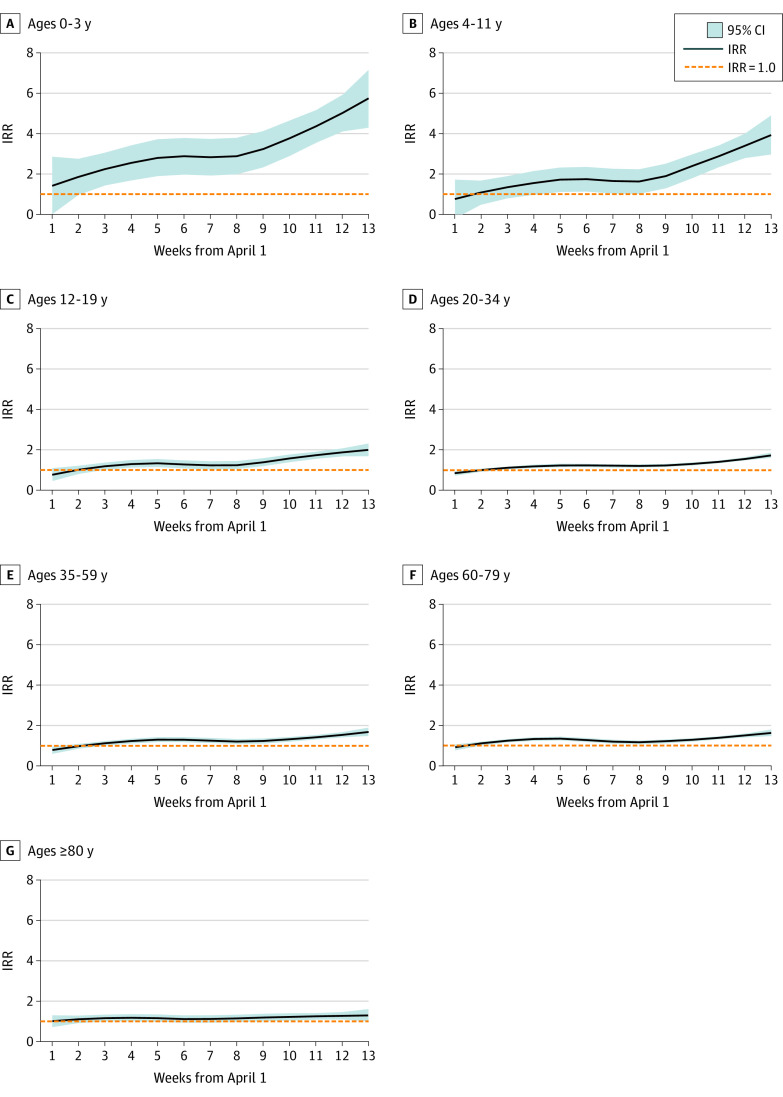
Results: Among 386 711 patients with a total of 1 221 568 visits to community clinics, the mean (SD) age was 27.29 (23.93) years, and there were 202 494 (52.3%) male patients and 184 217 (47.7%) female patients. Children aged 0 to 3 years had significantly increased rates of respiratory and gastrointestinal infection diagnoses (IR ratio, 2.64; 95% CI, 2:30-2.91; P < .001). In addition, incidence of non-SARS-CoV-2 respiratory infections were significantly increased across age groups (IR ratio, 1.74; 95% CI, 1.56-1.94; P < .001).
Conclusions and relevance: These morbidity trends observed in Israel suggest that similar trends could occur in coming months in other countries after easing of COVID-19-related restrictions, particularly with the ongoing challenges of SARS-CoV-2 variants.
Conflict of interest statement
Figures
References
-
- Ullrich A, Schranz M, Rexroth U, et al. ; Robert Koch’s Infectious Disease Surveillance Group . Impact of the COVID-19 pandemic and associated non-pharmaceutical interventions on other notifiable infectious diseases in Germany: an analysis of national surveillance data during week 1-2016—week 32-2020. Lancet Reg Health Eur. 2021;6:100103. doi: 10.1016/j.lanepe.2021.100103 - DOI - PMC - PubMed
MeSH terms
LinkOut - more resources
Full Text Sources
Medical
Miscellaneous