


doi: 10.1002/hep.32378.
Epub 2022 Apr 22.
AASLD Practice Guidance: Palliative care and symptom-based management in decompensated cirrhosis
Affiliations
- PMID: 35103995
- PMCID: PMC9942270
- DOI: 10.1002/hep.32378
Item in Clipboard
AASLD Practice Guidance: Palliative care and symptom-based management in decompensated cirrhosis
Hepatology.
2022 Sep.
No abstract available
Conflict of interest statement
CONFLICT OF INTEREST
The opinions expressed in this article are the authors’ own and do not reflect the views of the National Institutes of Health or the United States government.
Figures
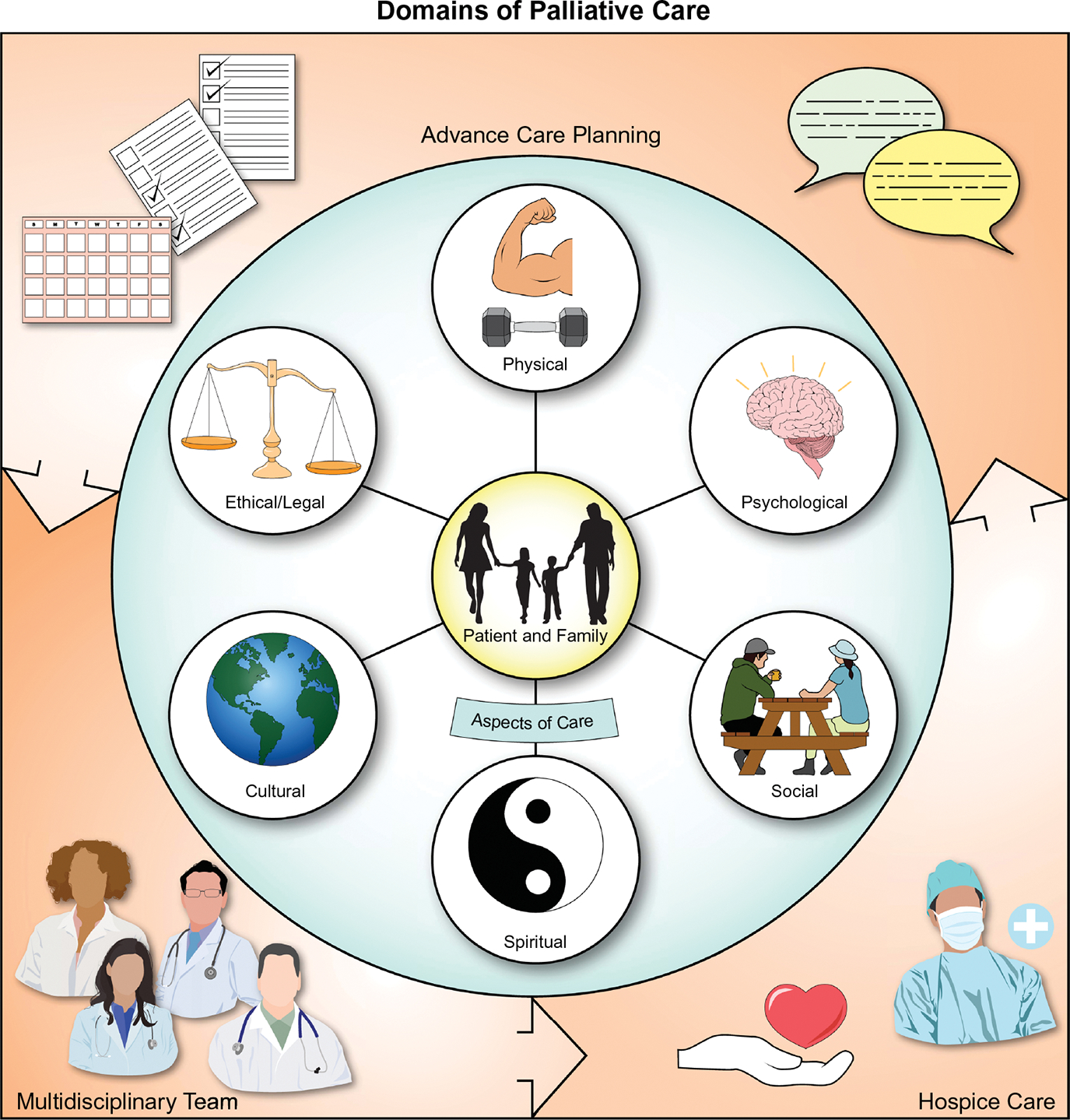
Domains of palliative care. The eight domains of palliative care, as defined by the National Consensus Project Clinical Practice Guidelines for Quality Palliative Care Guidelines, 4th Edition. Reference: Ferrell et al. 2018 include spiritual, cultural, social, psychological, ethical, physical, care at the end of life, and processes of care (e.g., ACP).[14] This figure also includes patients, families, and the multidisciplinary team as central to palliative care
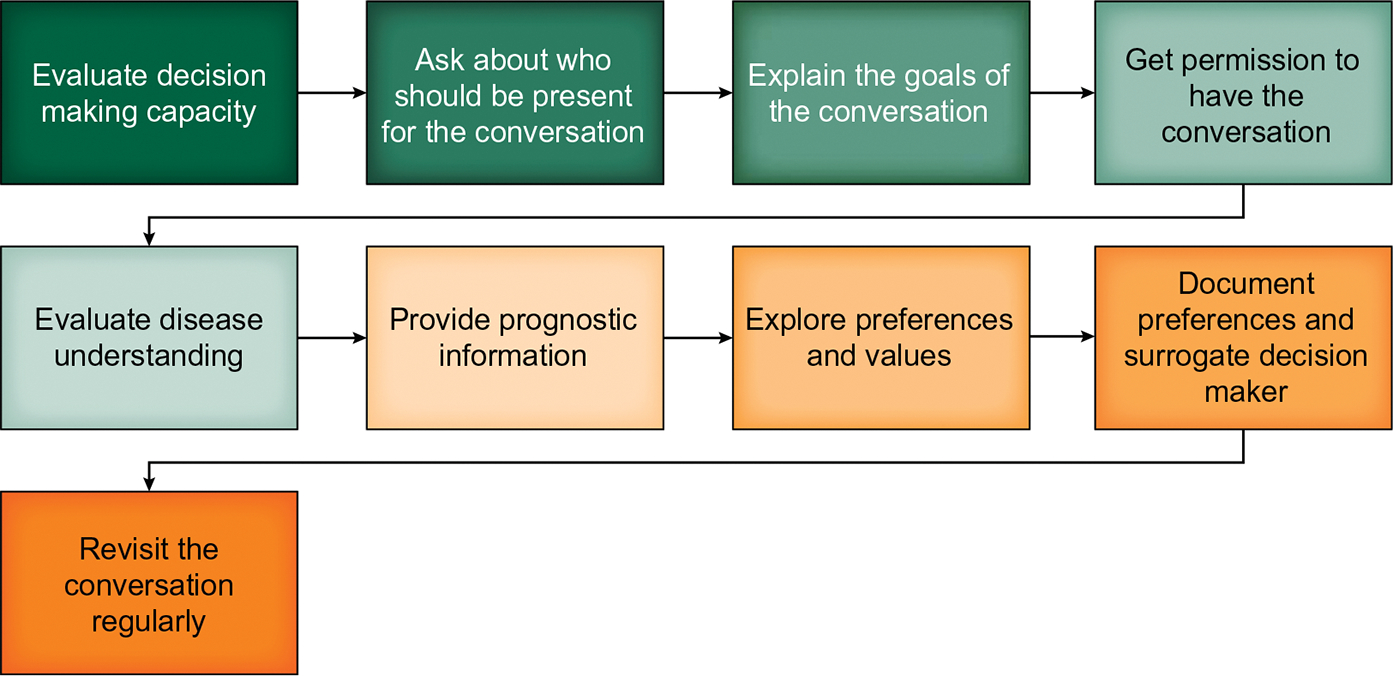
Steps in Advance Care Planning (ACP). ACP is an iterative process that involves working with patients and their families to identify and document their preferences for care. This graphic provides a roadmap for engaging in ACP
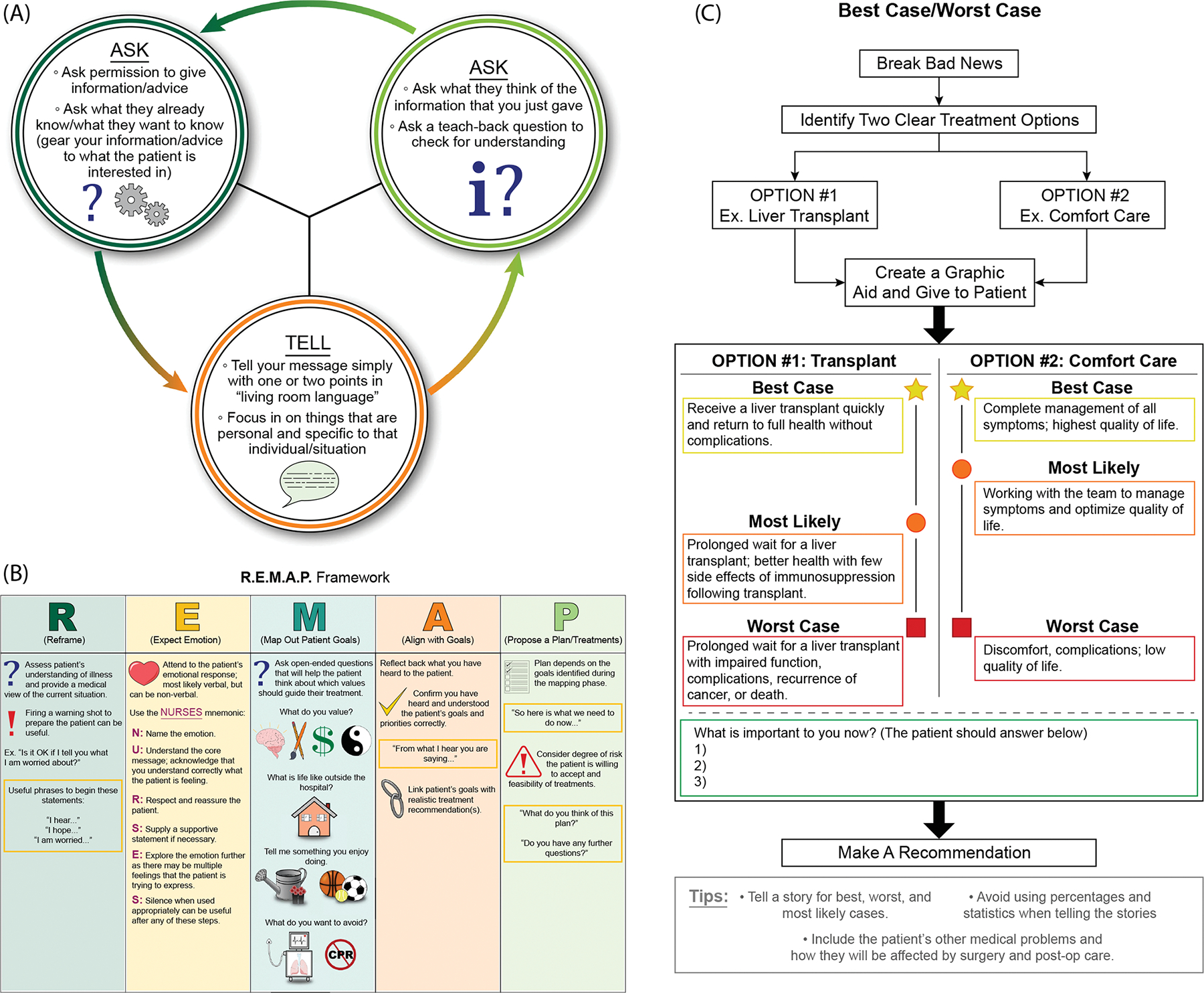
Structured frameworks for goals-of-care conversations. (A) Ask-Tell-Ask is a simple approach that can be used to deliver bad news. (B) The R.E.M.A.P. Framework is a step-wise approach to engaging patients in more-complex decision making. (C) Best-case worst-case provides a way to frame difficult choices, such as the choice to pursue a transplant. References: ©2021 VitalTalk. All rights reserved. VitalTalk content is for informational, educational, and noncommercial use only.[89] Zimmermann et al. 2020; Schwarze et al. 2020; Back et al. 2005; and Childers et al. 2017.[–95] Readers can learn more at https://www.vitaltalk.org/
Comment in
-
How to deliver palliative care for patients with management in decompensated cirrhosis.Hepatobiliary Surg Nutr. 2023 Aug 1;12(4):576-579. doi: 10.21037/hbsn-23-222. Epub 2023 Jun 29. Hepatobiliary Surg Nutr. 2023. PMID: 37600988 Free PMC article. No abstract available.
References
Publication types
MeSH terms
Grants and funding
LinkOut - more resources
Full Text Sources
Medical
