Review
. 2022 Feb 1;132(3):e148277.
doi: 10.1172/JCI148277.

Circadian rhythms and renal pathophysiology

Affiliations
Review

Circadian rhythms and renal pathophysiology

Rajesh Mohandas et al. J Clin Invest. .

Abstract

The reality of life in modern times is that our internal circadian rhythms are often out of alignment with the light/dark cycle of the external environment. This is known as circadian disruption, and a wealth of epidemiological evidence shows that it is associated with an increased risk for cardiovascular disease. Cardiovascular disease remains the top cause of death in the United States, and kidney disease in particular is a tremendous public health burden that contributes to cardiovascular deaths. There is an urgent need for new treatments for kidney disease; circadian rhythm-based therapies may be of potential benefit. The goal of this Review is to summarize the existing data that demonstrate a connection between circadian rhythm disruption and renal impairment in humans. Specifically, we will focus on chronic kidney disease, lupus nephritis, hypertension, and aging. Importantly, the relationship between circadian dysfunction and pathophysiology is thought to be bidirectional. Here we discuss the gaps in our knowledge of the mechanisms underlying circadian dysfunction in diseases of the kidney. Finally, we provide a brief overview of potential circadian rhythm-based interventions that could provide benefit in renal disease.


Conflict of interest statement

Conflict of interest: YS is an inventor on US patent application no. 16/597,634 (“Modulating iron metabolism delays the on-set and severity of lupus nephritis”).

Figures

Figure 1
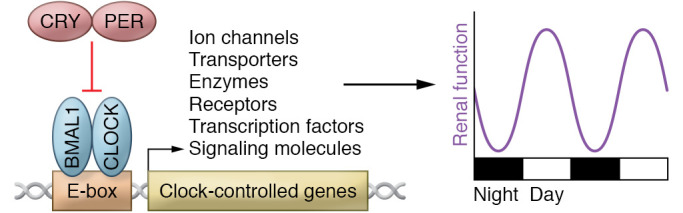
Figure 1. Transcription-translation feedback loop of the circadian clock.
BMAL1 and CLOCK bind to E-box response elements in the promoters of target genes, which include Period and Cryptochrome. PER and CRY form the negative arm of this feedback loop. Ancillary loops of the transcription-translation feedback system involving nuclear receptors and posttranslational modifications exist but will not be discussed here. Also beyond the scope of this Review is a discussion of the non-canonical functions of clock proteins, such as the role of BMAL1 in the regulation of translation in the cytosol (161).
Figure 2
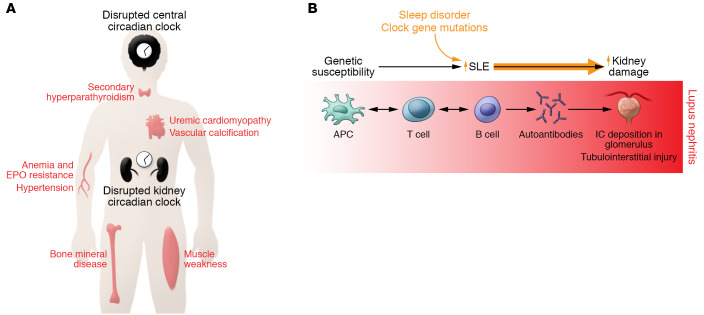
Figure 2. Disruption of circadian rhythms in disease state.
(A) Complications of CKD. Kidney disease is associated with disruption of peripheral and central circadian rhythms. The molecular clock modulates the levels or activity of serum phosphate, parathyroid hormone, erythropoietin (EPO), and other hormones that are known to exhibit diurnal rhythms. (B) Schema of progression of SLE to end-organ renal disease (lupus nephritis [LN]) and potential contribution from disturbed circadian clock. Genetically susceptible individuals develop SLE. During disease progression there is a complex crosstalk between multiple cell types involving both innate and adaptive immune systems. The antigen-presenting cells (APCs) present self-antigens from various sources to T lymphocytes, which results in generation of autoreactive T cells. These CD4+ T lymphocytes in turn instruct B cells to produce autoantibodies of different specificities that deposit as immune complexes (ICs) in the glomeruli. This leads to progressive glomerular pathology and local production of chemoattractants and matrix proteins, resulting in immune cell infiltration and tissue damage. Loss of glomerular permeability also leads to tubulointerstitial injury, which is perpetuated by intrinsic tubular cell inflammatory phenotype and infiltrating immune cells and eventually leads to renal failure. Sleep fragmentation or genetic mutations in key clock proteins in SLE patients can potentially accentuate immune cell effector function. Furthermore, mutations in the renal intrinsic cells’ clock genes can render them susceptible to injury, as local injurious events unfold during the progression of LN.
Figure 3
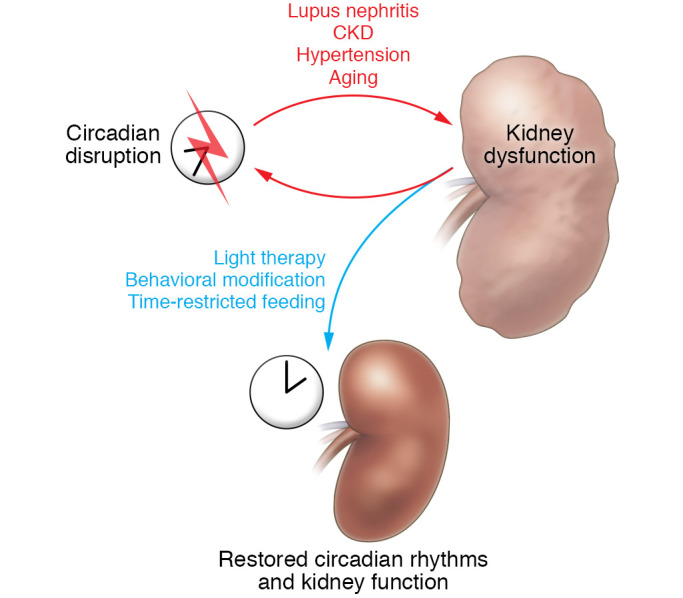
Figure 3. Proposed reciprocal relationship between circadian disruption and kidney disease.
Circadian disruption may lead to renal disease, but kidney disease itself may cause circadian disruption. These pathological states may exacerbate each other. This vicious cycle may represent an opportunity for circadian rhythm–based interventions as novel therapies to restore circadian rhythms and physiological function.

References

    1. Armstrong JA. Urinalysis in Western culture: a brief history. Kidney Int. 2007;71(5):384–387. doi: 10.1038/sj.ki.5002057. - DOI - PubMed
    1. Mills JN. Human circadian rhythms. Physiol Rev. 1966;46(1):128–171. doi: 10.1152/physrev.1966.46.1.128. - DOI - PubMed
    1. Mills JN, Stanbury SW. Intrinsic diurnal rhythm in urinary electrolyte output. J Physiol. 1951;115(1):18p–19p. - PubMed

    1. Mills JN. Diurnal rhythm in urine flow. J Physiol. 1951;113(4):528–536. doi: 10.1113/jphysiol.1951.sp004593. - DOI - PMC - PubMed
    1. Mills JN, Stanbury SW. Persistent 24-hour renal excretory rhythm on a 12-hour cycle of activity. J Physiol. 1952;117(1):22–37. - PMC - PubMed

Publication types

MeSH terms