


Network analysis of assistive technology stakeholders in Malawi
- PMID: 35107410
- PMCID: PMC8812727
- DOI: 10.1080/16549716.2021.2014046
Network analysis of assistive technology stakeholders in Malawi
Abstract
Background: Assistive technologies promote participation and quality of life for people with disabilities and other functional limitations. There is a global call to develop and implement policies to improve access to assistive technologies. In response, a stakeholder led initiative in Malawi is working towards the development of such a policy.
Objective: The objective of this study was to assess the existing network of stakeholders, and the strength of relationship between organizations who deliver assistive products and related services.
Method: We conducted a survey-based network analysis of assistive technology stakeholder organizations in Malawi.
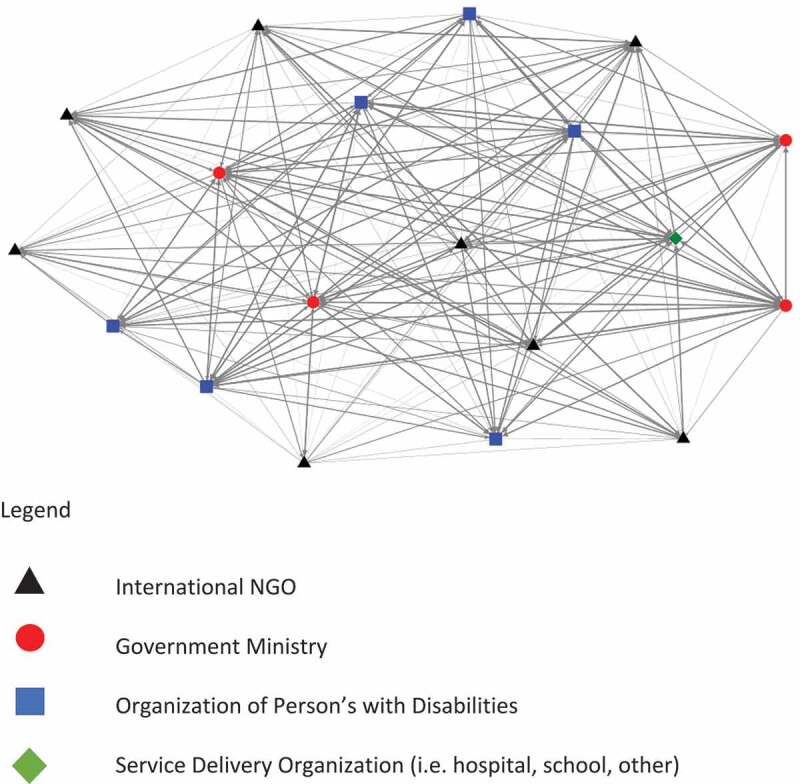
Results: Stakeholders (n = 19) reported a range of connections, from no awareness to collaboration with organizations within the assistive technology network. No single organization or government ministry was most central to the network. International NGOs were less central to the network than local organizations for disabled people, service providers, and ministries.
Conclusion: The assistive technology stakeholder network in Malawi is distributed, with a range of responsibility across a variety of stakeholders, including three government ministries. An effective assistive technology policy must engage all stakeholders and may benefit from a collective leadership approach that spans the inter-sectoral need for a cohesive assistive technology system.
Keywords: Self-help devices; assistive products; health policy; low and middle income countries; policy development.
Conflict of interest statement
No potential conflict of interest was reported by the author(s).
Figures
References
-
- Khasnabis C, Mirza Z, MacLachlan M.. Opening the GATE to inclusion for people with disabilities. Lancet. 2015;386:2229–5. - PubMed
-
- Ripat JD, Woodgate RL. The role of assistive technology in self-perceived participation. Int J Rehabil Res. 2012;35:170–177. - PubMed
-
- Brandt A, Samuelsson K, Töytäri O, et al. Activity and participation, quality of life and user satisfaction outcomes of environmental control systems and smart home technology: a systematic review. Disabil Rehabil Assist Technol. 2011;6:189–206. - PubMed
-
- World Health Organization . Assistive technology fact sheet. Geneva, Switzerland: World Health Organization; 2016.
-
- Eide AH, Munthali A. Living conditions among persons with disabilities in Malawi. Oslo, Norway: SINTEF; 2018.
Publication types
MeSH terms
Grants and funding
LinkOut - more resources
Full Text Sources
Medical
Miscellaneous
