


Design of therapeutic education workshops for home haemodialysis in a patient-centered chronic kidney diseases research: a qualitative study
- PMID: 35109808
- PMCID: PMC8812054
- DOI: 10.1186/s12882-022-02683-0
Design of therapeutic education workshops for home haemodialysis in a patient-centered chronic kidney diseases research: a qualitative study
Abstract
Rationale & objective: A quarter of patients do not receive any information on the modalities of renal remplacement therapy (RRT) before its initiation. In our facility, we provide therapeutic education workshops for all RRT except for home hemodialysis (HHD). The objectives of this study were to identify and describe the needs of CKD patients and caregivers for RRT with HHD and design therapeutic education workshops.
Setting & participants: Two sequential methods of qualitative data collection were conducted. Interviews with patients treated with HHD and doctors specialized in HHD were performed to define the interview guide followed by semi-structured interviews with the help of HHD patients from our center.
Analytic approach: Thematic analysis was conducted and were rooted in the principles of qualitative analysis for social scientists. Data were analyzed by two investigators. Transcribed interviews were entered into RQDA 3.6.1 software for data organization and coding purposes (Version 3.6.1).
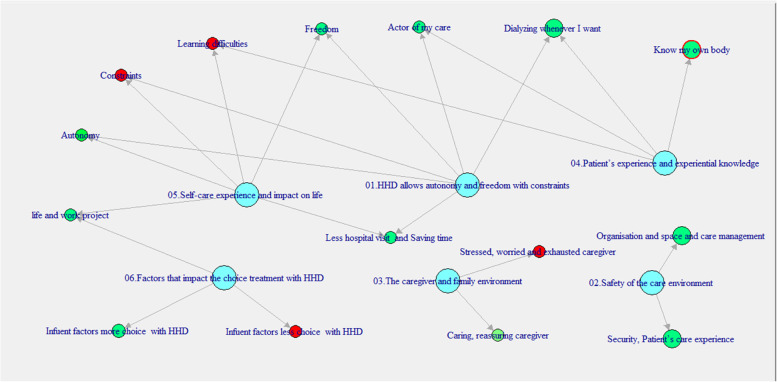
Results: In total, five interviews were performed. We identified six themes related to the barriers, facilitators, and potential solutions to home dialysis therapy: (1) HHD allows autonomy and freedom with constraints, (2) safety of the care environment, (3) the caregiver and family environment, (4) patient's experience and experiential knowledge, (5) self-care experience and impact on life, and (6) factors that impact the choice of treatment with HHD. We designed therapeutic education workshops in a group of patients and caregivers.
Conclusions: Our study confirmed previous results obtained in literature on the major barriers, facilitators, and potential solutions to HHD including the impact of HHD on the caregiver, the experiences of patients already treated with HHD, and the role of nurses and nephrologists in informing and educating patients. A program to develop patient-to-patient peer mentorship allowing patients to discuss their dialysis experience may be relevant.
Keywords: Home haemodialysis (HHD); Patient education; Patient-centered outcomes research (PCOR); Person centred care (PCC); Qualitative study.
© 2022. The Author(s).
Conflict of interest statement
The authors declare they have no competing interests.
Figures
References
MeSH terms
LinkOut - more resources
Full Text Sources
Medical
