


Quantitative assessment of pregnancy outcome following recurrent miscarriage clinic care: a prospective cohort study
- PMID: 35110317
- PMCID: PMC8811565
- DOI: 10.1136/bmjopen-2021-052661
Quantitative assessment of pregnancy outcome following recurrent miscarriage clinic care: a prospective cohort study
Abstract
Objectives: To measure pregnancy outcome following attendance at a recurrent miscarriage service and identify factors that influence outcome.
Design: Prospective, observational electronic cohort study.
Setting: Participants attending a specialist recurrent miscarriage clinic, with a history of two or more pregnancy losses. 857 new patients attended over a 30-month period and were invited to participate. Participant data were recorded on a bespoke study database, 'Tommy's Net'.
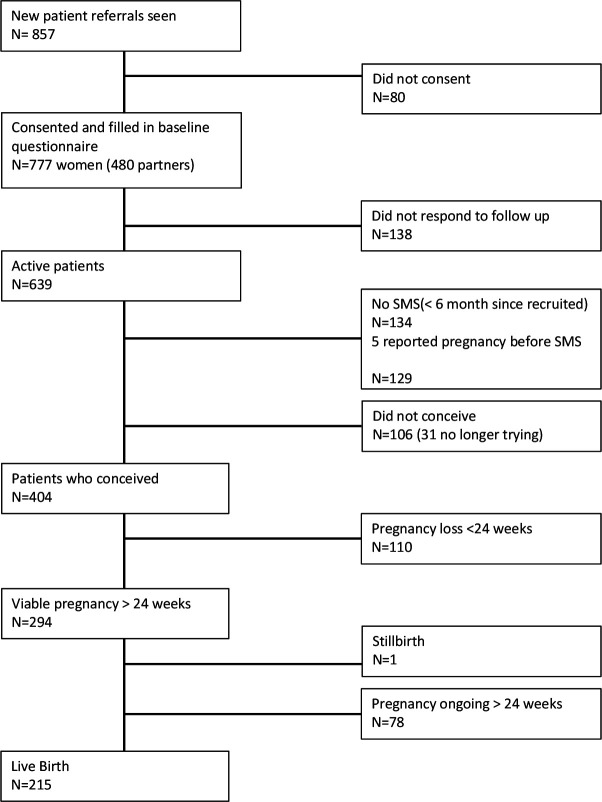
Participants: 777 women consented to participate (90.7% of new patients). 639 (82%) women continued within the cohort, and 138 were lost to follow-up. Mean age of active participants was 34 years for women and 37 years for partners, with a mean of 3.5 (1-19) previous pregnancy losses. Rates of obesity (maternal: 23.8%, paternal: 22.4%), smoking (maternal:7.4%, paternal: 19.4%) and alcohol consumption (maternal: 50%, paternal: 79.2%) were high and 55% of participants were not taking folic acid.
Outcome measures: Biannual collection of pregnancy outcomes, either through prompted self-reporting, or existing hospital systems.
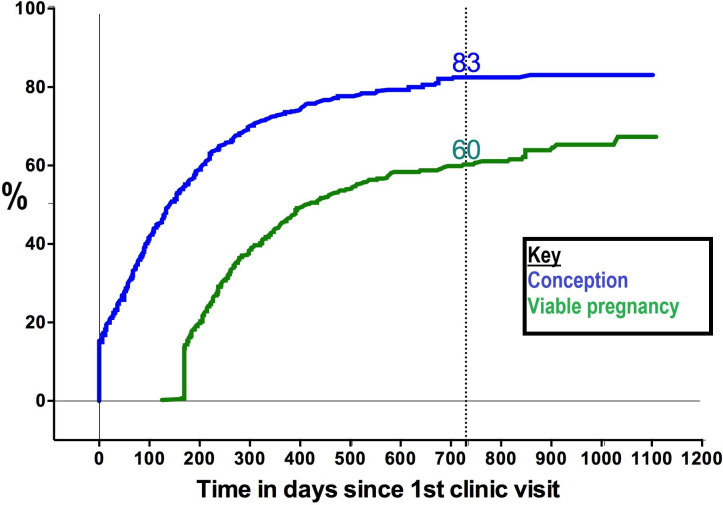
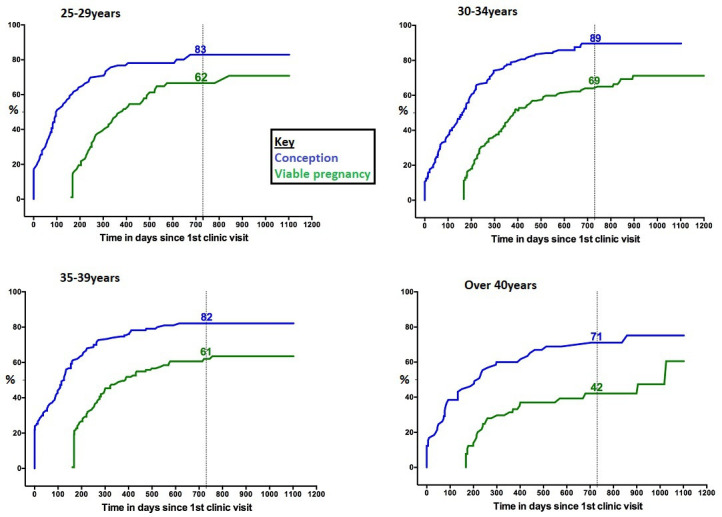
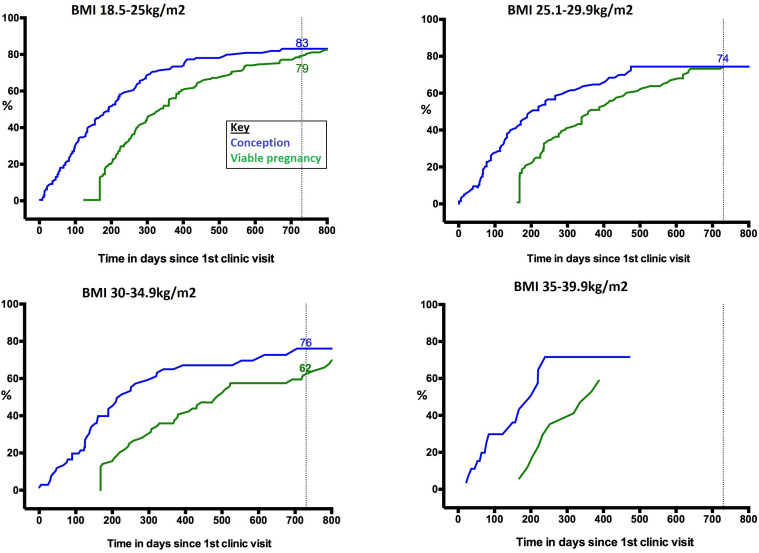
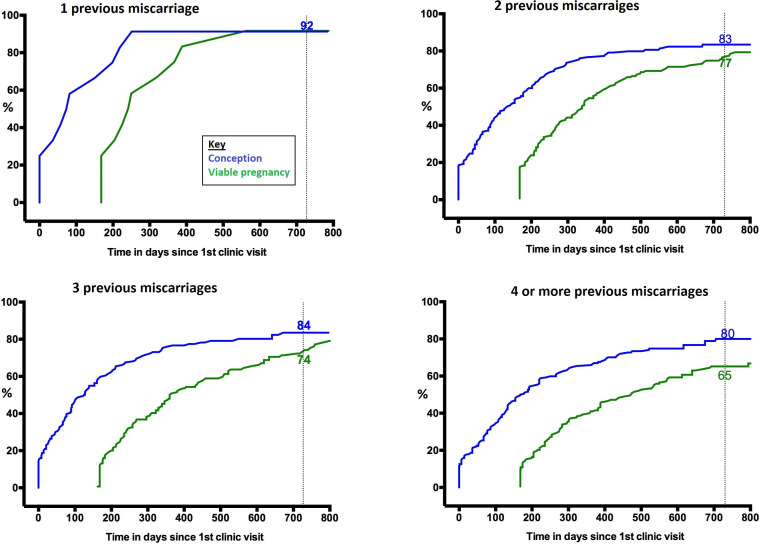
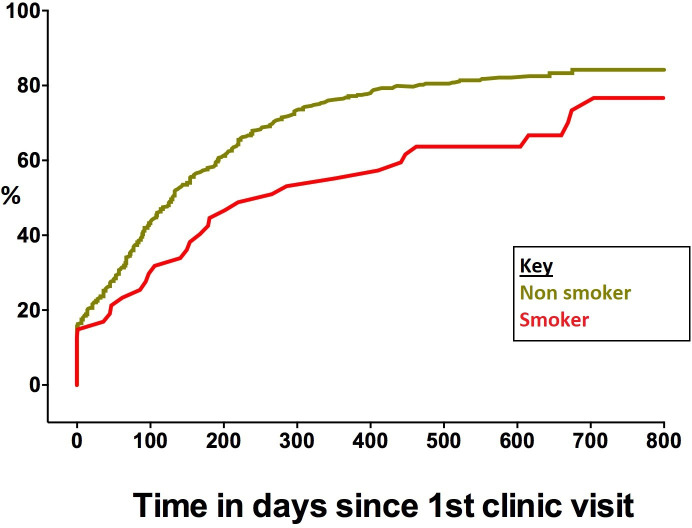
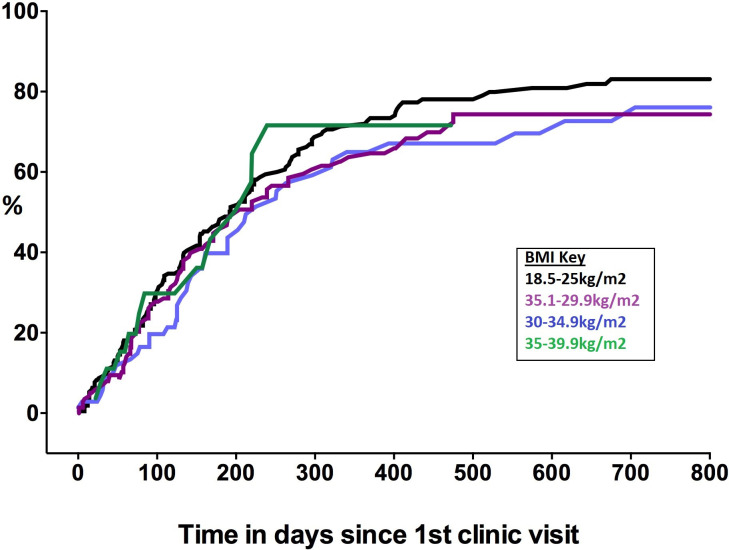
Results: 639 (82%) women were followed up. 404 (83.4%) reported conception and 106 (16.6%) reported no pregnancy, at least 6 months following registration. Of those that conceived, 72.8% (294/404) had a viable pregnancy. Maternal smoking and body mass index (BMI) over 30 were significantly higher in those who did not conceive (p=0.001) CONCLUSIONS: Tommy's Net provides a secure electronic repository on data for couples with recurrent pregnancy loss and associated outcomes. The study identified that subfertility, as well as repeated miscarriage, maternal BMI and smoking status, contributed to failure to achieve live birth. Study findings may enable comparison of clinic outcomes and inform the development of a personalised holistic care package.
Keywords: gynaecology; obstetrics; reproductive medicine; subfertility.
© Author(s) (or their employer(s)) 2022. Re-use permitted under CC BY-NC. No commercial re-use. See rights and permissions. Published by BMJ.
Conflict of interest statement
Competing interests: None declared.
Figures
References
-
- ESHRE Early Pregnancy Guideline Development Group (GDG) . Recurrent pregnancy loss, European Society of reproduction and embryology, 2017.
-
- Regan L, Backos M, Rai R. Recurrent miscarriage, investigations and treatment of couples. Royal College of Obstetricians and Gynaecologists, Greentop Guideline, 2011.
Publication types
MeSH terms
LinkOut - more resources
Full Text Sources
