


Group B Streptococcus Surface Protein β: Structural Characterization of a Complement Factor H-Binding Motif and Its Contribution to Immune Evasion
- PMID: 35110419
- PMCID: PMC8881398
- DOI: 10.4049/jimmunol.2101078
Group B Streptococcus Surface Protein β: Structural Characterization of a Complement Factor H-Binding Motif and Its Contribution to Immune Evasion
Abstract
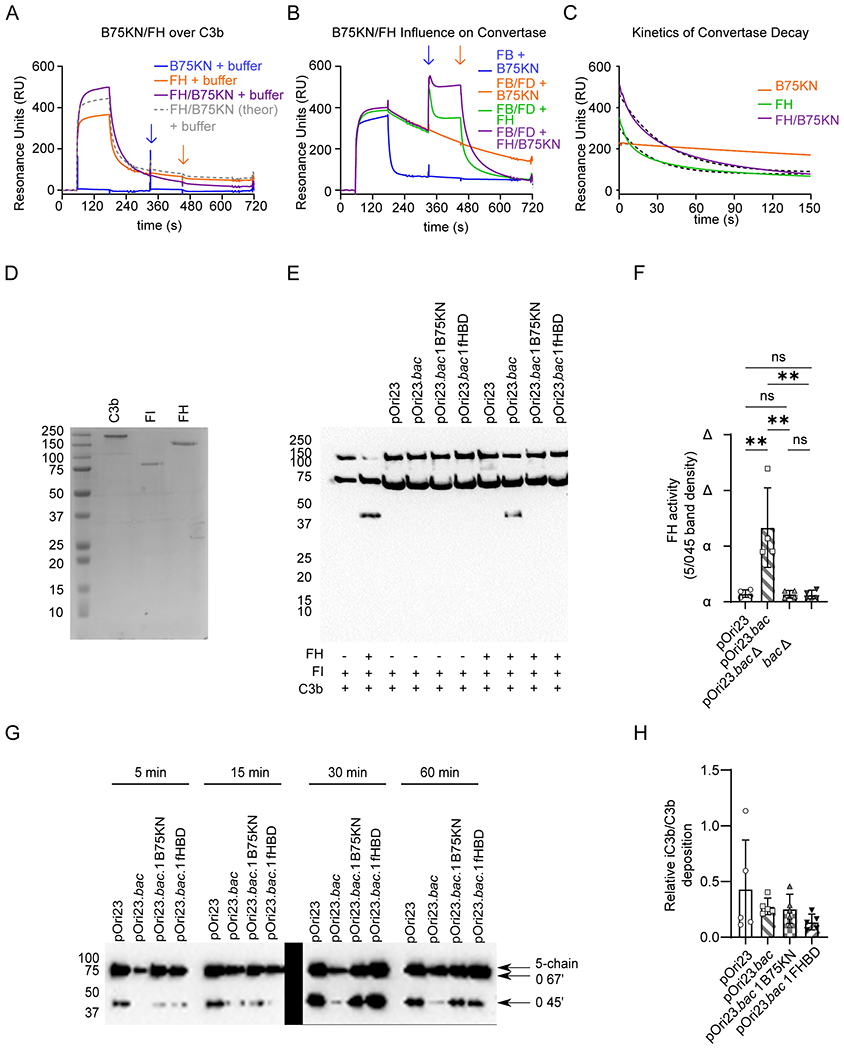
The β protein from group B Streptococcus (GBS) is a ∼132-kDa, cell-surface exposed molecule that binds to multiple host-derived ligands, including complement factor H (FH). Many details regarding this interaction and its significance to immune evasion by GBS remain unclear. In this study, we identified a three-helix bundle domain within the C-terminal half of the B75KN region of β as the major FH-binding determinant and determined its crystal structure at 2.5 Å resolution. Analysis of this structure suggested a role in FH binding for a loop region connecting helices α1 and α2, which we confirmed by mutagenesis and direct binding studies. Using a combination of protein cross-linking and mass spectrometry, we observed that B75KN bound to complement control protein (CCP)3 and CCP4 domains of FH. Although this binding site lies within a complement regulatory region of FH, we determined that FH bound by β retained its decay acceleration and cofactor activities. Heterologous expression of β by Lactococcus lactis resulted in recruitment of FH to the bacterial surface and a significant reduction of C3b deposition following exposure to human serum. Surprisingly, we found that FH binding by β was not required for bacterial resistance to phagocytosis by neutrophils or killing of bacteria by whole human blood. However, loss of the B75KN region significantly diminished bacterial survival in both assays. Although our results show that FH recruited to the bacterial surface through a high-affinity interaction maintains key complement-regulatory functions, they raise questions about the importance of FH binding to immune evasion by GBS as a whole.
Copyright © 2022 by The American Association of Immunologists, Inc.
Figures



References
-
- Doran KS, and Nizet V. 2004. Molecular Pathogenesis of Neonatal Group B Streptococcal Infection: No Longer in its Infancy. Mol. Micro 54: 23–31. - PubMed
-
- Ruppen C, Notter J, Strahm C, Sonderegger B, and Sendi P. 2018. Osteoarticular and skin and soft-tissue infections caused by Streptococcus agalactiae in elderly patients are frequently associated with bacteremia. Diagnostic microbiology and infectious disease 90: 55–57. - PubMed
-
- Leclercq SY, Sullivan MJ, Ipe DS, Smith JP, Cripps AW, and Ulett GC. 2016. Pathogenesis of Streptococcus urinary tract infection depends on bacterial strain and β-hemolysin/cytolysin that mediates cytotoxicity, cytokine synthesis, inflammation and virulence. Scientific reports 6: 1–14. - PMC - PubMed
-
- Saad EJ, Baenas DF, Boisseau CS, García MJ, Núñez SA, Sanchez PE, Balderramo DC, Hernández D, and Caeiro JP. 2018. Streptococcus agalactiae bacteremia in non-pregnant adult patients at two teaching hospitals. Revista Argentina de microbiologia 50: 280–284. - PubMed
Publication types
MeSH terms
Substances
Grants and funding
LinkOut - more resources
Full Text Sources
Miscellaneous
