


Streptococcal pyrogenic exotoxin B cleaves GSDMA and triggers pyroptosis
- PMID: 35110732
- PMCID: PMC9703647
- DOI: 10.1038/s41586-021-04384-4
Streptococcal pyrogenic exotoxin B cleaves GSDMA and triggers pyroptosis
Erratum in
-
Author Correction: Streptococcal pyrogenic exotoxin B cleaves GSDMA and triggers pyroptosis.Nature. 2022 Aug;608(7923):E28. doi: 10.1038/s41586-022-05109-x. Nature. 2022. PMID: 35896754 No abstract available.
Abstract
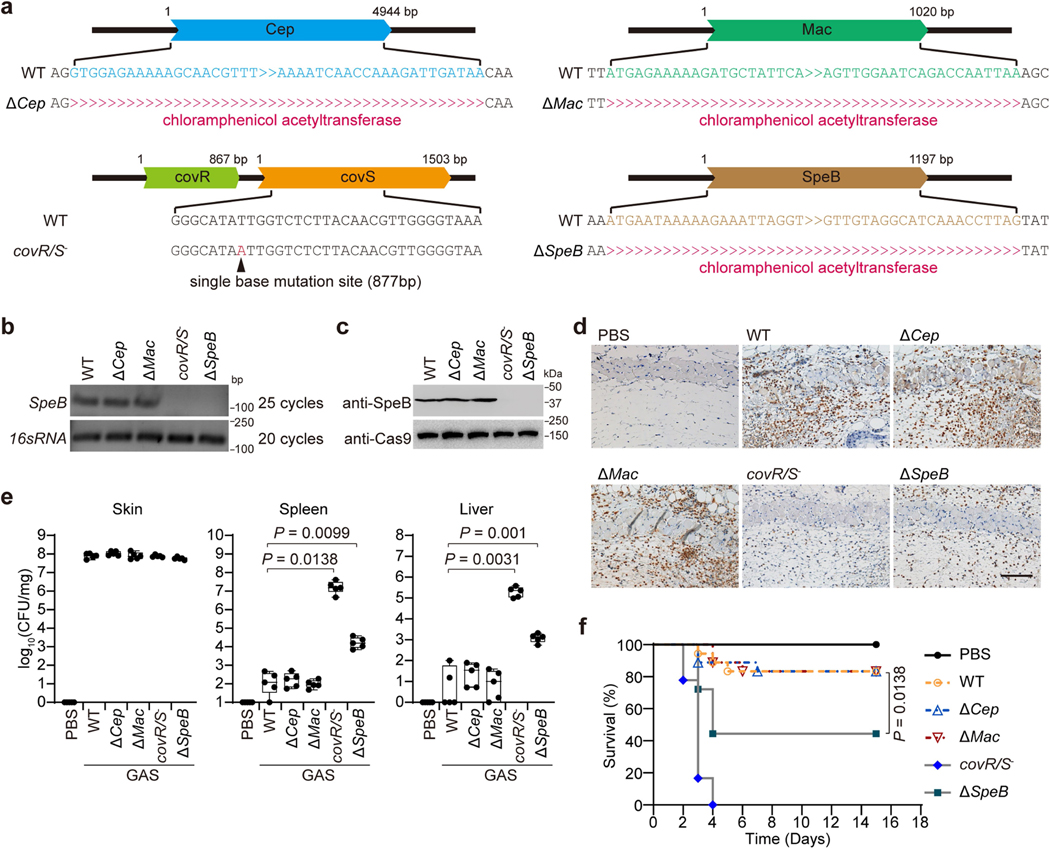
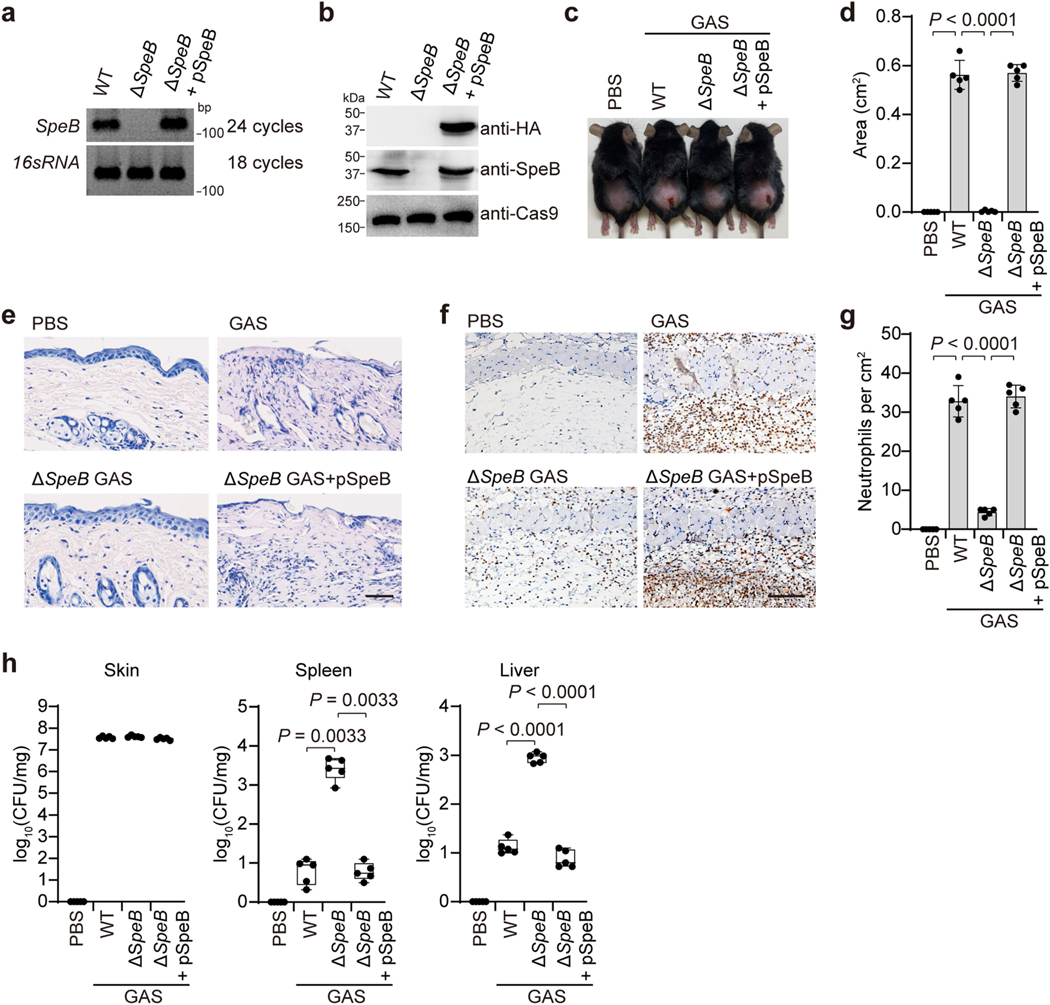
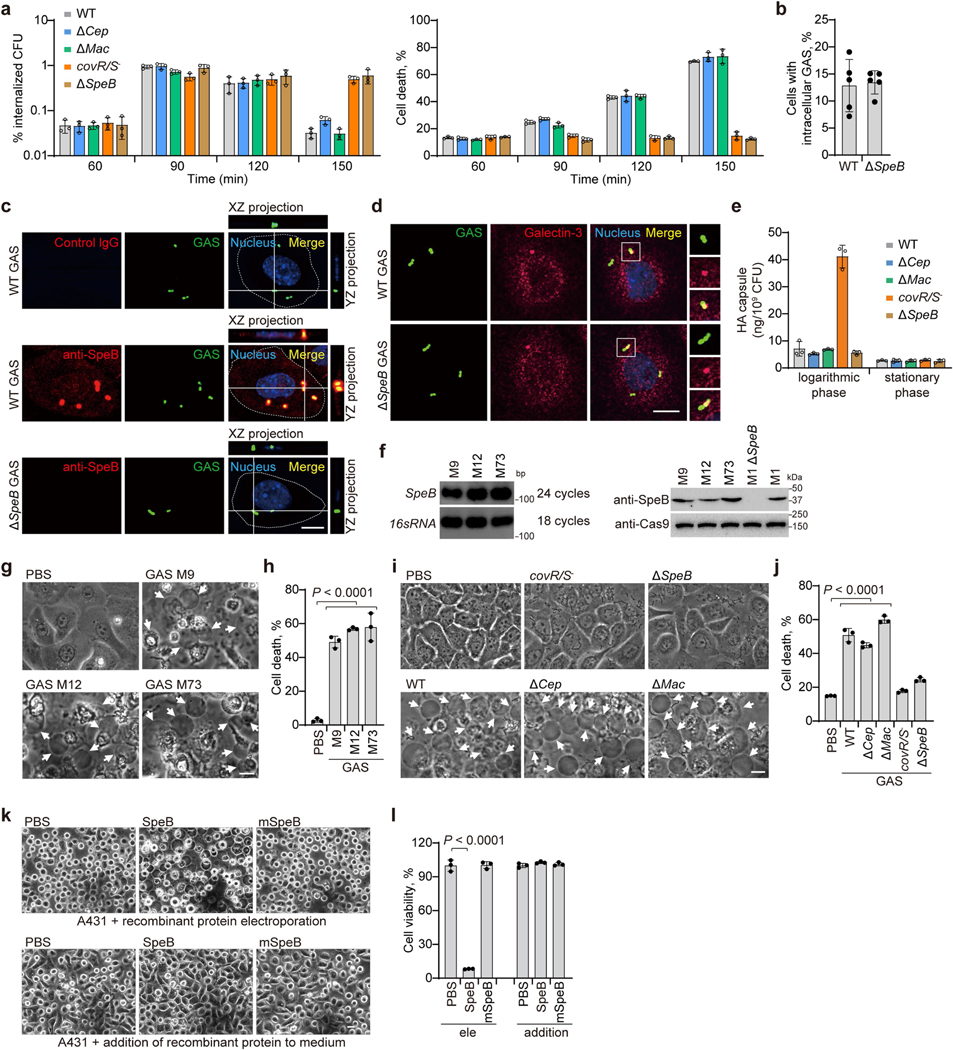
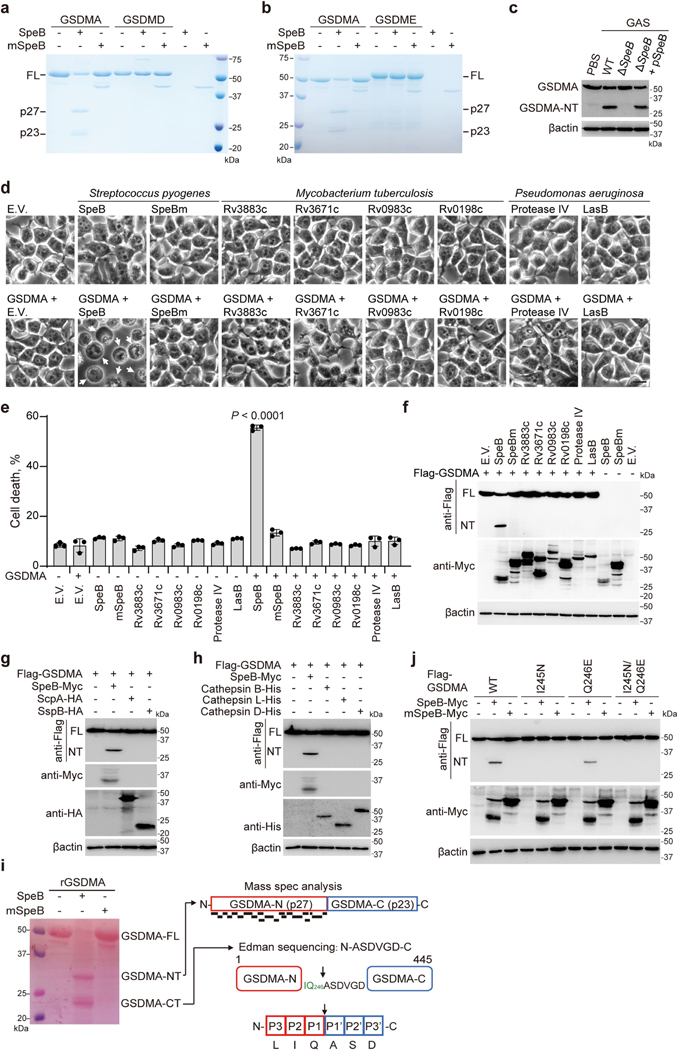
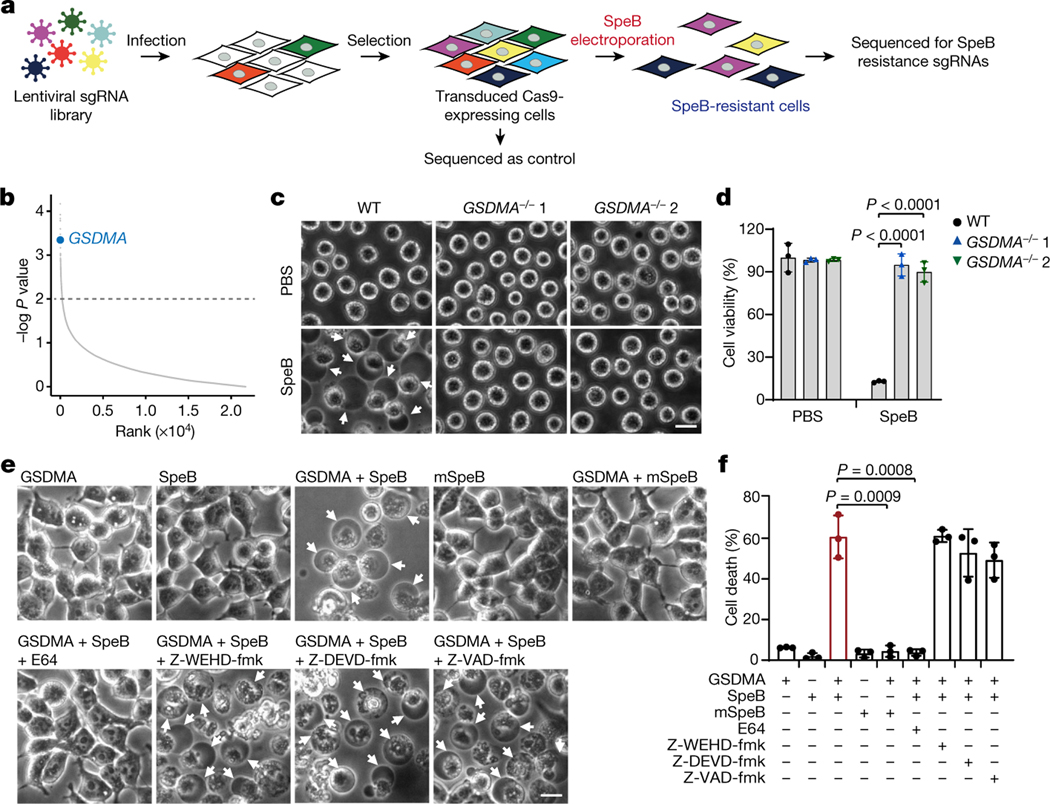
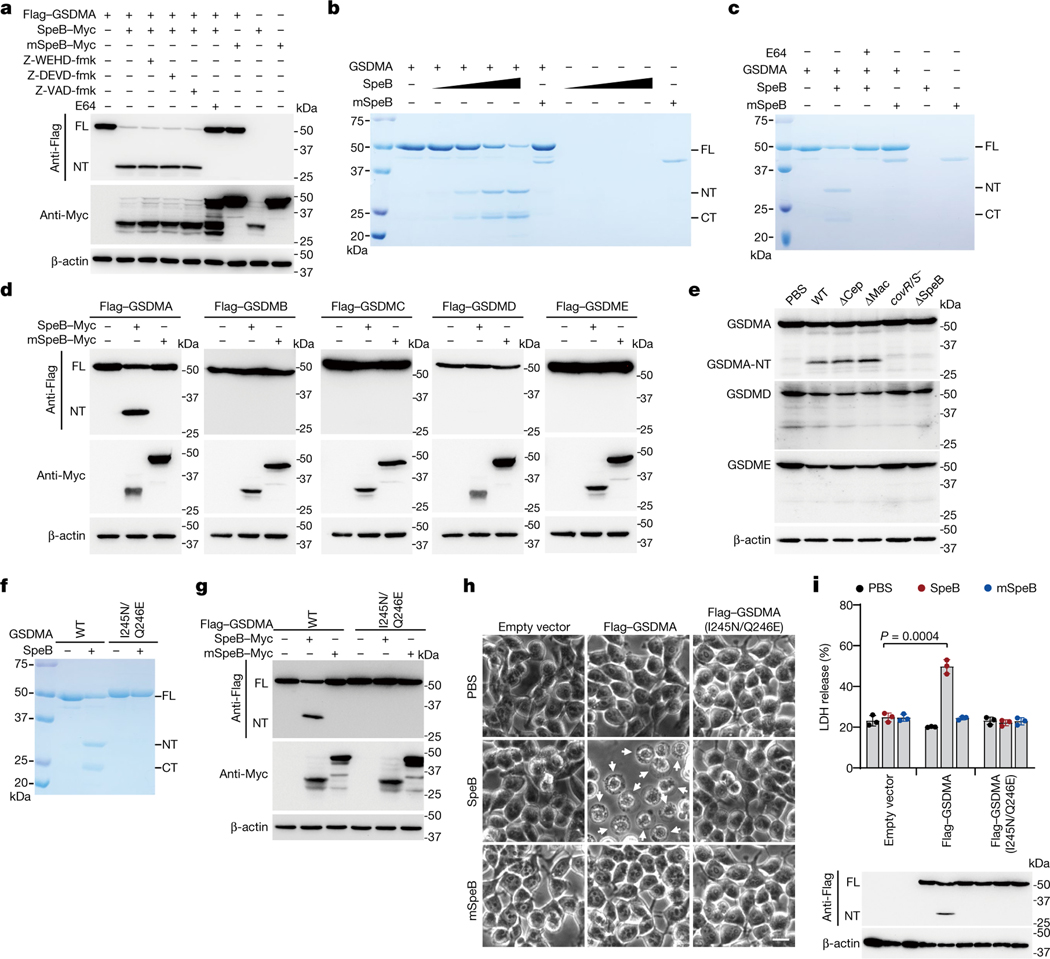
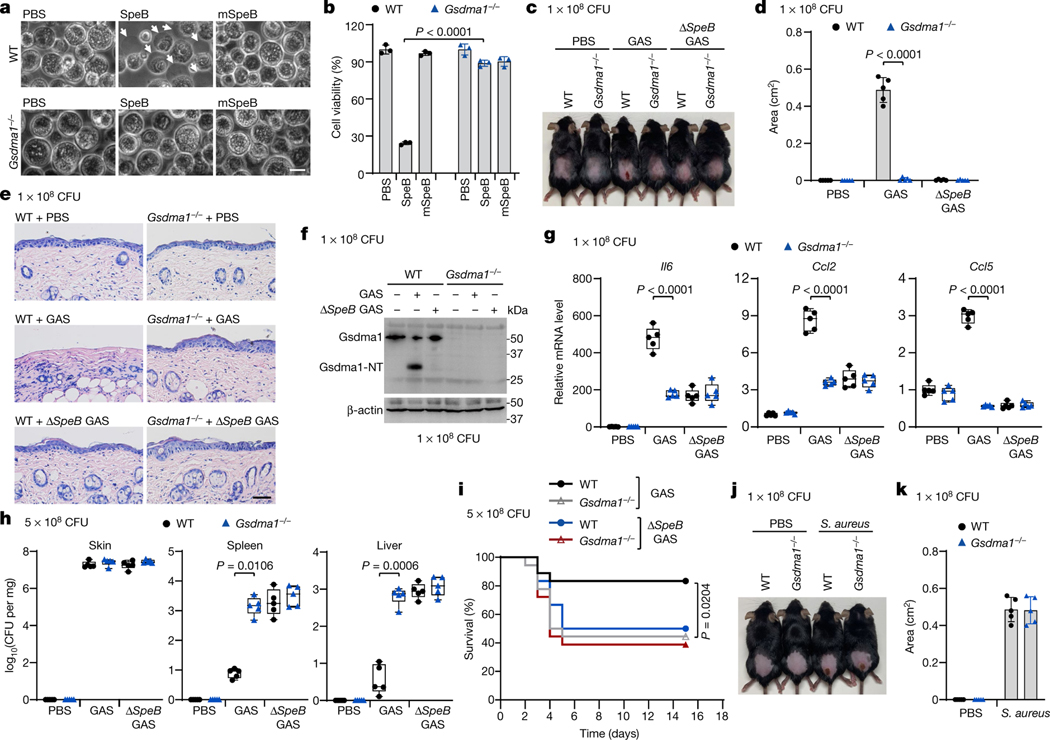
Gasdermins, a family of five pore-forming proteins (GSDMA-GSDME) in humans expressed predominantly in the skin, mucosa and immune sentinel cells, are key executioners of inflammatory cell death (pyroptosis), which recruits immune cells to infection sites and promotes protective immunity1,2. Pore formation is triggered by gasdermin cleavage1,2. Although the proteases that activate GSDMB, C, D and E have been identified, how GSDMA-the dominant gasdermin in the skin-is activated, remains unknown. Streptococcus pyogenes, also known as group A Streptococcus (GAS), is a major skin pathogen that causes substantial morbidity and mortality worldwide3. Here we show that the GAS cysteine protease SpeB virulence factor triggers keratinocyte pyroptosis by cleaving GSDMA after Gln246, unleashing an active N-terminal fragment that triggers pyroptosis. Gsdma1 genetic deficiency blunts mouse immune responses to GAS, resulting in uncontrolled bacterial dissemination and death. GSDMA acts as both a sensor and substrate of GAS SpeB and as an effector to trigger pyroptosis, adding a simple one-molecule mechanism for host recognition and control of virulence of a dangerous microbial pathogen.
© 2022. The Author(s), under exclusive licence to Springer Nature Limited.
Conflict of interest statement
Figures
Comment in
-
Suicide signaling by GSDMA: a single-molecule mechanism for recognition and defense against SpeB-expressing GAS.Signal Transduct Target Ther. 2022 May 7;7(1):153. doi: 10.1038/s41392-022-01011-0. Signal Transduct Target Ther. 2022. PMID: 35525909 Free PMC article. No abstract available.
References
-
- Broz P, Pelegrin P. & Shao F. The gasdermins, a protein family executing cell death and inflammation. Nat. Rev. Immunol 20, 143–157 (2020). - PubMed
-
- Cole JN, Barnett TC, Nizet V. & Walker MJ Molecular insight into invasive group A streptococcal disease. Nat. Rev. Microbiol 9, 724–736 (2011). - PubMed
-
- Svensson MD et al. Role for a secreted cysteine proteinase in the establishment of host tissue tropism by group A streptococci. Mol. Microbiol 38, 242–253 (2000). - PubMed
Publication types
MeSH terms
Substances
Grants and funding
LinkOut - more resources
Full Text Sources
Molecular Biology Databases
Research Materials
