


Red Yeast Rice for Hyperlipidemia: A Meta-Analysis of 15 High-Quality Randomized Controlled Trials
- PMID: 35111069
- PMCID: PMC8802088
- DOI: 10.3389/fphar.2021.819482
Red Yeast Rice for Hyperlipidemia: A Meta-Analysis of 15 High-Quality Randomized Controlled Trials
Abstract
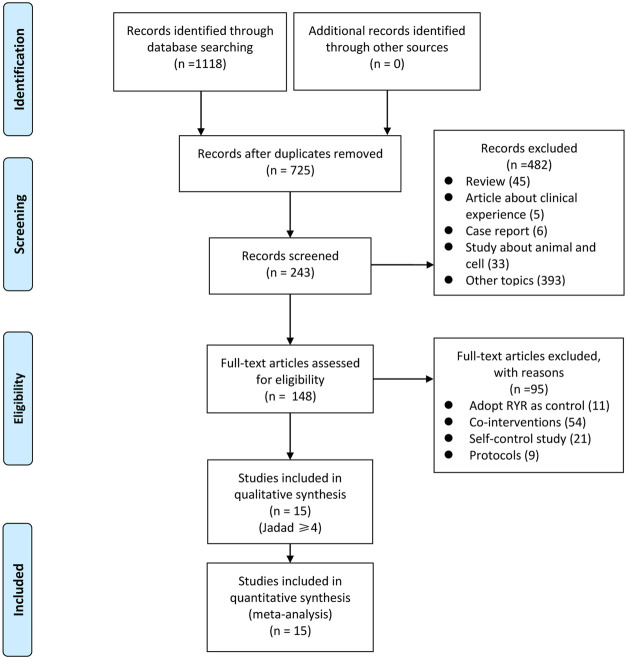
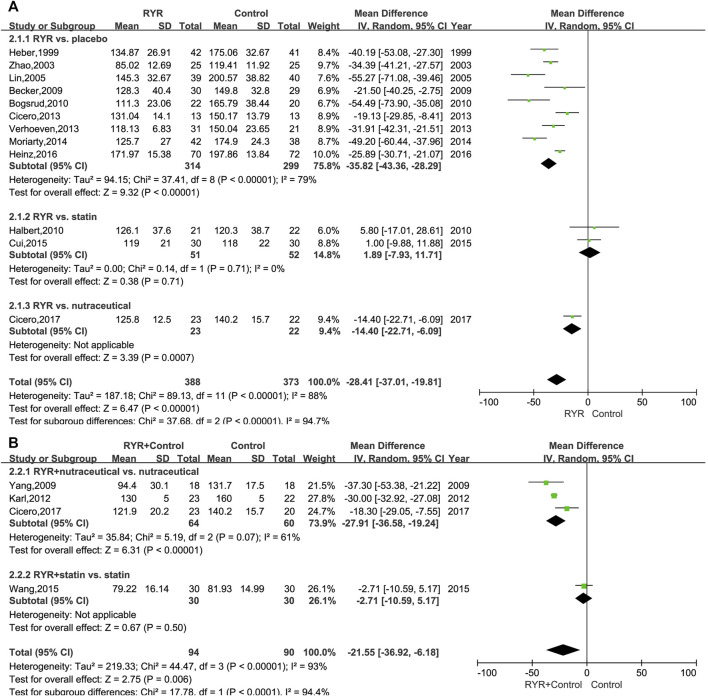
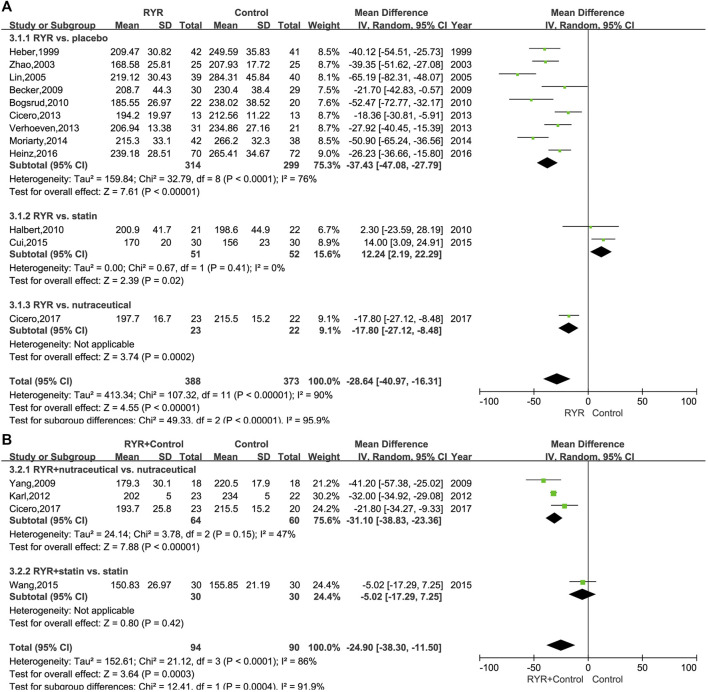
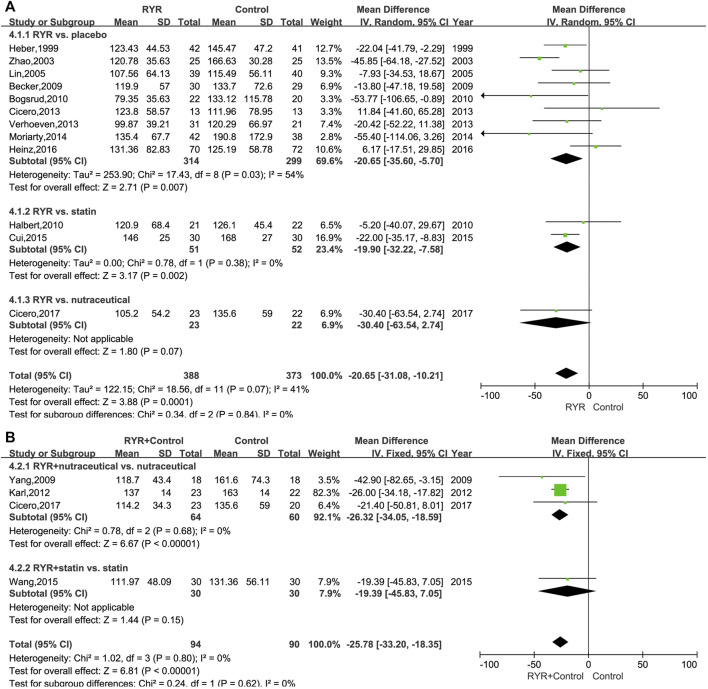
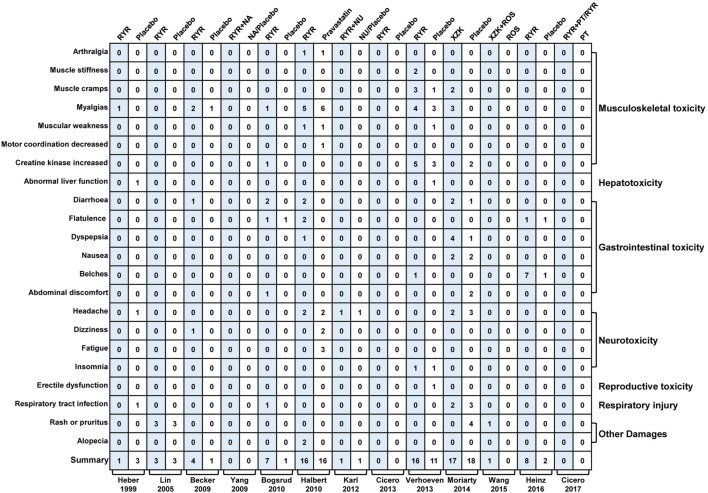
Background: RYR is a commonly used lipid-lowering dietary supplements in Asian and European countries, showing considerable benefits and low toxicity. This quantitative study aims to present high-quality evidence regarding the efficacy and safety of RYR in treating hyperlipidemia, in order to promote its clinical application. Methods: PubMed, embase, and Cochrane Central Register of Controlled Trials databases were systematically searched, and high-quality randomized controlled trials comparing RYR with non-RYR interventions were included. RevMan5.3 software was used to conduct the meta-analysis. Results: A total of 1,012 individuals participated in this study (481 in the experimental and 531 in the control group). In comparison to statins, RYR was more effective in lowering TG (MD, -19.90; 95% CI, -32.22 to -7.58; p = 0.002), comparable in lowering LDL-C and elevating HDL-C, and less effective in lowering TC (MD, 12.24; 95% CI, 2.19 to 22.29; p = 0.02). Compared with nutraceutical, RYR significantly reduced TC (MD, -17.80; 95% CI, -27.12 to -8.48; p = 0.0002) and LDL-C (MD, -14.40; 95% CI, -22.71 to -6.09; p = 0.0007), and elevated HDL-C (MD, 7.60; 95% CI, 4.33 to 10.87; p < 0.00001). Moreover, RYR effectively synergized nutraceutical to further reduce TC (MD, -31.10; 95% CI, -38.83 to -23.36; p < 0.00001), LDL-C (MD, -27.91; 95% CI, -36.58 to -19.24; p < 0.00001), and TG (MD, -26.32; 95% CI, -34.05 to -18.59; p < 0.00001). Additionally, RYR significantly reduced apoB (MD, -27.98; 95% CI, -35.51 to -20.45; p < 0.00001) and, whether alone or in combination, did not increase the risk of adverse events in patients with hyperlipidemia. Conclusion: RYR at 200-4800 mg daily appears to be a safe and effective treatment for hyperlipidemia, effectively regulating blood lipid levels with an exceptional impact on TG. Looking forward, high-quality clinical trials with longer observation periods are required to evaluate the efficacy and safety of RYR as a long-term medication. Systematic Review Registration: (https://www.crd.york.ac.uk/PROSPERO/), identifier (CRD4202128450).
Keywords: RCTs; high-quality; hyperlipidemia; meta-analysis; red yeast rice.
Copyright © 2022 Li, Wang, Chen, Zou, Shu, Lu, Wang, Jiang, Fan and Luo.
Conflict of interest statement
The authors declare that the research was conducted in the absence of any commercial or financial relationships that could be construed as a potential conflict of interest.
Figures
References
Publication types
LinkOut - more resources
Full Text Sources
Miscellaneous
